Wednesday, January 2, 2013

Charge Ahead, Fall Down, Get Up, Repeat (New Year's Wishes, 2013)


From our bedroom window looking north.


2013 came at us from Day One with reminders of what winter used to be like, could still be like, north of 45 degrees latitude in the center of a continental land mass.  The thermometer registered 18-below on New Year’s morning at 7:30, then actually dropped a couple more notches, stopping at minus-20 as the sun crept over the southeast hill.  I looked at the dial with some disbelief, but when I stepped outside and heard the deck boards creak and groan with a frigid lament under my feet, I believed (I have not over-indulged this holiday season, so I’m certain excess weight wasn’t the cause of this phenomenon).  Also my nose hairs went instantly crispy, and my still sleepy eyes were like to be glued shut if I had stayed outside a minute longer.

Odd thing was, the needle stayed put at -20 as the sun grew stronger; Mary eventually went out and gave the dial a tap, and it jumped up suddenly to near zero.  Who knows where we actually bottomed out?  Cold enough.  But it warmed enough by mid-morning that we (Mary and I, guests Martha and Tom ) got into our skiing togs and hit the trails.  A glorious day for it—with bright sun and little wind the exertions quickly warmed us.  Lily charged ahead of us over the crest of the hill and her pounding paws kicked up a flurry of powdery snow while her breath billowed out in a steamy cumulus, caught in the sun’s sharp near-solstice angle on the line where snow meets sky.
 
We skied over the hayfield hill, swooping down the eastern slope to the boundary with LeRoy and Shelly’s land, traversed back up to the top and came down toward the house through the old pasture.  I took the hill first, on a slightly different line than I had taken before, and as I came around the curve and over the knob with speed, I saw that divot, and I thought Oh, crud….  I believe I was airborne for a moment; then I was anything but.  Wipe out. It must have been impressive, but I don’t know if anyone saw.  I got up and shook it off; I was a little embarrassed, but more exhilarated.

Top of the hayfield hill.

One thing I’ve been trying to do a lot while skiing this year is to fall down.  I know that might sound odd, and counter to the general aim of skiing, but I feel that one of the best things a 54-year-old can do is to fall down in the snow—provided that he is able to get up again, of course.  The key is to not be afraid of falling—charge ahead, fall down, get up, repeat.

That’s going to be the theme of 2013 for me.  I’m avoiding the resolutions game.  Except that I have already publicly resolved to eat more Wisconsin cheese.  And I want to learn to play Johnny B. Goode on the Ibanez Artcore electric guitar that Mary surprised me with on my birthday last October, best present ever.

Best present ever, the Ibanez "Blue Beauty"

But back to the ski trail—and just to digress here a bit: I have discovered this winter that one key to perfect bliss for me is to be able to step out my back door and ski in my very own woods; it’s a luxury, for sure, but one that I appreciate fully.
 
I took Martha and Tom through the woods to the northern tip of our land while Mary stayed out in the field (she’s particularly averse to trees on skis as she’s still just picking up the sport).  The woods trails could use some improvements, as there are a lot of downed trees and some brushy patches with no clear way through, but it is so quiet and beautiful there in the snow, skiing is really just a way to get there.  One charming thing I’ve noticed this winter is that there are often deer tracks running right down the ski trails—I don’t know if this is because the deer and I share an intuition about the best way through the woods, or if the deer are cleverly taking advantage of our efforts to lessen their energy output in the cold snowy weather.  Or perhaps they’re curious about these odd emanations in the snow, and follow them wondering what sort or creature they will lead to.  At any rate, it creates a pleasant feeling of simpatico with the animals, like, yeah, we all live here together.  We often see deer at a distance, in the woods at dusk, but I’ve noticed the hoofprints following the ski tracks nearly right up to our back door.


Après-ski, a warming lunch, and Mary and Martha sat on the couch knitting while Tom and I flipped through the Fäviken cookbook they brought us as a gift, wondered about just how tasty would be a tea brewed from forest leaves that have “almost turned into soil,” and vowed that we would mature our own cider vinegar in a charred, hollowed-out stump, so help us Odin.  (Fäviken is a Swedish restaurant on the cutting edge of atavistic Nordic cuisine, employing ultra-local ingredients like, yes, old leaves, moss, lots of other foraged stuff that is very far removed, indeed, from the typical European luxury ingredients like truffles and foie gras.  Some—well, a lot—of the recipes read like parodies of obsessive-compulsive chefdom in pursuit of the hottest trend, and yet I find the idea of digging down (literally and figuratively) into northern culinary roots really fascinating.  It’s the very idea I’m slowly developing for my next concerted project, as I look for emblematic foods, methods, and recipes that speak compellingly of our place.)

Tom and Martha took their leave mid-afternoon, to get back to town before full dark, and I took a nap.  I just zonked out, and woke feeling as if I were getting sick.  But I willed myself out of bed, put on my Swedish Army surplus wool knickers, whistled for Lily (Annabel, 14-and-a-half, pretty much just putters around the yard in the winter), pulled on the ski boots, clicked into the bindings, and headed back up the hill just as it was turning to dusk.  I followed the path along the edge of the field and then, near the top of the hayfield hill, turned left and worked a traversing course up to the highest point on our property, stopping along the way to remove a section of barbed wire.  I got to the top of the hill where a serious deer stand—ours, inherited—is slowly going back to nature, the plywood walls delaminating one by one.  Then I skied out to the tip of the promontory I romantically think of as “The Grande Esplanade”; from here there is a marvelous view of our house and outbuildings far below, and the valley and ridgelines running off to the south and west.
 
It was pretty much dark now.  I took in the view, and the silence, only enhanced by the bit of breeze that rattled some frigid branches.  A very light snow was falling, but I couldn’t really see it, only felt the flakes touch my face.  With my literary education and inclinations, I couldn’t help thinking of Frost, “Stopping By Woods on a Snowy Evening,” and that was okay.  Whose woods these were, I knew.  The woods were lovely, dark, and deep, but I did not have miles to go before I slept.

In our woods going up is often easier than going down—certainly less dangerous.  But coming back down last night I found the line I’d been looking for all winter:  a long traverse of the big swale, between the oaks and maples, avoiding deadfalls and stumps and hidden barbed wire, so that I made it from near the top to the edge of the woods in one exhilarating run, in control but with enough pace to make it interesting.  It felt like an accomplishment, as if I’d worked out a writing problem, and it made me feel like, yeah, I will learn how to play Johnny B. Goode, the coolest song ever.

Then I skied to the top of the hayfield hill and finished with a lovely downhill run with a decent telemark turn, and as I glided into the yard I thought for some reason of Hemingway, something reminded me of a story from In Our Time.  I can’t help it; I’m made that way.

For New Year’s dinner Mary and I raided the fridge for leftovers—a couple of shrimp fritters that were excellent reheated and dabbed with mayonnaise; home-smoked duck breast and its accompanying sauce, so luxurious served on toast with a carrot slaw, “leftovers” seems a wholly inappropriate term.  Then the last remnants of some excellent cheese, Uplands Pleasant Ridge Reserve, and aged Marieke gouda (off to a good start on one resolution…).  We were both weary, we didn’t talk about too much, but it was pleasant.  We sat in our usual living room chairs and noshed.  Mary went to bed around ten; I practiced Johnny B. Goode for a while.  I’ve got about two-thirds of the intro down pretty good.

From my office/spare bedroom window; note Tom (L) and Martha's (R) herringbone ski tracks up the hill, impressive.

Thinking about the events of last year makes my head spin—we bought a house, sold a house, left the city for the country, plunged into home renovations, learned to live in a whole new place, embraced it; my mother went into a nursing home, had to leave her old life behind for one with not promising prospects, but she’s doing okay, has such a positive attitude, she sustains us all; our old dog Annabel had a major health crisis last winter (because of various and numerous fabric items she consumed), and last summer, a seizure, so she’s now on a daily dose of doggy downers; Mary became a country-to-city commuter; book events crescendoed in the fall then completely tailed off (don’t forget, I’m available for birthday parties, bar/bat mitzvahs, bachelorettes, etc.!). 

I hardly fished, barely hunted.  I found morels in our yard, chanterelles where I expect to find them, and missed out on most of the other mushrooms.  Our garden produced a lot of squash, but our apple trees bore little fruit.  We ate exceedingly well, and I grew rather tired of taking pictures of food, or looking at them.  Cutting, hauling, and splitting oak logs to feed our wood furnace has become a consuming concern for me; we could turn on the LP furnace, but to me that feels like a moral failure.  I’m heading up the hill with the chain saw and the ice fishing sled this afternoon.

Not the easiest way to heat a  house, but among the more interesting.

What’s past is past (or not, ask Faulkner), and I’m taking a clean slate approach.  Charge ahead, fall down, get up, repeat.  Focus on the possibilities; it’s never too late.  Resolutely avoid resolutions (except as noted).  Let conclusions present themselves.  Some of this applies to the future of Trout Caviar, as its five-year anniversary nears.   It’s usual to say something like, “Five years ago I never would have believed I’d be writing this damn thing five years later…”, but since, when I started this journal I didn’t put a term limit on it, it sort of makes sense that I’m still doing it, especially in light of the book, and all.

Which is to say:  I’m not sure about the future of Trout Caviar.  I ended the year in a bit of a slump, with only a brief, herring-induced bounce-back; I wonder how long the topic can remain fresh, or why, ultimately, I would keep at it.  I know I am not alone in this, since if you click on many of the sites in my “We Read These” list, you’ll find that there’s not much new to read on a lot of them.  It is probably melodramatic to say that I have seen the best blogs of my generation destroyed by madness, or that the best lack all conviction while the worst are full of a passionate intensity….  Well, melodramatic and derivative, and wrong.  If some of our comrades have fallen by the cyber-wayside, others have picked up the torch and race onward.

Nonetheless, what seems fairly clear to me is that the thrilling promise of a true “Internet community” is paling more than a little.  I’ll bet there are plenty of you reading this who have resolved to spend less time on-line, get off Facebook, give up Twitter.  Who doesn’t want to live her or his life more fully in the actual moment?  There’s good stuff to be gleaned from the Interwebs; it’s setting the limits that is tough.

I revile myself for caring about how many Twitter followers I have (300!), and I believe that the whole of social media creates a lot more heat than light, while at the same time, thanks to the “blogosphere” I’ve met lots of people who have enriched my life.  I’m not planning to crawl into a cave; or, if I do, I’ll be sure to bring my iPhone….

What I meant to say was:  Happy New Year.  The designation is arbitrary, sure, but nonetheless significant.  Marking passages is important, can lend clarity.  I hope your 2013 is filled with satisfaction and growth; that the people and things around you compel your interest, and that you spread it to others.  I wish you moments of calm reflection, bursts of inspiration.  Thanks for hanging around here.  It means a lot to me.

Cheers~ Brett

Thursday, December 13, 2012

A Superior Supper


This was a sort of herring-inspired tapas supper, if you will, or perhaps smorgasbord would be more appropriate to northern provenance of the fish, and the Nordic twist I administered to a classic French preparation, fish quenelles.  Whatever you want to call it, a superior supper, indeed.

Quenelles de brochet, pike dumplings, is a standard in the cuisine of Burgundy and the northern Rhone.  Like most dumplings, it probably had humble origins--a way to use up bits of fish for the dumplings and the bones for the sauce.  But most of the quenelles recipes I'd encountered were from the haute cuisine end of things, exceedingly rich and fussy to make.  In these high-end versions, the fish was there to hold as much butter, cream, and eggs as possible.  The traditional lobster, shrimp, or crayfish sauce that anointed these ethereal pillows of poisson does not scrimp on the fat, either.  Which is okay with me, from time to time, but since we planned to sample a variety of dishes, I didn't want that much richness in the quenelles.


This was a preparation that had intimidated me for a long time--well, until last week, to be honest.  It seemed to have the potential to be phenomenally delicious, but the one time I tasted it in France, the dumplings were kind of rubbery, and fishy tasting, and the one time I tried to make it at home, following a New York Times recipe, was an expensive, extremely messy disaster--turned out the recipe in the paper was wrong, and my email prompted a correction, which was very small consolation, indeed.  I never made the corrected recipe.

I'm not sure what prompted me to try fish quenelles again--perhaps just to test the versatility of my splendidly fresh herring.  In one of Rick Stein's books I found the streamlined quenelle recipe I'd long been looking for.  This one used bread soaked in milk--a "panade"--to hold things together without too much butterfat.  Also, unlike every other quenelle recipe I had encountered, it did not ask you to push the fish paste through a sieve (how appetizing does that sound?!).  Before the days of the food processor, sieving the puree was probably necessary to achieve a smooth texture in the dumplings; modern technology has eliminated the need for that step, but a lot of French recipes have not caught up.  (Madeleine Kammen notes that she could never forget learning to make quenelles, pounding the fish in a mortar and pestle; she was always reminded by the painful bursitis in her shoulder....)

Although rich, most classic quenelle preparations make a dumpling that must be pretty bland.  There is rarely any seasoning besides salt and perhaps a bit of white pepper.  I wanted my dumplings to be flavorful independent of rich sauce, so I gave them strong, northern notes with apple cider vinegar, grain mustard, and shallot (and a nod to Mme Kammen with the pinch of quatre-épices, "confit spice," that I learned from one of her books; I have a tin of that in my spice drawer at all times).

Carrying on the Nordic theme, my chowder sauce is heavy on the hardy roots--rutabaga, parsnip, and celery root.  I toned down the smokiness of the bacon by first water-blanching the meat.  The sour cream and lemon added at the end of cooking gives this sauce a nice acid lift; it would be a bit flat without it.

Do not worry if you don't have herring caviar.  A garnish of chopped herbs would be nice, too--some snipped chives, perhaps, or a little dill.  I think thyme leaves would suit it, too.


While I was roasting my potato slices in duck fat for the caviar canapé, I added the "tails" of the parsnip and rutabaga, sliced in half the long way.  They made for a charismatic, savory garnish, and a very rustic-looking counterpoint to the elegant dumplings and roe.

For the other dishes in our Nordic tapas spread, Mary mixed leftover broiled herring with its homemade chile mayo accompaniment for a lovely canapé served on toast:


I combined smoked whitefish, apple, and roasted beets in a dressing of Smude sunflower oil, cider vinegar, some honey, about a quarter teaspoon of mustard seeds and a generous pinch each of caraway and cumin seeds, some shallot, I think.  A bit of a mess in the plate, but fresh and flavorful:


And then those luxurious rounds of duck-fat-roasted potatoes with sour cream and a liberal topping of the herring roe, home-cured:


I think we're going to start seeing more and more chefs exploring the possibilities of Lake Superior herring.  Anybody out there need a menu consultant?  I'm available....


Herring Quenelles with Nordic Chowder and Caviar

6 ounces skinless, boneless Lake Superior herring
1 tablespoon minced shallots
2 tablespoons unsalted butter
½ cup fresh bread crumbs
1/3 cup whole milk
1 teaspoon grain mustard
1 teaspoon apple cider vinegar
1 egg
3/8 teaspoon salt
A few grinds of black pepper
2 tablespoons sour cream mixed with ¼ cup cream

Melt the butter in a small saucepan and add the shallots.  Just as the butter starts to sizzle, remove the pan from the heat and stir in the bread crumbs, then the milk.  Refrigerate until well chilled.

Cut or scrape away the line of brown-gray fat running down the herring fillets and discard.  Cut the fish into ½-inch cubes and place in the bowl of a food processer with the bread-shallot-milk mixture, the mustard, vinegar, confit spice, egg, salt, and pepper.  Process to a  very smooth puree, about 2 minutes.   Then, with the processor running, add the cream mixture and process just long enough to incorporate.  Refrigerate this mixture until you’re ready to make your quenelles.

Bring a saucepan of water to a simmer.

Using two kitchen tablespoons, shape quenelles, little football shapes, from the fish mixture.  They should be about 2 ½ inches long and just over an inch wide.  Poach the quenelles in the water, adjusting the heat to keep a gentle simmer, for 3 to 4 minutes, until they are firm.  Keep warm in a warm oven until ready to serve.

Root Vegetable Chowder

2 tablespoons each celery root, rutabaga, parsnip, and onion, in very small—less than ¼-inch—dice
1 ounce slab bacon, blanched in boiling water for 2 minutes, drained and minced
1 teaspoon butter or oil
2 teaspoons flour
½ cup fish, chicken, or vegetable stock
½ cup whole milk
Salt and pepper
2 tablespoons sour cream
Lemon juice
Herring caviar

Heat the bacon and butter in a small saucepan over medium heat, and as the bacon begins to render fat, add the vegetables.  Cook for about 3 minutes, until the onion becomes translucent.  Sprinkle the flour over the vegetables, stirring with a wooden spatula.  Combine the stock and milk and slowly add to the pan, scraping with the spatula to deglaze.  Add a couple of good pinches of salt and a few grinds of pepper.  Simmer for 5 minutes, stirring occasionally. 

The chowder can be made two or three days ahead to this stage, and finished just before serving.  When you’re ready to serve, heat the chowder and stir in the sour cream and a squeeze or two of lemon juice, if you like.  Taste for salt and pepper and add more if needed.  Ladle some chowder into shallow soup bowls, place the warm quenelles atop the chowder.  Sprinkle herring caviar here and there on top of the chowder and the quenelles.  Serve.

Text and photos copyright 2012 by Brett Laidlaw

Monday, December 10, 2012

Fresh


Having stooped to the depths of writing about avocadoes in this journal supposedly devoted to northern foods, it was probably in everyone’s best interests that I took a little break. The hiatus was not planned, just happened, as each time I considered a possible topic for a post, my inner editor said, “Meh.” I needed some fresh inspiration, and I got it from a road trip that Mary and I took up to the South Shore of Lake Superior (aka “The Cheesehead Riviera”; I just made that up...), destination Halvorson’s Fisheries in Cornucopia, Wisconsin.


There we watched the herring boats come in on a chill but beautiful afternoon. They had to break through a couple of inches of ice in the harbor—the trip was a preview of things to come, too, as our northward drive took us from the dusting of Dunn County snow to nearly a foot along the shore. We loaded a cooler with fresh off the boat herring—including several whole fish that yielded a pile of roe—along with smoked lake trout and whitefish. 


Lake Superior herring is an under-appreciated, misunderstood fish.  Its reputation suffers, I think, from its being confused with other fish known as herring to which it is not, in fact, closely related. The Lake Superior herring, Coregonus artedii, is more closely related to trout and salmon than it is to the saltwater herrings so well known in northern Europe. It’s a reasonable surmise that Scandinavian and German immigrants in the northland mistook this freshwater fish that schools in vast numbers for the ocean fish they knew from home—there are, indeed, superficial resemblances in size and color. And when you consider that for many people, their main association with herring is with the pickled variety, perhaps of indifferent quality, there’s a general reluctance to embrace the lake herring as the superb and versatile food fish that it is.


 As for the name confusion, lake herring is variously known as cisco, bluefin, and, where it occurs in smaller lakes, tullibee. There have been efforts in some circles to “rebrand” lake herring as cisco, but I doubt that is likely to gain much momentum—especially since I’ve seen smoked herring and smoked cisco resting side by side in the cooler case in lakeside fish shops over the years. There’s little consensus on what to call what, it seems, at least at the local level.  So I don't think the term herring is going away.  We just need to work on spreading the word about what a delightful fish it is to cook with.


Over the past couple of weeks I’ve prepared herring in a half dozen ways, and I’m still not tired of eating it. Last night a herring fillet went into a Sichuan-inspired dish with fermented vegetables and tofu in a hot bean sauce. On the our first night back from Corny, I simply fried fillets in a cornmeal dusting and served them with a crunchy, savory garnish of fried bacon, leek, and jalapeno, with a splash of apple cider beurre blanc. Other nights I fried chunks in a tempura-like batter for the best fish tacos I’ve ever eaten; broiled it and served it with a chile-laced mayonnaise; whizzed it up in the FP to make herring quenelles, fish dumplings that I served in a chowder-inspired sauce; and we snacked on the salted herring roe atop rounds of garden potatoes roasted in duck fat, with a dollop of sour cream.


That roe, by the way, is where the real money is for the Lake Superior commercial fisheries, Maureen Halvorson told me. Completing the ironic herring circle, it is shipped to Scandinavia, where it is considered a delicacy—even though it comes from a fish that does not exist anywhere near those northern European shores.

Here are a few more shots from our quick, fishy trip to Corny:

The beach at Corny, "The Cheesehead Riviera"


Cornmeal-dusted pan-fried lake herring with crunchy garnish, cider beurre blanc

It just occurred to me on this trip that they wear orange jumpsuits so they'll be easy to see if they fall overboard....


This was not the first time the three-hour drive to the South Shore was a time trip--that short distance often takes you to another season on the shore.


Waiting for the herring boats

Ice on the deck


The South Shore herring fishery is thriving; Halvorson's added another boat this year, bringing the fleet to four.

"...in the rooms of her icewater mansions...".


Text and photos copyright 2012 by Brett Laidlaw

Thursday, November 15, 2012

There and Here (Avocado with Black River Blue Dressing)


In spite of my mother’s best efforts to cultivate an avocado forest in Eden Prairie, Minnesota, in the 1960s and '70s, impaling the smooth round pits on toothpicks and suspending them in water-filled juice glasses on the kitchen window sill, I still have yet to taste a Minnesota- or Wisconsin-grown avocado.  Amazingly, those gargantuan seeds did sprout roots, then sent up spindly leaders, which produced a few leaves, and then…who knows their fate?  Perhaps a few got potted, but I don’t recall alligator pears drooping from any of Mom’s houseplants. So, no, avocadoes can’t be counted among the delights of local and seasonal eating in the northland.

Which does not mean that I don’t eat them.  I do.  Lots of them.  They’re among those non-local foods that are regulars in our kitchen, but which I rarely mention here, preferring to focus on the local, but perhaps that gives a weirdly skewed version of our diet.  I would say that probably 90 per cent of our diet is locally sourced—all our meat and most of our fish, all our grains except for rice, pretty much all our vegetables and fruits.  Dairy?  It would be kind of absurd to look outside America’s Dairyland for milk, cream, butter, and cheese, wouldn’t it?  

Still, I would find myself pinched in the kitchen without imported rice, lemon, olive oil, black pepper and other spices.  Our condiment cupboard is not terribly local, with its soy sauce, sambal, rice wine, sesame oil, canola oil, Chinese vinegar—though things have improved there with the relatively recent appearance of local pumpkin seed and sunflower oils; and I am going to figure out how to make my own sambal, with homegrown chiles, next year.  I rarely take a sip of orange juice anymore, and I think I might have forgotten how to peel a banana, but my morning cup is tea from afar, and I enjoy a cup of coffee every once in a while.  

In the pantry I find ketchup made from homegrown tomatoes, honey from hives a few miles down the road, wild blackberry jam distilled from Bide-A-Wee berries, and our very own maple syrup; there is pasta from North Dakota, but also from Italy, China, Japan, and Vietnam.  We should be producing good tofu in our region, but I’m not aware that any is made here.  It’s a staple ingredient in our house, the basis for one of our most common one-dish meals, Sichuan mapo doufu.  I don’t know if I’ve ever mentioned that, nearly five years into writing Trout Caviar.  I should have.


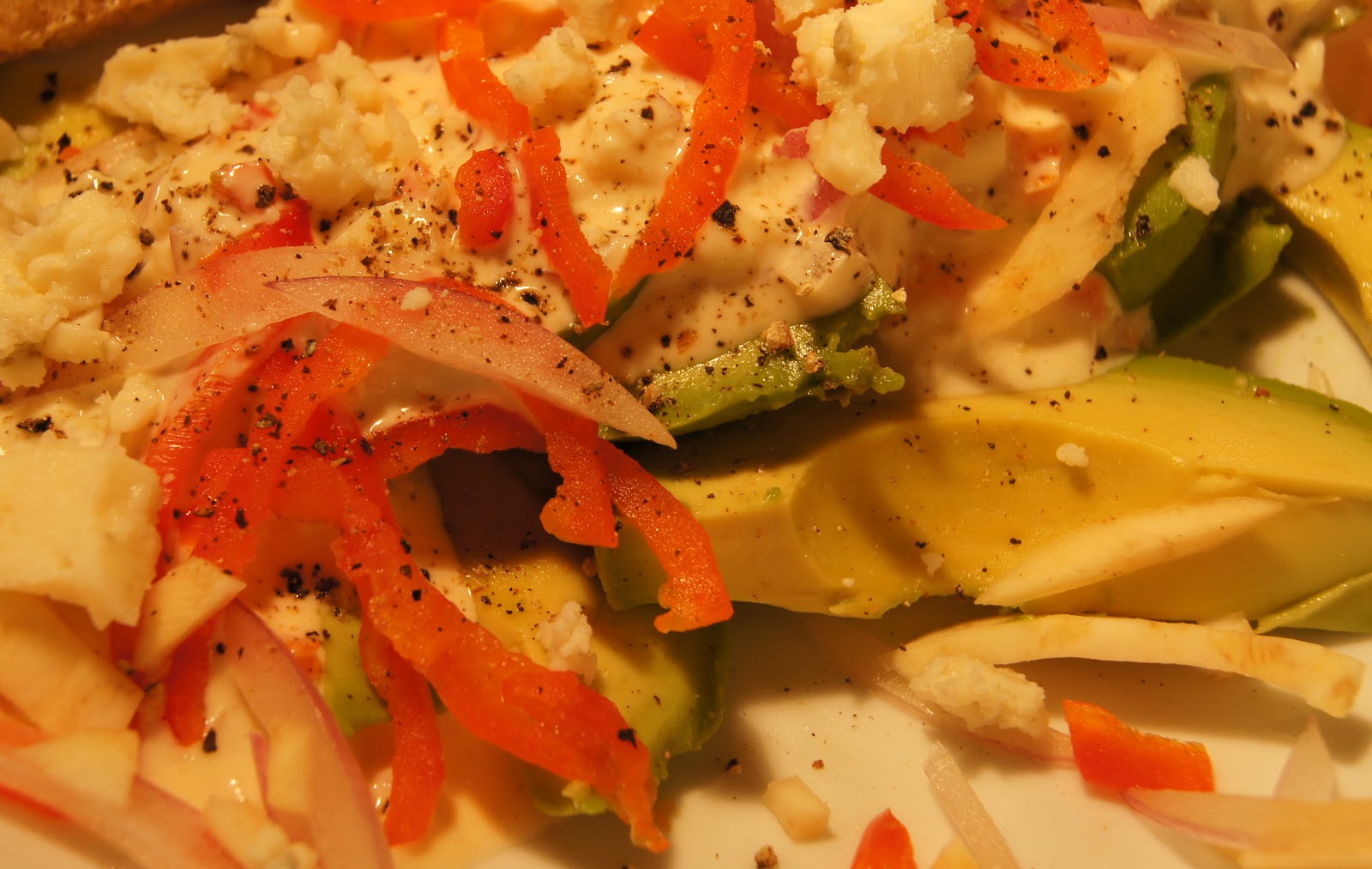
My point here, I guess, is that even as I become more impressed, year by year, with the ever growing breadth, depth, and quality of our local food sources, I don’t agonize over trying to make x-percent of my diet local, and I don’t apologize if a drop of Coke passes my lips from time to time, or a lobster from a distant sea finds its way into my pot.  I think it’s fair to say that my kitchen is locally based, and globally garnished, as this salad supper of avocado with blue cheese dressing illustrates. The proportions might seem reversed here, but there are more local ingredients in this than imported.

Avocado, mayonnaise, and blue cheese has been one of my favorite combinations since way back in my vegetarian days.  It’s sort of a study in close textural contrasts with wonderfully diverse flavors.  For the dressing I combined these local ingredients:

Wisconsin Black River blue cheese (1/2 cup crumbled?)
Minnesota Cedar Summit cream (2 tablespoons?)
Minnesota Smude sunflower oil (1 tablespoon?)
Wisconsin Menomonie Farmers Market red bell pepper and red onion and Wisconsin celery root from the co-op (about a tablespoon each minced for the dressing, more thinly sliced for garnish)
Menomonie market garlic, a medium clove minced

And these imports:

Hellmann’s mayo (couple tablespoons)
Sambal oelek (about a teaspoon)
Squeeze of lemon juice (I sometimes wind up with naked lemons after the rind has been stripped off bit by bit to garnish martinis….)
A few grinds black pepper

Mix well and adjust seasoning with sambal, lemon, pepper, and thickness with cream and oil—it should just flow. Unless you’re an absolute salt fiend, added salt is not necessary.

Spoon over sliced avocado—or over poached or sautéed shrimp; a nice grilled steak; any kind of salad; a sliced pear or apple; a hearty pasta like penne or rigatoni.

Serve with toast (from bread made with my nearly 10-year old house leaven, MN and ND flours) spread with Minnesota Hope Creamery butter.  Or serve on toast.  Not a bad breakfast using morning-after dressing.


Eat locally, think globally; shop thoughtfully, cook vibrantly, and have fun.

Wednesday, October 31, 2012

Honey Hua Jiao Braised Lamb Shoulder with Turnips (Welcome to Braising Season)


Braising season is full upon us, that time of year when meats and roots and wines and seasonings convene in the stew pot, the dutch oven, the cocotte, even the crockpot, and slowly simmer to succulence, producing homey, savory dishes that warm the hearts of those chilled of cheek who come in from the frosty outdoors to the warm kitchen with grateful appetite and glasses all a’fog.  Or perhaps it’s incorrect to speak of braising season, since that occupies better than half the year in these parts; more like braising semester, plus.  Or a twist on the old joke about the two seasons of the Northland—road repair, and braising season.

I do love a braised meal, both for the simplicity and for the phenomenally satisfying results.  But given that our climate is more than generous in providing us opportunities to enjoy braised dishes, it’s wise to look for ways to keep our simmered suppers interesting.  Case in point, today’s plate of Honey Hua Jiao Braised Lamb Shoulder with Turnips. That’s a mouthful—and a delectable one, though I say so myself.  Let’s break it down.


The danger with braised dishes is that they can all start to taste the same—the pot roast factor, if you will.  Exactly what is comforting about this type of cooking is what can also make it dull.  The deep, meaty flavors imbue everything in the pot, and without some thoughtful flavor additions, the end result can be kind of one-dimensional.  So we look for flavors to counter-balance the meaty, salty, and fatty; we want acid, maybe even a little bitterness, and perhaps sweetness, and interesting spice.

This dish has them all:  acid from wine, cider vinegar, and honey; bitterness, just a smidge, from the turnips; sweetness from the honey, of course, and also the turnips, shallots, and garlic; interesting spice, from the hua jiao, aka Sichuan peppercorns, and my beloved thyme, which goes so well with lamb and with honey.


I think it’s about time for hua jiao to burst upon the American culinary scene.  It’s such an intriguing, appetizing spice, I think it’s a simple matter of unfamiliarity that keeps it on the back shelf—or, more literally, on some dusty shelf in a corner of the Asian market, where it may be labeled Sichuan pepper, but just as likely flower pepper (the literal translation from Mandarin), dried pepper, or even xanthophyllum (the plant genus from which it comes, a type of “prickly ash” related to citrus).  For a long time it was hard to find good hua jiao; I don’t know if mainstream sources like Penzey’s even carry it.  What I’ve been finding in my local Asian markets lately is pretty good.  But if you happen to travel to China, or know someone who’s going, of course getting it from the source is the best way to go.

Hua jiao is the spice responsible for the ma, numbing quality, in Sichuan ma la dishes, the la being chile heat.  But it also has a wonderful aroma, slightly sweet, a bit tart and citrussy, appetizing in the way that a well balanced curry powder piques the appetite.  It goes well with hot, sweet, and sour flavors, and in a long-simmered meat dish it creates a flavor layer that tempers the richness of the meat—in this case, it mellows the potentially gamy flavor of the lamb.


You could put the hua jiao in cheesecloth and remove it at the end of cooking, but I like to bite into the individual peppercorns, which will have lost most of their numbing quality in the long cooking, but which still provide intriguing bursts of flavor.

I only made this dish for the first time last night, and as soon as the various components began coming to mind, I started to write it down, thinking this might be something I might want to replicate, and pass along.  We were not disappointed.  Served over soft polenta, with the brothy sauce combining all the aforementioned flavors beautifully, still allowing the individual elements to come through, it was beyond satisfying. 

The lamb was from the Lamb Shoppe  via Seward Co-op, a lovely piece of shoulder that actually contained the end of the rib rack—just spectacular meat.  Anyone who thinks they don’t like lamb should give Lamb Shoppe meat a try.  Often when people say they don’t like lamb, it’s because the lamb they’ve had was closer to mutton.  Knowing your source in matters of meat can make all the difference.


Honey Hua Jiao Braised Lamb Shoulder with Turnips

Serves four

3 pound lamb shoulder, bone in
1 ½ cups stock, water, or a combination
½ cup dry white wine
2 tablespoons honey
1 tablespoon apple cider vinegar
¾ teaspoon whole hua jiao, Sichuan peppercorns
6 to 8 small shallots, peeled
6 cloves garlic, peeled and halved the long way
A few sprigs thyme
Salt and freshly ground glack pepper
4 small turnips, quartered
Butter

Season the lamb with salt and pepper.  In a dutch oven or similar, heavy-bottomed pot, brown the lamb in a little bit of oil (I used Smude sunflower).  Working over medium-high heat, brown it well on all sides.

Combine the stock, wine, honey, and vinegar, stirring to mix well.  When the lamb is browned, remove it from the pan and deglaze the pan with the combined liquids, scraping up the brown bits with a wooden spatula.  Return the lamb to the pan along with the shallots, garlic, thyme, and hua jiao.  Add a couple good pinches of salt and a few coarse grinds of black pepper.

Bring to a simmer and place, partly covered, in a 350 oven.  Roast for 30 minutes, then turn the lamb over and cook another 30 minutes.  Remove the lid, add the turnips, and raise the heat to 425.  Continue to roast, turning and basting occasionally, for about another 45 minutes, until the turnips and lamb are both tender.

Remove the lamb from the pot and let it rest for 10 minutes before serving.  While the lamb rests, reduce the cooking liquid on the stovetop to your desired consistency—I like it fairly brothy, but with a bit of viscosity.  Swirl in a knob of butter at the end, if you like, taste for salt.  Serve over polenta, noodles, or rice.


Text and photos copyright 2012 by Brett Laidlaw

Monday, October 22, 2012

Quel Fromage! (Warm Rush Creek Reserve with Coal-Roasted Vegetables)


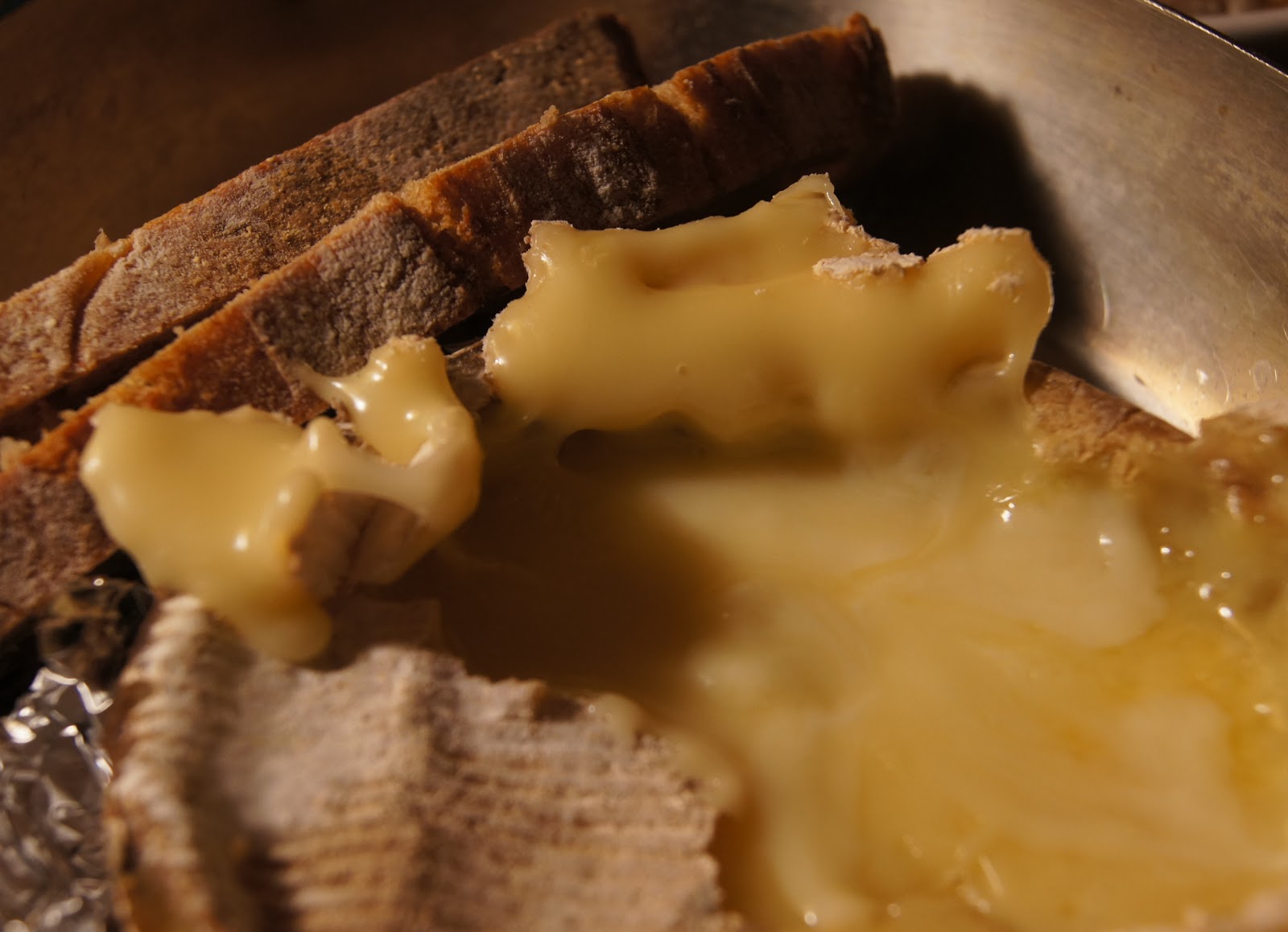
This is one from the "90 percent of good cooking is good shopping" file.  Serving a warm Rush Creek Reserve, the soft, young, raw milk cheese from  Uplands Cheese Company in Dodgeville, Wisconsin, with roasted vegetables wasn't even my original idea--I got it from the Big Cheese himself, Uplands's head cheesemaker Andy Hatch.  I was fortunate to be invited on the Cheese, Spirits, and Brews Tour sponsored by the Wisconsin Milk Marketing Board  last week, and while I wasn't able to join the group for the first couple days of the four-day tour, I lucked out in being able to visit two of my favorite Wisconsin cheesemakers, Uplands and Crave Brothers,  near the town of Waterloo, last Thursday and Friday.  It was a really inspiring--and delicious--couple of days, about which I will have more to say in the near future.  For now, let us simply delight in the wonder that is gooey cheese:


Really my only contribution to this utterly satisfying repast--other than being able to recognize a great idea when I hear it--was to build a fire and roast the vegetables in the coals, giving them some very appealingly rustic char and complex flavors of smoke and caramelization.


The cheese was the star (even if it didn't stand alone...), molten when we started to eat, cooling through a spectrum of flavors and textures as it gradually congealed--and even at the end we were scraping bits off the bottom of the dish.  The roasted vegetables and good bread were the perfect companions--the turnips were especially good, sweet, soft, and just a little bit pungent.  The beets were also lovely.  Cornichons were too tart for this sweet-tempered cheese, although it carries a bit of its own tang.  Apple was also out of place here; I think slices of pear might have gone well.


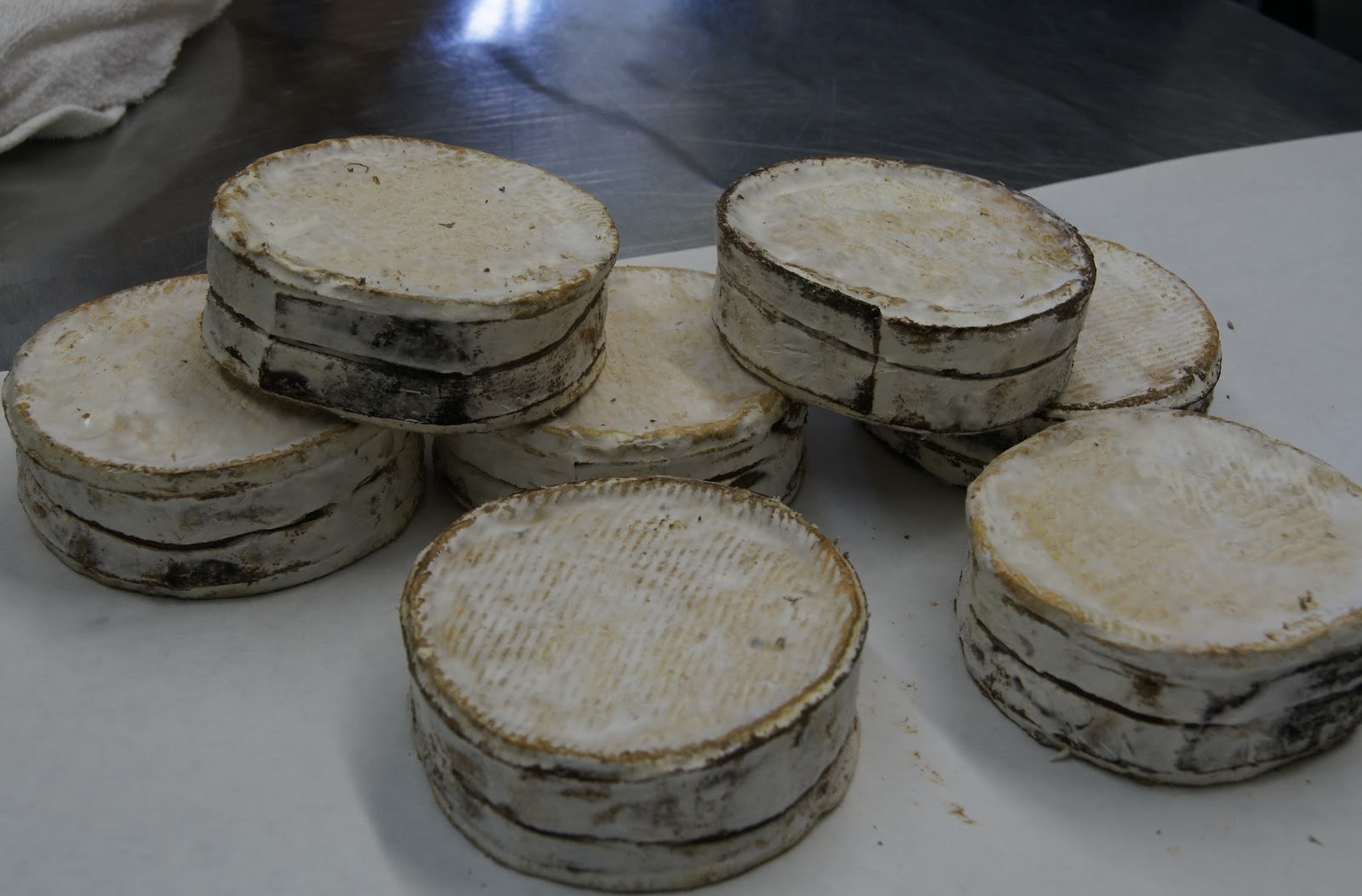
Produced from raw milk in late summer, Rush Creek Reserve is a seasonal cheese.  Aged for just under the legally required 60 days before being shipped, this washed-rind cheese continues to ripen in the store or in your fridge, and Andy Hatch said it's at its best for the next 30 days.  The interior becomes softer in that time, the aroma stronger--but I've had a Rush Creek Reserve aged past 90 days, and it never became as assertive as something like a Muenster or Epoisses.  The cheese we ate was fresh out of the gate, released on October 17.  I'll be looking to pick up another one in the next couple of weeks to see how it develops over a month's time.


To cook the vegetables--leek, potato, carrot, little onions, squash, beet, and turnip--we just wrapped them in foil and nestled them into the coals.  You don't have to wrap each vegetable individually--we did a couple small potatoes together, three small turnips lined up and foiled together, big beet cut in half and both halves wrapped in one sheet of foil, etc.  Turn every 10 minutes or so, and use your asbestos fingers to give the packets a squeeze for tenderness when you think they're getting done.  And do note that you want a nice bed of glowing coals, not a raging fire, which will burn the outside of the vegetables before the inside is cooked.  Of course you could simply do your vegetables in the oven, tossed with a bit of oil and roasted until nicely brown and tender.


To warm the cheese, we baked it, the bottom wrapped in foil to keep it from all melting away (a precaution which proved unnecessary), at 300 for about 20 minutes.  That gave us quite molten cheese to start with, and if this somewhat Cheez Whiz-like consistency offends any connoisseurs, I make no apologies.  The flavors of the cheese still came through, and the fragrance of roasty vegetables and richly flavorful cheese produced a kind of aroma-therapy of a very delectable sort.

Rush Creek Reserve at the factory, ready to be wrapped; each cheese is bound with a strip of spruce.

I purchased this particular cheese at the Driftless Depot , a delightful market, deli, and café in Spring Green, just a few miles up the road from Uplands.  If you're visiting Wisconsin's enchanting driftless area, this is the place to fill your picnic basket.  (Am I sounding a little like the southern Wisconsin tourist board?  Well, chalk it up to the convert's zeal, and be assured that my enthusiasm is heartfelt and warranted.)


The Uplands website has  a map showing where to buy their cheeses, which seems not very complete or up-to-date, as it shows only three sources in the Twin Cities, and I know it's more widely available than that.  Check with your local cheese store or co-op.  Rush Creek and Pleasant Ridge Reserve are also available on-line direct from Uplands.


Text and photos copyright 2012 by Brett Laidlaw
Wednesday, October 17, 2012

Speaking of Wretched Excess...


Well, I obviously know a little about the topic, to follow up poutine with chicken-fried venison in pickled ramp & jalapeno cream gravy.  But there's lots of good green stuff on the plate, too, in the form of a rice pilaf including leek, fennel, celery root, and shallot, and garden brussels sprouts and leeks roasted with...er, yep, bacon.  Just a little.

I had a terrific time in Waupaca, Wisconsin last weekend at the Waupaca Book Festival, of which Nancy "Rivertree" Miller, who worked on the final stages of editing my book, was one of the organizers.  It was a terrific festival featuring 16 authors and a wide range of events over three days.  I got to do a cooking demo in the basement meeting room of the Waupaca library, preparing pork chops with blackberry-whisky sauce and celery root-potato purée on two little electric burners, which were struggling just to boil water until we figured out to plug them in to separate circuits.  Once that little confugalty was sorted out everything went badda-bing badda-boom, and I think a good time was had by all.  And we ate some bacon.


On Saturday morning I met up with a friend who had come over from the legendary town of Menasha.  We had hoped to hunt before my authorial duties, but a steady rain verging on deluge 86ed that plan.  Instead we took her dog Duchamp for a run in the rain, saw the sights of Waupaca, and in the evening ate fried food at the Chain O' Lakes bar and restaurant.  Then as we prepared to go our separate ways on Sunday, Lynn Ann presented me with a lovely parting gift--a hind leg of venison, which came my way in order to make room in her freezer for this year's deer meat that was already coming her way from generous bow hunter friends.

By the time I got it home it was partly thawed, so I trimmed back to the frozen part, refroze the bulk of it, and wondered what to do with the sort of scrappy pieces I had cut off.  I'm not sure why this preparation occurred to me; I've never made chicken-fried anything in my life.  I think my initial impulse was venison schnitzel, but when it came around to dinner time that concept seemed too daunting; chicken-fried made it seem homey and do-able.


So I pounded out the meat with a cleaver--I smacked it vigorously with the dull side of the blade to tenderize, then with the flat side to pound it about 1/3-inch thick.  I placed the pounded meat into a milk bath to which I had added salt and pepper, Worcestershire, and tabasco.  It sat in there a while.  When it was time to cook I removed the meat from the milk and dredged it in seasoned flour.  Then I whisked an egg into the milk, dipped the meat into that, and again into the flour.

Then I fried the meat in about a half-inch of very hot canola oil.  It was messy.  It only took two to three minutes per side to get it nicely brown, and by basting with the oil I actually did get some of that puffing up of the breading that characterizes a good schnitzel.

Then as the fried meat rested on paper towels in the warm oven I made the sauce:  In a tablespoon or so of butter I sautéed chopped pickled ramps (rinsed a couple times and well-drained) and chopped jalapeno.  Sprinkled on a tablespoon and a half (guessing) of flour, stirred that around a bit, and began adding stock--perhaps 3/4 cup.  Finally just a glug, probably three tablespoons, of heavy cream.  The vegetables in the sauce, with their crunch, pickled tang, and mild heat, made a beautiful contrast to the rich sauce.  Not something I'll make very often, but a fun and satisfying dish, for every once in a while.


And I have discovered that room-temp leftover chicken-fried venison makes a morning-after breakfast equally as appealing as cold pizza, if you like that sort of thing.  I do.

The brussels sprouts were okay; Mary like them more than I did.  They were roasted at 375 with the bacon, tossed in the fat as it rendered, and cooked for about 30 minutes, the leeks added halfway through.  I thought they were a bit dry, that I should have cooked them at a lower temp and added some liquid to keep them moist until browning them at higher heat at the end.  I'll have another try soon.


Text and photos copyright 2012 by Brett Laidlaw