Showing posts with label preserving. Show all posts

Tuesday, July 28, 2015

Blueberry-Lemon-Ginger Jam


I’m not canning any jams or jellies this year.  I’ve rarely done large-scale preserve-making, preferring to grab a couple cups of raspberries, currants, or wild blackberries, and make a pint or two, or even less.  I’m often enticed by the beauty of fresh summer fruits, especially wild varieties, to put by some preserves, but the thing is, even a half-pint of jam or jelly goes a long way around here.  Our tastes run much more to the savory side, and we're not big breakfast eaters, so the fruit preserves tend to sit in a jam and jelly museum, through which I may meander once or twice a year, pondering this historical record of fruits preserved, considering their context—“Oh, there’s some of that wild grape jelly I made in ’08, the year the big wind blew down all those trees at Casey Lake, and with them their cargo of loaded grape vines!”

It’s amusing, to be sure, but not really worth it, in the long run.


The title of this post might seem to belie my no-canning intention; but note that I didn’t say I wasn’t making any jams or jellies, only that I’m not making them for storage or, as more often happens here, posterity.  We picked some blueberries at our friend Tina’s impromptu U-Pick operation last weekend, just a couple of pounds, and I came home with a clear plan:  freeze some; dry some; and make a small batch of jam for immediate use. 
 

And by golly, having a plan does sometimes work:  I have a couple trays of berries drying in low convection in the oven right now, a quart bag in the freezer, and one micro-batch of blueberry-lemon-ginger jam in the fridge.  It’s very low in sugar, so it won’t keep that long.  I’m hoping we consume it by the end of this weekend.  Then maybe I’ll go get some more berries.


I got a good start on it today with this lunch of homemade bread—a dense sorghum-cornmeal-rye loaf, and some chewy pain de campagne—with a wedge of Dandelion Addiction cheese from up Bayfield way, and a few spoonfuls of preserves.  With the minimal amount of sugar in the jam, it didn’t overwhelm the fairly mild cheese, and you can still really taste the blueberries. 

I couldn’t get my Ikea scale to switch from metric to American measures this morning.  Perhaps it’s just having a stubborn Swedish moment.  So all the measurements are metric, with my rough translations.

Blueberry-Lemon-Ginger Jam

360 grams (about 12 ounces) blueberries, fresh or frozen
50 grams (about 5 tablespoons) sugar
40 grams (about 6, 2-inch slices) crystallized ginger, chopped fairly small
Lemon zest, a couple 1-inch strips, minced
Juice of ½ lemon

Combine all in a heavy saucepan.  Bring to a boil over medium heat, then simmer briskly for about 8 minutes, until the berries are mostly, but not totally, broken down and the mixture is glossy and starting to thicken.  Cover and allow to cool in the pan, then transfer to a jar and refrigerate—but eat it as fast as you can!  It should last at least a couple of weeks in the fridge, I reckon.

Text and photos copyright 2015 by Brett Laidlaw

Friday, February 22, 2013

Smokey Deer


We’ve been on a steady venison diet here lately, thanks to one happy occurrence—the generous gift of a leg of venison from a friend—and one less fortunate one—the freezer dying on our spare fridge in the basement.  The venison had been in our freezer since it was passed along to me last fall, and as I was going to have to thaw it out all at once, I was waiting for the right moment.  But sometimes you choose your moment, and sometimes it is thrust upon you.  Hence, necessity being the mother of invention and all that, I got to work processing.  I was not a very experienced deer meat cook when I walked upstairs with that dripping, leg-shaped package; I’m a much more confident one now.

In the last three weeks I’ve prepared venison goulash, seared rye-crusted medallions, and that pan roast, which I’ve put to use in numerous ways.  But by far the most interesting and delectable preparation was this smoked venison “pastrami”.


I started by breaking the leg down into its component muscle groups.  Not all cuts of meat consist of a single muscle, of course—many are cross-sections of several groups.  But I don’t have a meat saw, and taking it apart at the seams, as it were, was the easiest, most logical thing to do.  I wound up with about a pound and a half of the dense meat from the shank, and several nice lean pieces from the upper leg, each around a pound and a half, also.  What looked at first like an enormous hunk of deer flesh yielded 8 or 9 pounds of usable meat—oh, and another pound-plus of trimmings, which the dogs greatly enjoyed.


To see what I was dealing with, I sliced off a small piece from each chunk and fried them briefly to assess the flavor and texture.  There were variations—this one a little more tender, this one a bit livery, etc.—but all were relatively tasty and tender.  They were, in effect, no different from something like the sirloin or top round cuts of beef.  The shank meat was destined for goulash.  From the other pieces I selected one to do the pan roast, and set a long, tenderloin-shaped cut aside to make medallions, and the last piece, more or less rectangular and about two-inches thick in the middle, I decided to smoke.

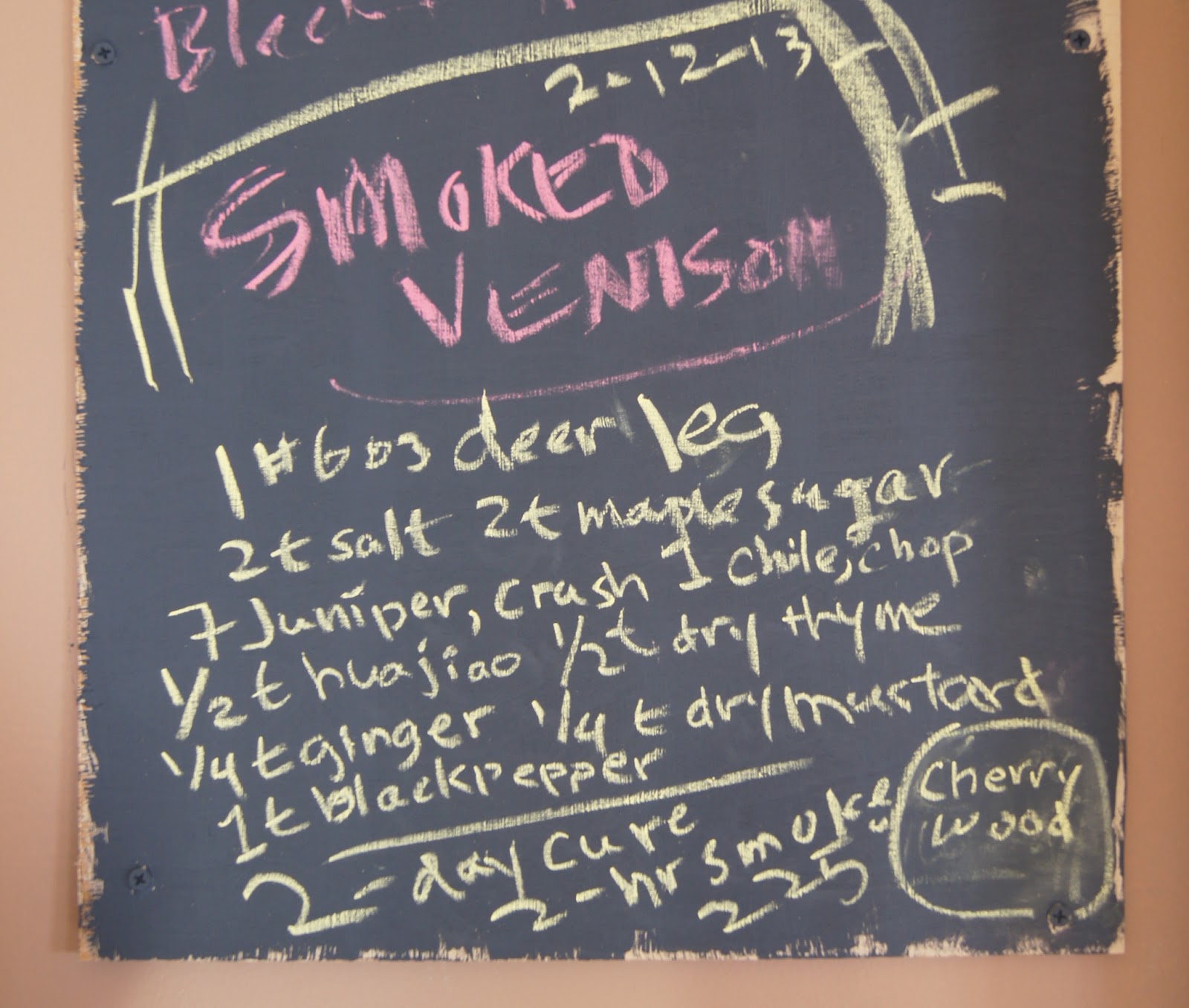
I cured it with a dry rub, and went for some fairly aggressive seasonings.  Here’s the recipe (chalkboard paint is fun…):


Hua jiao, once again, is Sichuan pepper, in this case the dry-roasted and ground up kind.  Ginger is the dry spice, chile a dried red one.  I used locally produced maple sugar, but you could substitute brown sugar in the same amount, or maple syrup, say 1 ½ tablespoons.  I massaged the meat with the seasonings and stuck it in the fridge for a couple of days, turning it several times.  Not a lot of liquid came off. 

Then I smoked it in my trusty Meco grill for about two hours at about 225, and I used wild black cherry as the main smoking wood, something I haven’t tried before. The end result was a delightful confluence of happenstance and experiment. I had no idea what the final product would look or taste like.  It smelled fantastic coming off the grill, and when I cut into it I was amazed at the color.  The taste is deep, layered, mysterious, and wild, but with a delicate texture that makes it seem refined, as well.  Really cool stuff.  What it reminded me of most was pastrami, which is smoked corned beef, so I guess that makes sense.


I have cooked slices to serve with eggs and polenta, and that was good, but I think it’s best straight up, on a slice of toasted country bread.  The sauce gribiche variation I came up with to accompany it doesn’t detract.  This is a really good time of year to dip into the pickle pantry for fresh and crunchy flavors.  The rhubarb pickles I made last summer have mellowed really nicely.  The sauce is composed of:

A grated hard-cooked egg
Dollop of Hellmann’s mayonnaise
A minced pickled ramp and a little of the pickling brine
Same amount minced pickled rhubarb
6 or 7 minced milkweed bud “capers”
A half teaspoon or so of sambal

I’ll run down the other preparations in another report.  All were worth recreating.

Text and photos copyright 2013 by Brett Laidlaw


Wednesday, September 7, 2011

The Season of Too Much to Do


The title could apply to any of our non-snow-covered seasons, I know, but seems particularly apt this time of year.  So much so, my mind just stalled in looking for a place to start the list.  Well, the garden, of course, is reaching a crescendo which, were a garden a symphony, would resound of swelling, urgent strings, pounding timpanis, wildly bugling bassoons, capped off by a thunderous cymbal clap, signifying a kitchen counter covered with green and half-ripe tomatoes, fading into October.  My Saint Paul garden early in the year was a disgrace, an embarrassment, with carrots and even beans (beans, dear lord!) that wouldn't germinate or grow, lettuce that didn't thrive, reluctant leeks.  I told myself, well, radishes and turnip greens are my favorite vegetables, anyway....

The trick, as it turns out, was to ignore it.  I maintained a basic sort of order out there with the occasional frantic weeding, and focused on how wonderfully the tomatoes were doing in my tiny Bide-A-Wee garden, thriving in honest-to-god full sun.  And I enjoyed the wild harvests from ramps, cress, nettles and other wild greens, on into black cap raspberries, July chanterelles, August blackberries.  Watched the progress of the Bide-A-Wee apples, anticipated cidering time.

Cucumber and pole bean mountains.

In the interim, nature did what nature does, and found a way.  In early August something came over my pole beans, cucumbers, leeks, and kale.  Eruption would seem to describe it pretty well.  What was looking to be a very paltry harvest became, seemingly overnight, more than I would handle.  I made cornichons, bread & butters, sour dills.  I found many uses for romano beans--including an excellent bean-on-bean salad with flageolets and romanos, red onion, hen of the woods, loads of olive oil and some cider vinegar.  I hope to make that again while the hens are around, and will attempt to codify it into a recipe then.

Romano pole beans, good at any size.

Around mid-summer a squash or pumpkin vine sprouted in the compost, and grew timidly for about a month.  This is a typical occurence here, and always a nice surprise when free food emerges from the "trash."  This year's model is a sort of white pumpkin, and is now growing with alarming prodigiosity--seems like it extends its reach by a couple of feet a day, and is branching out in many directions.  I recall I picked up the parent pumpkin at a Wisconsin roadside honor stand last fall.  We admired its decorative qualities a little too long, and it rotted before we got a chance to taste it.  We'll be able to remedy that omission this year, looks like.


In a summer when I feel as if I've done little to no preserving, I take a mental inventory and realize that I've made all those cucumber pickles, plus an impromptu corn relish, pickled ramps and milkweed buds, blackberry runny jam, tomato sauce; and I've frozen corn (kernels sliced from the cob, fresh) and turnip greens and red kale (briefly blanched, packed into sandwich bags).  I've also kept that crock stocked with mixed vegetables, using up garden surplus and the remains of market purchases before they become compost-worthy.

Suyo long is my favorite cucumber variety for Chinese or western salads, and bread & butter pickles--much less seedy than most slicers.

Oh yeah, and then there's the apples....  Our apples, right now, are both a delight and a terror.  A delight because it has been a wonderful year for them, and our splendidly diverse half-wild orchard is producing abundantly.  It has been great fun to taste our way from tree to tree and week to week, as the apples progressed from "sour, astringent, spit-it-out," to "now that has interesting flavors (though you still spit it out)", to chewable, eatable, and finally, absolutely delightful. 


Now, the terror:  This year our apples seem especially prone to falling off the tree either just as they ripen or even slightly before they are ripe.  We missed a weekend at Bide-A-Wee for a lovely trip to the South Shore of Lake Superior, and when I came out to the land the Wednesday following, I found that several hugely laden trees had dropped most of their apples in the time we'd been away.  I commenced frenzied picking of anything left on those trees, and an assessment of the state of ripeness of the other trees.  Another brief absence from the land, just a couple of days, and more trees had dropped most of their fruit.  Panic.  We'd waited two years for a decent apple crop, since last year's was beyond meager, an off year in the biennial fruiting cycle worsened greatly by a late-May frost that followed a very warm April which had the trees flowering early.

I think we're going to be okay.  We've salvaged enough to fill a carboy or two with cider to ferment, and to freeze a few gallons for fresh cider--that's our morning "orange juice" these days.  It's just an odd, perplexing, and unhappy phenomenon, this premature dropping of the apples.  In past years we've picked apples well into October, I have photos of apples with snow on them, I really do, like, look here:

October 11, 2009

A few trees aren't nearly ripe, and are holding their fruit.  Even one heavy cropping tree can provide almost more apples than you know what to do with.  And then, there's always next year, or the year after.  By that time we hope to be living in the country full time, our attention not so scattered.  That's the other complication here, the back-and-forth life.  I treasure every day we spend at Bide-A-Wee, and the effort required to prep for the weekend there, and to close up for the return to the city, is entirely worth it.  But I've come to realize that between the coming and going procedures and the travel itself, it takes a whole day out of the week.  And there are only seven days in a week, you know.  You probably knew that.  I'm only just starting to realize it....

So the season of too much to do can also be the season of too much to think about, which may be even more taxing.  I find I've been suffering a bit of blog fatigue lately, not because I can't think of anything to say, or don't have finds and dishes and photos I want to share, but precisely because there's just too much of all that. 
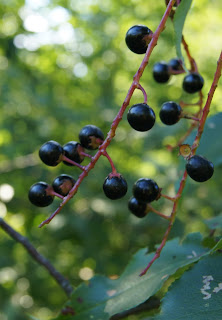
The wild black cherries are excellent this year.

I want to do the dry-fried green beans, the corn spoonbread, the ode to the blackberry, an exploration of black cherries.  Then the hen of the woods come in, fishing season has just three weeks left, those apples aren't going to press themselves.  And one of these days those Trout Caviar books are going to arrive (hey, where are those Trout Caviar books?), and with them a lot more delightful complications.

I hope you're finding better ways to simplify in the season of too much to do than I am.  The list gets shorter with concerted effort, then it grows again.  Today I've got bank, library, laundry, pick the garden, water the garden, unload the apples brought home yesterday, return emails, pack a few things and the dogs, and head back to Bide-A-Wee to set up for a full day of apple picking tomorrow.  As the evening comes on with its cool and quiet, and I build a fire to sit by with a wee dram of scotch, I won't feel much burdened.  The fact that the lawn needs mowing, wood needs hauling, the woodstove needs painting...oh, why did I have to bring that up?  No, really, it'll be okay.  It's good to be busy; the efforts will bring their rewards.

Garden & griffon, Annabel, to be precise.


Text and photos copyright 2011 by Brett Laidlaw

Thursday, July 7, 2011

Tasty Buds


I'm going to make a bold prediction:  milkweed will be the new ramps, the hot wild food that will grab the attention of chefs and home cooks alike.  And may I say, should this come to pass, it will be long overdue.  Whether you love, loathe, or linger in indifference toward ramps, it's hard to dispute the fact that they have become a bit overexposed, have held an exceedingly long reign over our springtime culinary imagination.  I think this may be because, as wild foods go, ramps are particularly reliable, abundant, and affordable.  Not everyone will shell out the $30-plus a pound for wild mushrooms, but a bunch of ramps at $2.50 per gives a lot of flavor for the dollar. 

Restaurant chefs know exactly when they'll be able to get ramps, and the cachet this wild springtime food gives to local-seasonal menus is a bargain for them, as well.

Milkweed is equally abundant as ramps--maybe moreso--it has a longer season, and it's edible in several forms, from shoots, to buds, flowers, smallish pods, and the immature silk that Sam Thayer calls "milkweed cheese."  It is, indeed, thanks to Thayer that I, and many others, have come to know and appreciate the culinary qualities of this long misunderstood plant.  It was thought for a long time, and by many so-called experts (including the venerable Euell Gibbons), that milkweed was inherently bitter, and that any form of it therefore required cooking in several changes of water simply to make it palatable.  In a thorough and utterly convincing essay (the first of his work that I encountered), Thayer laid that notion to rest.  I won't bother to paraphrase further what you can read for yourself right here.

So far the milkweed parts I've worked with have been the flower buds and small pods.  Our Wisconsin land must be rife with the shoots in spring, since it's rife with mature plants right now (our Saint Paul front yard has a nice crop, too), but I haven't managed to catch them at that stage.  What I've mainly done with both buds and pods, other than just munch on them, desultorily, during walks around our land, is to pickle them.  That's how I spent most of my day today.


I gathered maybe a quart of the bud heads (I doubt that's botanically accurate, but it will do), giving each a little shake as I picked it to dislodge any insects--many insects like milkweed, not just monarch butterflies.  My fingertips became sticky with the latex that gives milkweed its name, but I was able to rinse it off easily when I was done; I believe that Thayer reports a somewhat caustic effect from longer exposure of skin to the latex.  Once I got the buds home, I rinsed them thoroughly, then chilled them in the refrigerator overnight.  That actually seemed to have firmed them when I came back to them.  This afternoon I used a paring knife to cut the buds off the flower head, a pleasant little chore accomplished while watching "The People's Court."  I didn't bother about the little tails that remained attached to the buds; they're edible, as well, and likely will largely disappear after pickling.


I applied three different methods to preserving them. First, I took about three-quarters of a cup of buds and mixed them with nearly a tablespoon of coarse salt--fleur de sel, in my case. I bottled them and will refrigerate them. I imagine these may ferment somewhat and develop a bit of pungency with time. I hope so. Another cup I immersed in the sweet and sour and salt brine described here--I used the larger, "purpler" ones for this; these ready-to-open buds had a slightly sweet and floral taste that I thought might come through in that brine. The rest, a scant cup, I will prepare in the "cornichon method" also described in that post.

The flavor of unseasoned milkweed is nowhere near as assertive as that of ramps--but then, outside the allium world, what is?  It's mild, green, a bit like lightly steamed green beans, I'd say.  The buds have a nice crisp "pop" when you bite into them, the small pods, as well.  Up to an inch or so in size the pods remain tender enough to steam or stir-fry.  The uses of the silk, that "cheese," I have yet to explore.

I've been calling these pickled buds milkweed "capers," but I think I'll drop that term.  Nonetheless, you can use them in most of the places you'd use something like a caper--in salad dressings, to flavor an egg salad or deviled eggs, sprinkled over grilled or fried meat or fish.  I'm going to mix some into mayonnaise tonight, along with some chopped pickled ramps, to make a wild tartar sauce to serve with fried whitefish.

I would never advise anyone to use this blog, or any simple descriptive or photographic source, as a field guide to wild edibles--always consult a good field guide or two or four, or a trusted friend who knows about these things.  That caution registered, milkweed is among the easiest of wild foods to identify.  The buds will be on the plants for another week or two.  As you can see from the photos here, some have already bloomed.  It's not the sort of thing one wants to subsist on, but milkweed provides many opportunities through the spring and summer to get a delightful, safe taste of wild foods.

Milkweed:  It's the new ramps.  You read it here first.


Text and photos copyright 2011 by Brett Laidlaw

Tuesday, August 24, 2010

A Report Upon the State of My Pickle, August 2010


I was intimidated by pickling and canning for a long time. Two things generally put me off on the whole process: First was the impression that it requires rigorous adherence to a systematic, scientific method to ensure proper results, lest in consuming said results, you die. Since I am not particularly good at reading directions or following instructions, it seemed much better to leave it to Gedney's.

The second discouraging facet of home canning has always been the fact that the glut of food begging to be pickled and canned arrives mid-summer, in the dog days' heat and humidity of late July and August, and who wants to be stuck in a sauna-like kitchen peering into steaming cauldrons when it's 90 with a dewpoint of 75? Pas moi, bien sur.

So I avoided delving into this arcane, sweaty, potentially deadly realm for years, but I was always jealous of those who had mastered it, who held the keys to this alchemy, who could endure the physical rigors of that sweat-lodge vision quest, who could make beautiful things out of the humblest materials, a lousy cucumber, salt, spoiled cider or wine. Those people were better than I, I was certain--smarter, stronger, more enlightened, more moral and pure.

And, they got dilly beans to snack on with their beer.

I finally overcame my reluctance to pickle around 15 years ago, I guess, spurred by an over-abundance of suyo long cucumbers from the garden. Ordinary overgrown cukes I have no trouble consigning to the compost bin. A well-formed suyo long cucumber, though, is such a magnificent thing--dark green, beautifully curved, bristly, ridged, sometimes growing to nearly a foot-and-a-half long--I couldn't bear to toss them or see them rot in the crisper. I gave a lot away, but I still had too many. I opened up the stained red-checked cover of the Better Homes and Gardens and found a recipe for bread & butters. It didn't seem too complicated. I made up a batch that filled a couple of quart jars. There was no steaming cauldron involved. I just stuck the jars in the fridge, and they kept all year, until the cucumbers were overwhelming the garden again. Now, was that so hard?

That experience set me down the path of small-batch canning, an approach much more like cooking than it is like the Industial-Scale Food Preservation that "home canning" had always implied for me. I have a few stand-bys--the bread & butters, French cornichons, sour dills--but each year I like to try a few new things.

Of course, it's generally the fruits or vegetables that you have the most of that you wind up looking for ways to preserve. For me, this year, that has meant taking a pickle to some wild foods that I hadn't preserved this way before: ramps, fiddleheads, chanterelles, milkweed pods.

I started with the ramps, wrote about it here. That Momofuku-inspired brine has become my go-to recipe for quick pickles. I did a jar of ostrich fern fiddleheads and ramps with that same brine, and I used it on the milkweed pods you see here in the little pottery dish:


Those pods are about an inch long, maybe a little longer, some of them. I blanched them in salted water for a couple of minutes before immersing them in the brine, and they've cured nicely in the last three or four weeks. They have a really interesting texture--nice sort of popping crunch to them--and the flavor is very like green beans.

Here's that brine again:

2 cups water
1 cup apple cider vinegar (or rice wine vinegar)
3/4 cup sugar
scant 2 Tbsp salt
2 small dried red chilies, seeds removed (or leave them in if you want more heat)--optional
1 tsp black peppercorns, also optional

And of course you could add other flavors, garlic, herbs, etc.

In the jar at top left in that picture, those are tiny milkweed pods that I turned into "Bide-A-Wee capers," preserving them the same way I do cornichons: toss with a good amount of salt and let sit overnight; rinse next day and place in a jar with a few peppercorns, some tarragon, a clove of garlic; boil vinegar enough to cover (I'm always using cider vinegar now, since we have so much home-made); the following two days, pour the vinegar into a small saucepan, bring to a boil, pour back over the pods. After that refrigerate and use as you would use capers. I can't wait to make a beurre noisette with some of those milkweed capers, to spoon over a grilled trout. I haven't been fishing much at all this summer, with the heat, and the streams often blown out from heavy rains.

With my excess chanterelles I made a soy sauce pickle based on a Momofuku recipe (just tasted those, and they're great); and a vinegar-blanched and packed in oil with garlic, chili, and herbs; and a jar of chanterelles in the manner of Polish pickled mushrooms. The last two preparations were from Linda Ziedrich's excellent The Joy of Pickling .

In the picture at the very top, that's my favorite pickle of the summer--cukes and crabs in the brine as above, without the peppercorns, with a little fresh Bulgarian carrot chili in place of the dried chili. This is a wonderfully simple, extremely refreshing pickle. The cucumber and the apple seem to sort of swap flavors after a few days in the brine--the apples have a bit of a watermelon rind taste to them, the cuke chunks become tart-sweet and a little fruity. Really good. I'm on my second batch. These should be eaten within a week or so of making them.

To make them, you just quarter and core a few crabapples or other small, firm, tart apples; cut a few pickling cukes into 1 1/2- to 2-inch lengths, and quarter those--and if they're very seedy trim off some of the seeds; make the brine as above, pour over the apple and cuke pieces packed into a jar with some chili, if you like. Refrigerate for a day before eating, and consume within a week. While the weather stays summery, that shouldn't be a problem.

After four days in the country I came back to Saint Paul to find my cucumbers in a state of riot. I just picked a heaping salad spinner full, to go with the half-a-crisper that's been awaiting company and a coolish day to get pickled. So this afternoon I'll be revisiting the classics I mentioned above--the bread & butters, cornichons, and Russian sour dills. Also on my radar: fermenting some kale, beets, and good old sauerkraut in anticipation of winter soups and choucroutes.

I hope you're getting your pickle on nicely this summer, and I'd love to hear about your favorite preserving recipes, too--pickles, canned goods, fermented stuff, jellies, or jams, whatever.

Cheers, and happy pickling to you.


Text and photos copyright 2010 by Brett Laidlaw

Saturday, January 9, 2010

Amour de Pommes (2009 Food Highlights)

Time for another Trout Caviar Sweepstakes: I've got an extra copy of Michael Pollan's The Omnivore's Dilemma to give away. Also up for grabs, The Angry Trout Café Notebook, the story of that popular Grand Marais restaurant with profiles of the fishermen and -women, farmers, and foragers who provide their raw materials; with recipes for many of their best-known dishes. And finally, a copy of Jacques Pepin's memoir, The Apprentice (this one's a paperback and a little dinged up). Share a notable local food experience from last year in the comments section, and we'll make a random drawing of the entrants at the end of this month.

You may note, just off to right side of the page here, a new section that shows Trout Caviar's "followers." Click on the "Follow" button to become one. You probably know better than I do what that actually means. In my mind, it means you've joined the
Trout Caviar Righteous Eaters' Army*--a prestigious distinction, indeed!

Happy New Year, everyone. May your gardens grow abundantly, your farmers' markets thrive, your foragers' baskets overflow with bounty, this year and throughout the new decade.


I've been slow getting on to the 2009 Food Highlights. The new decade sort of took me by surprise, I guess. But it was a remarkable year in food for us, and I want to note a few of the more memorable experiences from last year over the next couple of weeks.

Last year was our first full year with Bide-A-Wee, and we spent a lot more time in that cheesy state just east of the Saint Croix and Mississippi Rivers. We added the term "tree crops" to our vocabulary, and then we added our own tree crops to our pantry and table.


We tapped maple trees for syrup for the first time last spring. That was tree crop number one. That was really good fun, and it was amazing to see how much sap a tree could produce on a good day, and to taste it straight from the tree--cold, clear, slightly sweet, a touch woody. Absolutely delicious, a spring tonic. And it was a challenge to figure out how to reduce that sap by a factor of 40 to turn it into syrup. Lot of boiling. More boiling. Boil it some more. We'll get us some better equipment for the task this year. We got a decent amount of syrup, but it wasn't a great year for sugaring--it turned too warm too soon, breaking the freeze and thaw cycle that really gets the sap flowing. We also tapped some of our birches, for you can make birch syrup too (it takes even more boiling!), but we never got enough sap to even begin.


Through the spring and summer we harvested many kinds of wild fruit, some of which we’d never tasted before—nannyberries, highbush cranberries, haws. We picked all the blackberries we wanted for a good five weeks, a remarkable run. Wild plums, black cherries, elderberries, wild grapes—it was indeed a very fruitful year.


But really, 2009 was the year of the apple at Bide-A-Wee. We didn’t know it at the time, but last spring provided perfect pollinating conditions for fruit trees of all kinds. We were kind of disappointed when the blossoms didn’t last as long as the previous year, but now I think that they blew away early because, once the flower had been pollinated, the blossoms weren’t needed anymore. And then we watched as the trees started to fruit, and were amazed at the difference from the previous year.

Many apple trees have a biennial habit; 2008 had provided a fairly meager crop, but in 2009 almost all of our trees were “on”, and how. We started picking apples in August, and I foraged the last basket at the end of November. I was surprised at how much frost the apples were able to withstand. Several times temperatures dropped into the ‘teens overnight, and in the morning the frost-covered fruit appeared frozen solid. But as long as the temperature rose above freezing in the course of the day, the apples recovered with no lasting damage.


Nor was a coating of snow a problem. An October surprise turned the valley white. Annabel strikes a call-of-the-wildish pose:


There was no way we could pick even a small fraction of the apples that bowed the branches of the trees by early autumn. We’ve been doing “triage pruning” for two winters, just getting a start on rehabilitating some of these several dozen long-neglected trees, but many of them are still untouched. Picking apples is difficult on the steep, brambly hills where most of our trees grow. Some trees were completely inaccessible within thickets of blackberry canes. Some trees made repulsively scabby apples. A few trees, heavily laden with beautiful fruit during one of our weekend visits, had suddenly dropped almost all their apples by the next weekend.


In spite of that we had a bountiful harvest, and we’ve been exploring all the many aspects of the apple, a remarkably versatile food crop. We’ve made apple jam and jelly, apple sauce and butter, apple cider and syrup, apple relish, ketchup, and pickles. We’ve eaten apples at breakfast, lunch, dinner, and all times in between. We braise meats in apple cider, and sauté apples to serve with meat and fowl, fish and game. We grate apples into pancakes and breads. We have apple cider fermenting in carboys and bottles, and I’m experimenting with apple cider vinegar, too. We use dried apples to pep up granola, to sprinkle over salads, or just for snacks. Since we discovered that Annabel and Lily gobble dried apple slices enthusiastically, I haven’t bothered to bake dog biscuits. Apple salad, apple salsa, apple "kimchi", what the hell?

We invested in a cider press, the Happy Valley Ranch "Homesteader." Thoroughly old-fashioned technology, still quite effective. The press produces apple juice, or sweet cider. That juice we ferment to "hard," alcoholic cider, reduce by boiling to make versatile apple syrup (more tart than sweet; better in salad dressings than over pancakes), or freeze for drinking fresh through the winter. We haven’t bought orange juice in more than a year, start the day with a glass of apple cider, just like Thomas Jefferson did.


Of all the various uses to which we have put the versatile pome, I can recommend a few with particular enthusiasm.

--Braising in cider: There are classic preparations using cider in cooking, a lot of them from the French regions of Normandy and Brittany, where apple trees grow more readily than grapevines. In these dishes the cider, sweet or hard, serves the same purpose as the wine in a coq au vin, boeuf bourguignon, etc., a flavorful, tenderizing (because acidic) liquid that mellows in the cooking and the mixing with the meat juices and melting fat to create…man, really, really tasty food. Game birds, chicken, and pork are particularly suited to this kind of cooking. When it’s cooked for a long time, the fruitiness and tartness of the cider recede into the background. The end flavor is distinctive, but not necessarily apple-y. That's country-style pork ribs braised in cider, with apples and chestnuts, above. Here’s a chicken dish with cider and cabbage, and here’s grouse in cider cream. But you can adapt a lot of recipes that call for wine, stock, or even beer as a braising liquid, subbing cider in their place. Give it a try.

--Pickled crab apples. I’ve been absolutely tickled with these pickles, which are pictured at the top of the post. Whole crab apples cooked in a wonderfully fragrant-spiced sweet and sour syrup. Serve these with roast pork or game, chop them to add to dressing for a winter cabbage salad, garnish a cheese plate with them. I tinkered a bit with a recipe from Linda Ziedrich’s excellent The Joy of Pickling, adding some star anise, black peppercorns, and a good deal of fresh ginger slices, to the original recipe’s cinnamon, cloves and allspice:

Pickled Crab Apples
Makes two pints

1 ½ pounds crab apples, stems on
One 2-inch stick cinnamon
1 tsp allspice berries
½ tsp whole cloves
1 whole star anise
6 slices fresh ginger, 1/8-inch thick
½ tsp black peppercorns
1 cup sugar
¾ cup water
1 cup cider vinegar

In a large, non-reactive (stainless or enameled) sauce pan, combine the water, sugar, vinegar, and spices. Bring to a boil, stirring to dissolve the sugar. Remove from the heat and let cool.

Pierce each apple in a couple of spots with a metal or bamboo skewer (this is supposed to keep the apples from exploding, though a lot of mine cracked anyway; no matter).

Add the apples to the syrup and bring the syrup to a simmer over medium-low heat. Simmer the apples until they start to look translucent, 15 to 20 minutes. Remove the pot from the heat, cover, and let stand overnight.

Next day, use a slotted spoon to transfer the apples to sterilized canning jars--one quart or two pint jars. Strain the syrup to remove the spices, then return the syrup to the sauce pan. Bring it to a boil, then pour the hot syrup over the apples in the jars to cover. Seal with sterilized two-part lids. Process in a hot water bath for ten minutes (or just whack the lids on and refrigerate; they will keep indefinitely in the fridge).

Save any leftover syrup in a jar in the fridge. It’s great used in dressing for beet or cabbage salads. Likewise, use the liquid from the canned apples this same way.


--India relish: I acquired three new cookbooks this past fall—used, but new to me: Hollyhocks & Radishes, Joy of Cooking**, and…a compilation of recipes from The Country Journal magazine, can’t recall the exact title. Weirdly, each one practically fell open to a recipe for “India relish” the first time I picked it up. I had never heard of India relish; India relish calls for a lot of apples; I was intrigued, nay, compelled to try it. It’s great—delightful on a hot dog, a cheese sandwich. Last weekend at Bide-A-Wee we had a lunch of grilled ham (Grass Run Farm, purchased at Seward Co-op) and cheese (Roth Kase "gruyère”) on homemade natural leaven brioche with India relish. Yay, lunch!

I’m not going to give the recipe because, well, it’s in pretty much every old-timey cookbook out there, apparently. In Joy (the old one, mine was printed in 1964)it’s called Indian relish, and it’s on page 785. This is one for next fall, as it also calls for green tomatoes. So if you have a garden, and access to an apple tree, it’s basically free. I always cut back the sugar in traditional recipes like this by 20 or 25 percent. (Also in Joy I’ve just come across a recipe for sweet and sour baked beets and apples, page 264. I have beets and apples! I’m gonna try it.)

So there you go, that’s my exultation of the apple. I think we tend to take the apple for granted, consign it to the obligatory role of the piece of fruit in the lunch bag, or the plop of apple sauce beside the pork chop. But in fact it is an extremely important food crop, and a cook’s delight in the range of its uses. And then, of course, there’s all that cider bubbling in the basement. Will report when we open the first bottle.

Duck confit with crabs and cabbage.

Cider sipper Mary.

_______________________________________________

*--I was originally calling this the TC Toxic Zombie Cult, because I've noticed that zombies and cults seem to be really hot these days, and the "toxic" part just made it super extra edgy, which people also go for. But it was suggested to me that the whole concept didn't really fit the Trout Caviar zeitgeist, and upon further reflection, I had to agree. But if you'd like to be part of the TC Toxic Zombie Cult, I could probably still manage to make up some membership cards.

**--That is the correct title, Joy of Cooking, no "the" to be seen. Never noticed that before....

Text and photos copyright 2010 by Brett Laidlaw

Thursday, December 10, 2009

"Salvage" Kimchi


When the weather turns on you, as it did on us this past week, the best thing you can do is plunge in to some spicy fermentation--funky Korean ambrosia; kimchi, that is. There was frost on the cabbage leaves, what was left of them. I had planted some savoy cabbage rather late, but we got ten or twelve little heads, lovely they were, absolutely mignon. When I cut the petits choux from the plants, a lot of quite edible looking leaves remained, the ones that hadn't enrolled in the heading-up program. I felt I owed something to these hardy individualists. They seemed a little tough, but no more than, say, collards or big mustard greens. I thought a brining and a good dose of fermentation might turn them into something delicious.

The photo at right illustrates our current situation: the hot, and the not-so-hot. My chilies, which were hanging out to dry, are now pretty much freeze-dried.

I also had roots, all those carrots from my volunteer plot, and some turnips I'd forgotten about. With sub-zero temperatures on the way, it was all-ashore-that's-going-ashore and devil-take-the-hindmost, with a little bit of Katie-bar-the-door thrown in for good measure. Or something like that. The cold plays tricks on the mind.... I had to use warm water to dislodge some the turnips even before the real deep-freeze set in. Those roots and a few leaves of lacinato kale went into a mixed-vegetable ferment.


I got out my prized copy of
Wild Fermentation , by Sandor Ellix Katz, aka "Sandorkraut." The Momofuku cookbook I recently bought also has kimchi recipes, and I may try David Chang's version in future (though I must admit Chang's kimchi scares me a little, calling for dried shrimp or dried scallops in the seasoning). When it comes to fermentation, I trust Sandor Katz.

I made a brine according to Katz's instructions: 1/4 cup salt to 1 quart water. Washed the cabbage leaves, cut out the thick rib, shredded them. The turnips I peeled, the carrots, not; I sliced them thin on my "Benriner."


The sliced roots, the kale, and a bit of leek went into a separate brine. After a few hours in their salty baths, I drained the vegetables, reserving the brine, and rinsed them in fresh water, as they tasted a bit too salty.


I chopped the flavorings: garlic, ginger, chili, a couple of small leeks. I tossed the vegetables with liberal doses of this extremely aromatic mixture, and put them into separate jars. The cabbage really compressed--what looked like it would barely fit into a quart jar came down to less than a pint. The cabbage smelled bracingly "kimchi-ish" right away--spicy, mustardy, garlicky.


That was two days ago. The jars have been sitting on my kitchen radiator cover. I check them each day and make sure the vegetables are covered in brine. They're just starting to ferment, the mixed vegetable version moreso, because of the sugar in the carrots, I would imagine. Within a week they should be taking on a distinctly fermented character, and when they're as funky as I want them, I'll put them in the fridge. There they will keep for as long as you like. I just recently tossed out the end of a jar I'd made two years ago.

I will report back on my kimchi's progress, and how we wind up using it, in future posts.

Text and photos copyright 2009 by Brett Laidlaw

Tuesday, August 4, 2009

Pickled

It started with the 'kraut, the wonderfully simple and seemingly fool-proof sauerkraut made in quart jars from The Country Gourmet . Then I got my hands on Sandor Ellix Katz's excellent book, Wild Fermentation , and I got to fermenting turnips, beets, kimchi, apples, eggplant.... Any vegetable or fruit I had too much of, into a jar of brine it went. Not everything worked out equally well. Beets, kimchi, apples=great. Eggplant, turnips, overgrown radishes=compost.

I've since gotten my fermentation fever under control. Sauerkraut and sour dills are the must-haves. Sour beets produce an amazingly flavorful borscht. I'll do apples again because we have many, many apples on those dozens of old trees out at Bide-A-Wee, and they look so very beautiful in the jar, and are a unique treat, fizzy in the middle, turning into salty cider from the inside out. Hard to describe.


This week I found myself with excess produce as a result of that old eyes-bigger-than-stomach type phenomenon that overcomes many of us at the farmers market. Oh, and I'd apparently forgotten that I have a good-sized garden at home. So the cauliflower and beets that had been lingering in the crisper, the larger green beans from a market buy, a red onion, the last of the garden snow peas and baby carrots I recently thinned out, all went into a gallon jar along with a few cloves of garlic, a dozen or so peppercorns, some thyme and tarragon.

The brine consisted of one-half cup of sea salt or pickling salt to three quarts of water. I heat the water on the stove just to warm, so the salt dissolves easily. Toss the vegetables and herbs and garlic together in a big bowl, then put everything into the jar. Add brine to cover. The recipe I was using, from
The Joy of Pickling (which I see has just come out in a new, revised edition, 250 flavor-packed recipes where before there were only 200!), called for two tablespoons of red wine vinegar added to the jar; I had champagne vinegar, so used that instead.

To hold the vegetables under the brine, you take a plastic zipper bag, fit it in the mouth of the jar, and add leftover brine so it settles in and seals.


I put up those pickles yesterday, and the beets, cut into chunks, started to color the brine immediately. Today the brine is dark as midnight, and you just see little starry glimmers of white cauliflower where the florets touch the glass. I'll leave that out at cool room temp (basement) for a week or so, at which point fermentation will be well underway. Then I'll move the jar to the fridge to slow things down. You can start eating the vegetables at any point, and they'll keep indefinitely--I'm just about through my last jar of sour dills from last year.

One other tip, from Russian master picklers: If you put a couple of oak, grape, or currant leaves in with your fermented pickles, they'll stay crisp, not go mushy. I'm not sure why that works, something to do with the tannins in those leaves, I guess. What I do know is that it works. I did an experiment a couple of years ago, made a jar of sour dills with currant leaves added, and one with nothing. The jar with currant leaves stayed nicely crisp;the jar without went mushy, and found the fate of all failed pickles, the compost pile.

Text and photos copyright 2009 by Brett Laidlaw