
It's a kind of culinary rite of passage, I think, embracing the heartier greens. Now, if you grew up with a pot of collards ever simmering on the back of the stove, that might not apply. In that case, long-cooked greens and pot likker, some cornbread crumbled in, that would be pure comfort food. But if you grew up white in Minnesota, where "greens" meant iceberg lettuce, and even fresh spinach was a bit of an exotic species, the idea of eating kale, turnip greens, mustard greens...well, the idea did not repel, but only because the idea simply did not occur. I'm not sure I even knew what those things were when I was young. Even in my years as a vegetarian, they were outside my ken, just too foreign (perhaps, too flavorful?) to register.
I don't really know when I first came to understand, then enjoy, then relish, dishes like roasted kale leaves or garlicky turnip greens. Certainly by the time I went to teach English in China, over twenty years ago, I was pretty familiar with the deep, slightly bitter flavor of dark green brassicas. In fact, it may have been by exploring Sichuan cooking here in the States, in my college years, that I came to appreciate the flavors of Chinese broccoli, bok choi, et al.

Now I plant several kinds of cooking greens in the garden every year--three kinds of kale, usually, turnips mainly for the greens, broccoli rabe or rapini (is there a difference?). Purple mustard plants itself--I started the ball rolling more than ten years ago in our Saint Paul garden, and haven't had to replant since. Those brightly colored leaves are so prolific, they'll even resow a couple of times in a season. And now that sort of begs the whole question of "greens," since the mustard is purple, regular Vates kale is called blue, the Russian kind is red, and the Tuscan-lacinato-"dinosaur" kale, that's
cavolo nero in Italian, black cabbage.
I write of kale and its kindred leaves now because this is the time of year when we enjoy them most. I plant them early in the year and harvest young leaves,thinnings, for spring salads. When they start to become too tough, too strong for eating raw, I ignore them for a few months. I let them outgrow the depredations of the slugs, outlast pretty much everything else in the garden, and come back to them after the first frosts have arrived. That would be now.
Now, not only are those leaves beautiful just tossed with a bit of olive oil and roasted till tender, or dropped into soups, steam-sautéed with lots of garlic. Now, a remarkable thing has happened, which is that the frost has actually tenderized them, mellowed them, so the smaller leaves can be eaten raw again, with pleasure. So I made lunch today out of a handful of lacinato kale leaves shredded quite thin, tossed with a simple, pungent dressing, piled on toast and topped with a poached egg. This is the kind of brilliantly simple dish that always makes me ask, whether silently to myself, if I'm lunching solo, or, sadly, rhetorically if in company:
Why can't you get something like this in a restaurant around here...?
Other things I like to do with kale: Add to a long-simmered Chinese dish, like anise-flavored red-cooked chicken; top a pizza, along with some currants, crumbled blue cheese; chop and sauté to mix into a frittata.
Kale will only improve through many frosts. Really, as long as the temperature is popping back above freezing for a few hours each day, you can leave it in the garden and pick as needed. Before the really cold weather drops down, though, I like to harvest bunches of leaves, wash them, trim out the thicker stems, then blanch them briefly in a big pot of boiling water. Just as soon as they wilt I remove them, shock them in ice water, then squeeze them into sandwich bags in single-meal portions, and freeze them. They compress amazingly. It's one of the best frozen vegetables I know, and extremely welcome come mid-winter, when a small bunch of imported kale at the co-op may cost upwards of two bucks, and disappear in a single meal.
That salad, it really is a gardener's delight, best when you have access to the tender leaves of spring, or those frost-nipped leaves of autumn. To make it I took
About 12 small leaves of lacinato kale, rinsed, shredded
1 small clove garlic, minced very fine
1 Tbsp sunflower oil
2 tsp apple cider vinegar
1 good pinch coarse sea salt
1/4 tsp sambal chili paste
Black pepper
Chives or another fresh herb, optional
1 egg
Mix all together and let sit for at least 15 minutes. Toast some good whole grain levain bread. Butter the toast. Pile the salad on top. Poach an egg (or soft boil, or cook over-easy, or to taste) and top the salad with the egg. Grind a bit of black pepper over all, and snip some chives, or another fresh herb of your liking, over the dish. Sprinkle on more coarse salt, to taste, just before serving.
Text and photos copyright 2010 by Brett Laidlaw


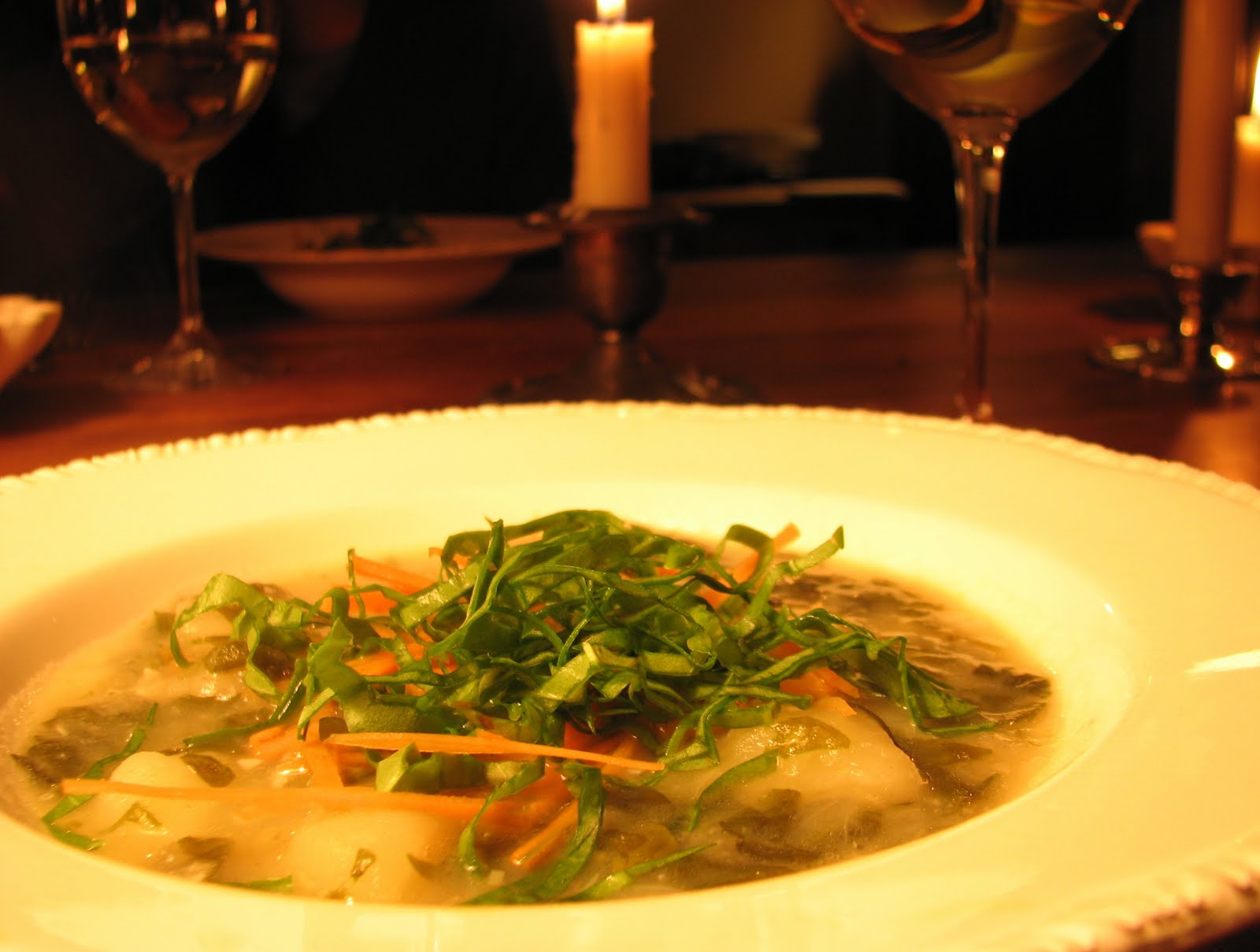


 With our oil lamp, a propane camp lantern, and strategically placed tea lights we’re sitting in romantically rustic lighting, a picture from more than a century back in technology, except that I am writing this on an Asus netbook, and Mary is reading Huckleberry Finn on her brand new Kindle, the electronic reader.


