Showing posts with label Wisconsin. Show all posts

Wednesday, July 10, 2013

A Midsummer Night's Smørrebrød


You don’t have to be Danish to appreciate smørrebrød, those open-face sandwiches—knife and fork sandwiches—composed upon dense, buttered rye bread, usually containing appropriately Nordic ingredients like pickled herring, beets, and pork paté. If you like bread, and noshy food in that tapas mode, you’ll like smørrebrød. As a summer evening meal it has the additional virtue that most of the toppings can be prepared ahead—or are themselves commercially prepared foods of the very best sort, like cheese, smoked fish, cured meats, etc. Finally, because finishing preparation is so simple, these mini-canvases beg to be decorated to the full extent of your garnishing imagination.


Bready. Noshy. Easy. Pretty. What, I ask, is not to like in that combination?


It’s usually this time of year, when we’ve just slipped past the solstice, and the gardens are really starting to produce, the market stalls are burgeoning as the plants make the most of that vital sunshine, that my appetite turns to smørrebrød. It’s an elegantly rustic (or is it rustically elegant?) kind of meal to enjoy in those long twilights as the strong sun softens on descent, spreading welcome shadows, and the heat of the day begins to mellow.


That pretty well describes the evening last weekend when we prepared a smørrebrød repast at the house and packed it in a cooler for a picnic on the hill. It was a bit warm and muggy in the valley, but we caught a nice breeze as we headed up the hill. I’d been cleaning up a little impromptu sort of dump at the edge of the woods this spring, hauling down old car batteries, car seats, beer cans and bottles, what have you. Then I ran the lawn tractor up there to mow a small picnic area. Among the detritus I’d found a piece of sheet metal and some cinder blocks, and these we turned to better purpose as a makeshift picnic table (pleasantly, though very rustically, reminiscent of a Parisian zinc bar). It was, I dare say, one of the best picnics ever.


We settled in very comfortably (so did the dogs, eventually) to enjoy the view of the green, green hills, mist-shrouded in the distance. The aspen leaves overhead kept up a  calming kerfuffle. There was even a floor show, of sorts, as the neighbor who rents our hayfield came to bale up the last few rows of the oats and grass they cut last week. Urban al fresco dining has its pleasures, but when was the last time you saw a John Deere tractor and baler on the Nicollet Mall?


As we ate our smørrebrød and sipped our pinot gris and watched the sun pass out of sight behind the western hills—though it would still be light for a couple of hours—I had a thought about terroir—you know, that idea that foods and wines can taste distinctly of the place they came from, express some quality of the soils in which they grow, the waters that sustain them, and the human cultures that have nurtured them through time. My idea had something to do with how a cuisine is shaped by the sense of the seasons experienced by the people who create it. And how, for us specifically and for northern peoples in general, our long annual journey from the abyss of winter’s frigid darkness to midsummer’s almost too abundant light and warmth, and back again, how this must have as great an impact on the savor of our food as the molds in the caves of Roquefort, or the chalky soils of Sancerre.


It profoundly affects what we eat, how we eat it, what we want to eat, and how we experience it in the context of the year. A midsummer picnic at 45 degrees north latitude must taste different from the same meal consumed in Florida or southern California; in those places, their own seasonal context would shape their experience of what they eat.  For me, high summer dining has meant that I’ve hardly wanted to look at a piece of red meat—give me vegetables, salads, simply prepared fish, cheese and bread. Oh, and maybe a glass of wine.


I made a small rye loaf that included a little birch syrup. You want a pretty dense bread, with a close crumb--not something like a baguette that's full of holes.  Then top to your heart's desire.  I don't let myself be constrained by any rules, but rather see the smørrebrød concept as the base for using the best of the local and seasonal.  One of my favorite, oft-repeated mantras--Ninety percent of good cooking is good shopping--is on full display here.  That is not to say, of course, that you should hie thee to a high-end supermarket, but rather that best ingredients make for best results.


The Superior shore was well represented in fresh herring from Cornucopia, smoked whitefish from Port Wing, cheese from Bayfield.  The Menomonie farmers market gave us snap peas, onions, beets, turnips, potatoes, and asparagus, and our garden contributed, too, with radishes, chives, and mustard greens.  There was a bit of home-smoked bacon in the potato and asparagus salad, and the yogurt cheese was home-cultured using wonderful fresh milk from just down the road.  Oh, and the mayo, also homemade, using eggs from our neighbor Tina's chickens, and Minnesota sunflower oil Smude.

On Wisconin! was surely the theme of this meal, especially as the sandwiches were literally presented on Wisconsin.  A more thorough description of the various toppin's below.


Smoked whitefish salad combined about four ounces of flaked smoked whitefish with roughly three tablespoons of peas—we shelled some sugar snaps—two ounces of Wisconsin hickory nuts, chopped and lightly toasted in a dry skillet. (The nuts were a generous gift from my buddy Lucas “The Beard” Madsen; hickory trees grow in his part of southeastern Wisconsin, though they’re scarce here. Other local, wild alternatives would be black walnuts or hazelnuts; a good storebought option would be pecans.) To the fish, peas, and nuts I added some sliced red onion and about three tablespoons of mayonnaise—homemade in this case, and for a dinner like this I think it’s really worth the effort. Garnish with a little more red onion and thin slices of sugar snaps.


I was inordinately pleased with my checkboard composition of roasted baby beets and turnips. The base was fresh yogurt cheese (with just a dollop of chevre added in for body, and flavor) mixed with chopped chives and lots of coarsely ground pepper. Lay down a good bed of the cheese mixture, and decorate to your heart’s content. You can leave the vegetables round and create a fish-scale effect. I really liked the geometrical drama of the squares—just cut straight down around the sides of each little beet or turnip, and then slicing across produces squares.


Asparagus and potato salad was originally going to be oyster mushroom and potato sauté, but the little critters had honeycombed my ‘shrooms, so it was Plan B, which was just delightful. The potatoes were preroasted (along with the beets and turnips). Wash and slice the asparagus bite-size.  Dice up some good bacon fairly coarse, begin to render, then add the asparagus. Then add a couple of generous pinches of caraway seeds, about half as much cumin seed, and…mustard seed! About a teaspoon. Add the cut-up potatoes to warm and brown just a bit, and absorb the other flavors. This I served atop a generous spread of that homemade mayo.


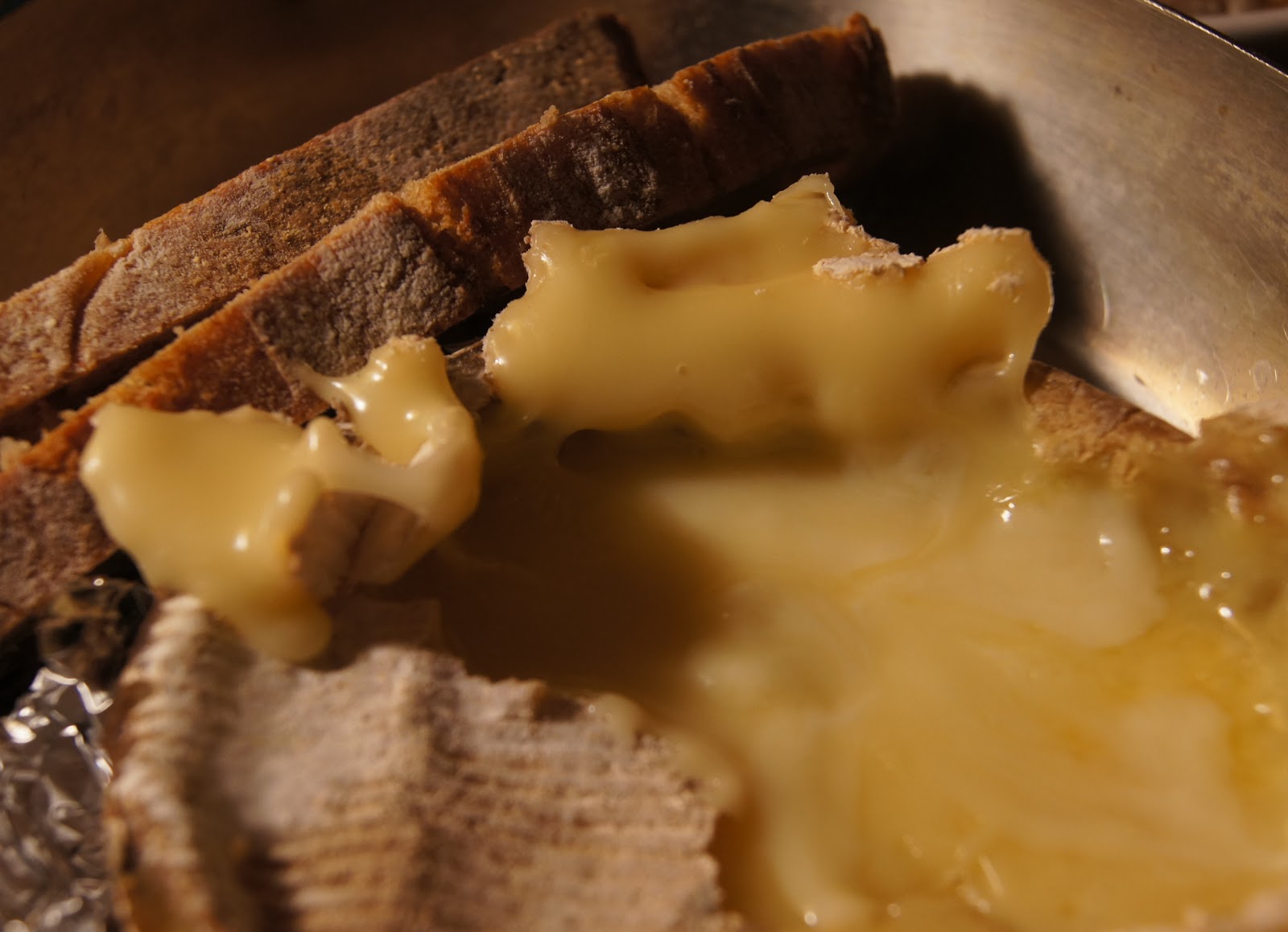
Brie and radishes. A study in simplicity and the wonder of felicitous combinations. This one was just delicious. The cheese was one you probably haven’t heard of, but of which I predict you’ll be hearing quite a bit in the near future. It was Happy Hollow Creamery's “Snowy Spring Brie,” which we picked up at Ehler’s store in Cornucopia on the shore recently. Happy Hollow lists a Bayfield, WI address. This cheese, beautifully ripened, was exquisitely flavorful. Not even terribly expensive. If you happen to come across it, just buy it. Their Lazy Daisy raw milk cheddar is also excellent. As I say, I predict you’ll be hearing more about these cheeses and this creamery. For the sandwich: butter, cheese, radish, pepper, boom.


Last but surely not least, grilled Superior herring atop mustardy mustard greens. I’ve said plenty about this superb fish, which never disappoints—we usually get it hours after it’s been caught, so that’s a good start. I’ll have more to say in a future post about the greens preparation, which combines oil, mustard or other strongly flavored greens, more mustard—a good, strong Dijon style—a bit of honey, some vinegar, salt and pepper. This is going to be a standard greens preparation at our house right through the summer and fall. Butter, mustardy mustard greens, a piece of grilled fish, and a radish flower—yep, radish flower, you knew? They’re a bit sweet and a bit peppery at the same time.


Partly what inspired us to climb the hill for supper was a story we heard on  WPR's new show 45 North .  Last week Anne Strainchamps interviewed the British adventurer and writer Alastair Humphreys , who has bicycled around the world, run a marathon in the Sahara, and rowed the Atlantic, and now (maybe because he's tired...) is promoting the idea of "micro-adventures," mini-excursions in one's own backyard.  He's encouraging people just to get outside, and outside one's usual comfort zone--just grab a sleeping bag, a sandwich, and a bottle of wine, and go sleep on a hill, look at the stars, watch the sun come up.  I think it's just a brilliant idea whose simplicity is at the heart of its brilliance, and while we retired down the hill with the last fading light to all the comforts of home, we did feel as if we'd been away for a while, even if our adventure was, literally, in our own back yard.

And the food, if I need to say it, was good to the last pea.


Text and photos copyright 2013 by Brett Laidlaw

Monday, December 10, 2012

Fresh


Having stooped to the depths of writing about avocadoes in this journal supposedly devoted to northern foods, it was probably in everyone’s best interests that I took a little break. The hiatus was not planned, just happened, as each time I considered a possible topic for a post, my inner editor said, “Meh.” I needed some fresh inspiration, and I got it from a road trip that Mary and I took up to the South Shore of Lake Superior (aka “The Cheesehead Riviera”; I just made that up...), destination Halvorson’s Fisheries in Cornucopia, Wisconsin.


There we watched the herring boats come in on a chill but beautiful afternoon. They had to break through a couple of inches of ice in the harbor—the trip was a preview of things to come, too, as our northward drive took us from the dusting of Dunn County snow to nearly a foot along the shore. We loaded a cooler with fresh off the boat herring—including several whole fish that yielded a pile of roe—along with smoked lake trout and whitefish. 


Lake Superior herring is an under-appreciated, misunderstood fish.  Its reputation suffers, I think, from its being confused with other fish known as herring to which it is not, in fact, closely related. The Lake Superior herring, Coregonus artedii, is more closely related to trout and salmon than it is to the saltwater herrings so well known in northern Europe. It’s a reasonable surmise that Scandinavian and German immigrants in the northland mistook this freshwater fish that schools in vast numbers for the ocean fish they knew from home—there are, indeed, superficial resemblances in size and color. And when you consider that for many people, their main association with herring is with the pickled variety, perhaps of indifferent quality, there’s a general reluctance to embrace the lake herring as the superb and versatile food fish that it is.


 As for the name confusion, lake herring is variously known as cisco, bluefin, and, where it occurs in smaller lakes, tullibee. There have been efforts in some circles to “rebrand” lake herring as cisco, but I doubt that is likely to gain much momentum—especially since I’ve seen smoked herring and smoked cisco resting side by side in the cooler case in lakeside fish shops over the years. There’s little consensus on what to call what, it seems, at least at the local level.  So I don't think the term herring is going away.  We just need to work on spreading the word about what a delightful fish it is to cook with.


Over the past couple of weeks I’ve prepared herring in a half dozen ways, and I’m still not tired of eating it. Last night a herring fillet went into a Sichuan-inspired dish with fermented vegetables and tofu in a hot bean sauce. On the our first night back from Corny, I simply fried fillets in a cornmeal dusting and served them with a crunchy, savory garnish of fried bacon, leek, and jalapeno, with a splash of apple cider beurre blanc. Other nights I fried chunks in a tempura-like batter for the best fish tacos I’ve ever eaten; broiled it and served it with a chile-laced mayonnaise; whizzed it up in the FP to make herring quenelles, fish dumplings that I served in a chowder-inspired sauce; and we snacked on the salted herring roe atop rounds of garden potatoes roasted in duck fat, with a dollop of sour cream.


That roe, by the way, is where the real money is for the Lake Superior commercial fisheries, Maureen Halvorson told me. Completing the ironic herring circle, it is shipped to Scandinavia, where it is considered a delicacy—even though it comes from a fish that does not exist anywhere near those northern European shores.

Here are a few more shots from our quick, fishy trip to Corny:

The beach at Corny, "The Cheesehead Riviera"


Cornmeal-dusted pan-fried lake herring with crunchy garnish, cider beurre blanc

It just occurred to me on this trip that they wear orange jumpsuits so they'll be easy to see if they fall overboard....


This was not the first time the three-hour drive to the South Shore was a time trip--that short distance often takes you to another season on the shore.


Waiting for the herring boats

Ice on the deck


The South Shore herring fishery is thriving; Halvorson's added another boat this year, bringing the fleet to four.

"...in the rooms of her icewater mansions...".


Text and photos copyright 2012 by Brett Laidlaw
Monday, October 22, 2012

Quel Fromage! (Warm Rush Creek Reserve with Coal-Roasted Vegetables)


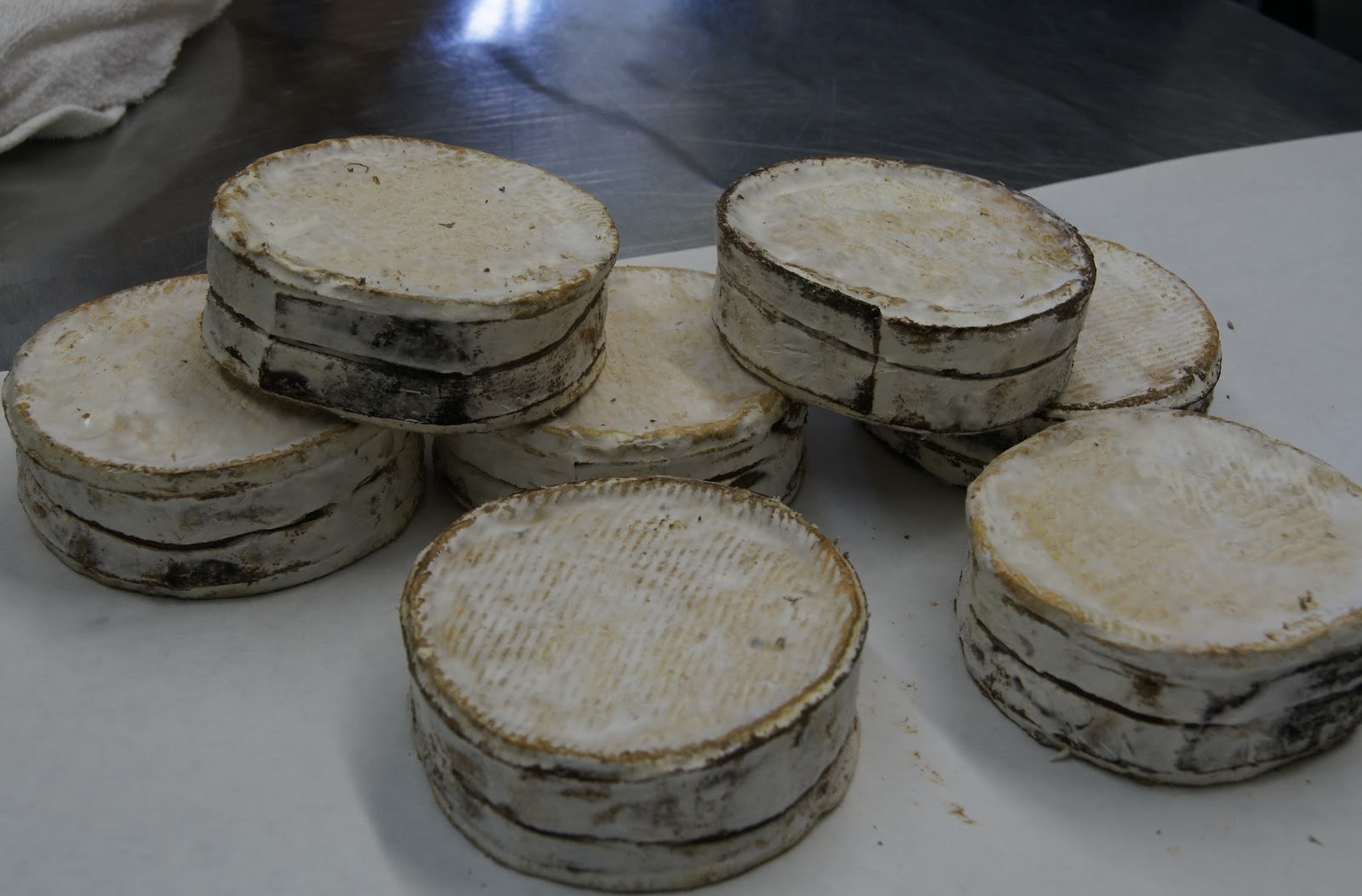
This is one from the "90 percent of good cooking is good shopping" file.  Serving a warm Rush Creek Reserve, the soft, young, raw milk cheese from  Uplands Cheese Company in Dodgeville, Wisconsin, with roasted vegetables wasn't even my original idea--I got it from the Big Cheese himself, Uplands's head cheesemaker Andy Hatch.  I was fortunate to be invited on the Cheese, Spirits, and Brews Tour sponsored by the Wisconsin Milk Marketing Board  last week, and while I wasn't able to join the group for the first couple days of the four-day tour, I lucked out in being able to visit two of my favorite Wisconsin cheesemakers, Uplands and Crave Brothers,  near the town of Waterloo, last Thursday and Friday.  It was a really inspiring--and delicious--couple of days, about which I will have more to say in the near future.  For now, let us simply delight in the wonder that is gooey cheese:


Really my only contribution to this utterly satisfying repast--other than being able to recognize a great idea when I hear it--was to build a fire and roast the vegetables in the coals, giving them some very appealingly rustic char and complex flavors of smoke and caramelization.


The cheese was the star (even if it didn't stand alone...), molten when we started to eat, cooling through a spectrum of flavors and textures as it gradually congealed--and even at the end we were scraping bits off the bottom of the dish.  The roasted vegetables and good bread were the perfect companions--the turnips were especially good, sweet, soft, and just a little bit pungent.  The beets were also lovely.  Cornichons were too tart for this sweet-tempered cheese, although it carries a bit of its own tang.  Apple was also out of place here; I think slices of pear might have gone well.


Produced from raw milk in late summer, Rush Creek Reserve is a seasonal cheese.  Aged for just under the legally required 60 days before being shipped, this washed-rind cheese continues to ripen in the store or in your fridge, and Andy Hatch said it's at its best for the next 30 days.  The interior becomes softer in that time, the aroma stronger--but I've had a Rush Creek Reserve aged past 90 days, and it never became as assertive as something like a Muenster or Epoisses.  The cheese we ate was fresh out of the gate, released on October 17.  I'll be looking to pick up another one in the next couple of weeks to see how it develops over a month's time.


To cook the vegetables--leek, potato, carrot, little onions, squash, beet, and turnip--we just wrapped them in foil and nestled them into the coals.  You don't have to wrap each vegetable individually--we did a couple small potatoes together, three small turnips lined up and foiled together, big beet cut in half and both halves wrapped in one sheet of foil, etc.  Turn every 10 minutes or so, and use your asbestos fingers to give the packets a squeeze for tenderness when you think they're getting done.  And do note that you want a nice bed of glowing coals, not a raging fire, which will burn the outside of the vegetables before the inside is cooked.  Of course you could simply do your vegetables in the oven, tossed with a bit of oil and roasted until nicely brown and tender.


To warm the cheese, we baked it, the bottom wrapped in foil to keep it from all melting away (a precaution which proved unnecessary), at 300 for about 20 minutes.  That gave us quite molten cheese to start with, and if this somewhat Cheez Whiz-like consistency offends any connoisseurs, I make no apologies.  The flavors of the cheese still came through, and the fragrance of roasty vegetables and richly flavorful cheese produced a kind of aroma-therapy of a very delectable sort.

Rush Creek Reserve at the factory, ready to be wrapped; each cheese is bound with a strip of spruce.

I purchased this particular cheese at the Driftless Depot , a delightful market, deli, and café in Spring Green, just a few miles up the road from Uplands.  If you're visiting Wisconsin's enchanting driftless area, this is the place to fill your picnic basket.  (Am I sounding a little like the southern Wisconsin tourist board?  Well, chalk it up to the convert's zeal, and be assured that my enthusiasm is heartfelt and warranted.)


The Uplands website has  a map showing where to buy their cheeses, which seems not very complete or up-to-date, as it shows only three sources in the Twin Cities, and I know it's more widely available than that.  Check with your local cheese store or co-op.  Rush Creek and Pleasant Ridge Reserve are also available on-line direct from Uplands.


Text and photos copyright 2012 by Brett Laidlaw

Wednesday, July 18, 2012

Midsummer 2012


There's a beautiful soaking rain falling in the Hay Creek valley of northern Dunn County this morning, after overnight storms brought us a blessed half inch.  We have not seen the kind of severe drought that southern Wisconsin--and much of the Midwest--has suffered through this summer, but it had been pretty dry since mid-June.  More than that, it has been hot, and muggy.  The heat has had us feeling like we've been under siege--you just try to get through it, get done what needs getting done, and little more.  They're talking about this kind of summer weather becoming "the new normal."  Well, normal is as normal does, I suppose, and what's to be done?  Even if the whole world smartened up tomorrow and put all possible effort into mitigating the human impact on climate change, I don't imagine the effects would be felt for quite some time--and it does not appear that we're going to smarten up, anyway, but rather, dumben down, if I may coin a phrase.  It seems lame to say that we're going to have to get used to it, but that's where I wind up.

I remember hot, sweltering summers from when I was growing up in Eden Prairie, a southwestern suburb of Minneapolis, nights when I couldn't stand to even have a sheet over me, and the still humid air weighed like wet wool.  But I recently went online and looked at some weather data from summers in the early 1970s, and while I found lots of 90-degree days in those summers, what was remarkable was the dewpoints (a term I don't think we even used much then, so it must have been figured retroactively from relative humidity readings).  Most of the dewpoints on those hot days gone by were in the upper 50s, while the tropical weather we've seen this summer has brought day after day of dewpoints in the upper 60s to mid-70s.  It used to be kind of a joke, that "it ain't the heat, it's the humidity."  No joke anymore.

As uncomfortably hot and sticky as this summer has been, I must say it has Mary and me feeling pretty good about our decision to move to the country.  Our house does not have central air, just a window AC unit in our bedroom, which we have used exactly one night this summer.  Yep, in a record-breaking summer we've run the AC just once.  On all the other nights it has cooled off sufficiently to make sleeping comfortable with only a fan running.  That's the effect of being outside the urban heat island, and at the bottom of a valley.  I had a book event in the Twin Cities one hot day in June, an evening talk at a bookstore, and as I got in the car to drive home, around 8:30, the car thermometer read 87 degrees.  It stayed there until I passed Woodbury, heading east, when it dropped to the low 80s.  The other side of the Saint Croix River, it fell into the 70s, and by the time I reached home the number on the dash read 66 degrees.  Granted, it had gotten dark in the meantime, but the temp in the cities was still in the 80s after 10:00 p.m.  Even on the hottest days, it seems that the temperature drops around ten degrees as soon as the sun falls behind the trees on the west side of our house.  The sweltering days are a bitch, but the cool evenings and mornings make it tolerable.

Still, this summer has felt like a bit of a slog.  We worry about the dogs--well, we worry about senior griffon Annabel, who turned 14 this summer, and never has liked the heat.  I water our new gardens nearly every day, and still a second planting of carrots and lettuce just burned up before they could get their roots to cooler depths.  I've spent fewer days on the trout stream than I have since the day I first picked up a fly rod more than 20 years ago.  I hardly saw the shady side of the woods from mid-June to just a week or so ago.  But things are starting to look up.  This morning's rain gives a chance to take a deep breath, reflect a bit, and look ahead.  It's less than a month and a half until September; I think we'll make it.

The chanterelles came in early again, which would seem to be another example of that "new normal."  And already we have blackberries, a good two weeks ahead of when I usually expect them.  I'm experimenting with black walnuts, since our new old house came with a big old walnut tree in the back corner of the yard.  As I was circling around under that tree looking for nuts, it occurred to me that you get to know a tree in a totally different way if you harvest from it.  Looked at from a distance, an apple tree is an apple tree is an apple tree.  But when you get in there to clear the brambles from around it, take out dead wood, water sprouts and extraneous branches, you really get to see the shape and structure of the tree.  When you climb up in one to prune or pick apples, you really develop a relationship with that tree, odd as that may sound.  Our black walnut tree had always struck me as an attractive tree, but spending a while in its atmosphere gave me an entirely new appreciation of it--the grandeur of its size, for one thing, but also the grace of its slightly drooping branches, the plume-like shape of its exotic-looking leaves and leaflets. It dropped a filigreed shade around it, and exuded a stately calm. The tree came alive for me; it is now a presence in my mind as well as on our little homestead.

To harvest any nuts, I had to employ the apple picker--that's how high the lowest branches start.  I'm pickling a jar full, and will steep some in Everclear with spices to make the liqueur that the Italians call nocino.  Here's an indicator of our peculiar microclimate:  our walnuts are still soft enough to cut with a knife here on July 18.  Just a little bit south of here they've been hard as rocks for at least a couple of weeks now.

It appears that the wild blackberry crop will be excellent this year.  That's what I originally sat down to write about this morning, but I had a sort of déjà vu all over again feeling that snuffed out all enthusiasm.  I'm into my fifth year of writing this blog, foraging, gardening, hitting the markets, cooking, and eating in the same place, more or less.  All the same stuff comes in at pretty much the same time, and I start to get this creeping feeling, Haven't I said this before, and before, and before?  Does anybody want to read this perennial rehash?

It's not that I've lost enthusiasm for foraging, or for the foods themselves.  Far from it:  so excited was I to see a good number of ripe berries on the blackberry canes yesterday that I spent a good hour and a half out in the heat of a stiflingly hot and humid day to pick a shy quart, and take pictures--and had to put the camera away when I noticed I was dripping sweat all over it, a 3-T-shirt day....  I'm imagining all sorts of fun new things to do with the berries this year.  It's just the conveying of that enthusiasm that needs some refreshing, I think.  Perhaps a new angle is called for, a fresh perspective. I'm not sure right now what that might be.

For the moment, I'll just say that there are few more satisfying ways to start the day than with a beautiful bowl of yogurt and berries with a lashing of maple syrup, such as in the photograph that heads this post.  It's one hundred percent local, and a splendid collaboration:  the yogurt was cultured here at home from Connorsville milk (the Bartzes' Bolen-Vale Farm), blueberries from our neighbor Tina up the hill and across the state highway, raspberries (wild, I believe) from our Otter Creek friends Don and Joni, our Bide-A-Wee blackberries, and syrup from Brook's Sugar Bush (mailing address Downing, but I think they're actually closer to Connorsville).  To me that's an inspiring, as well as delicious and healthful, way to start the day.

I sense a lot of anxiety in the air these days, and it's not just the suffocating humidity.  There's the poisonous political climate, international turmoil, economic worries that drag on and on, and then we've all got our own personal burdens, small in the context, perhaps, but plenty big in their immediate impact.  I'm grateful for this cool, gray, rainy morning and the opportunity to sit back and sort of parse things out, step out of the just getting through it, and see a brightening ahead.  That's the report from Near North Wisconsin, midsummer, 2012.

Thursday, July 12, 2012

Oil From Pumpkins


The idyllic western Wisconsin countryside we now call home is a magical place, so perhaps it’s no surprise that amazing things happen here.  There are world-class cheeses produced on modest farms, the hills become flush with morels, then chanterelles in their season, and crystalline spring creeks vivid with trout thread through the lush valleys.  In one such valley two inspired men (with a little help from their friends) are squeezing oil from pumpkins, creating a product not merely distinctive for this region, but rare in the whole U.S.A.  Ken Seguine and Jay Gilbertson are the visionaries behind  Hay River Pumpkin Seed Oil, which has been on the market since December 2006.

Pumpkin seed oil is a product well-known in Europe, particularly Austria, but when the first bottle of Hay River oil hit the shelves in 2006, it was the first
bottle of American pumpkin seed oil to hit the shelves, period.  I’m aware of at least one other company now producing pumpkin and squash seed oils, but it is still a fairly exotic ingredient in the American pantry.  Once more people learn about it, they’re going to like it.  It takes a little getting used to, since it is unlike any other oil we commonly use, but it is both approachable and versatile.  Think of it in the same vein as a high quality extra virgin olive oil in terms of how you might use it; now forget all about olive oil.  This uniquely fragrant oil is nothing like that.

The story behind the oil is as remarkable as the product.  Ken’s from suburban L.A., Jay’s from Eau Claire, and they were living in the Twin Cities when they started looking for a home in western Wisconsin to be near Jay’s parents in 2001.  It took nine months of looking until they found “our picture of heaven,” in Ken’s words.  (Another factor in their move to the area was the siren song of Roberts and Cash—that is, our friends Don and Joni of Otter Creek Growers, previously stewards of Elsie’s Farm, a near legendary endeavor that introduced many Twin Citizens to the wonders of this green, rolling land.  But not us; we didn’t really get to know Don and Joni until we started coming out to Bide-A-Wee. Along with Don and Joni, Ken also acknowledges local farmers Kate Stout and Mike and Patty Wright-Racette for helping them to get started.)

Once they were living in the country, the path to Hay River oil wound its way through their interests and experiences in an unpredictable but, in the end, undeniably organic fashion.  Ken was a life-long gardener with a plant science education, both Ken and Jay were extremely interested in sustainable foods, and they had encountered pumpkin seed oil via Ken’s one-time employer, Horst Rechelbacher—that’s the Horst, of the Aveda company, a native of Austria.  With no American pumpkin seed oil in production at the time, there was clearly a hole in the upscale oil market, and they decided to fill it.


For several years they tested a variety of “naked seeded” oil pumpkins, looking for the best match for the climate.  A trial pressing of their chosen variety took place in 2005.  “At every turn, we've had to invent our own way. Being the first pumpkin seed oil produced in the U.S. meant that there simply was not anyone to tell us what to do or warn us about the pot holes,” Ken wrote in an email.

The growing is the easy part, according to Ken:  “After all, they’re pumpkins, not orchids.”  And the oil, he said, practically sells itself, as well.  Keeping the whole endeavor very local, the seeds are processed by Botanic Oil in Spooner, WI.  Harvesting is probably the hardest part.  For the first few years everything was done by hand: “Very pleasant, very communal, very cool and very expensive.”  Twenty to forty people gathered for these great pumpkin emptying parties.  


When Mary and I encountered Ken and crew last fall they were in the midst of a maiden run with a new, custom-built harvester that wasn’t working very well.  Ken was cordial and smiling when we stopped on a drive to see what strange things were happening in that Barron County field on a choice October day, but he later told me that much cursing had preceded our arrival.  The custom machine was temperamental, and slow; they’re now looking in to buying a European-made harvester.

Ken Seguine and crew harvesting pumpkins


Now about the oil.  Maybe start with the color, which is remarkable.  The Hay River website describes it as dark red, but it can also appear to be a striking dark green, depending on the light and whether you’re looking at a thin or thick layer of it.  This phenomenon is called dichromatism.   Perhaps it has to do with red and green being complementary colors, which is also a factor in red-green color blindness, with which your faithful correspondent is blessed.  But still I have no trouble appreciating the beauty of the oil’s color; to me it appears mostly to be a deep forest green.  The color makes it a splendid choice for garnishing pale, contrasting foods—we’ve used it on polenta, and drizzled on poached eggs.

Polenta with pumpkin seed oil, pan-seared Superior whitefish

The way the seeds are processed contributes to both the color and the aroma of the oil:  the seeds are toasted, then cold-pressed.  The toasting lends a nutty fragrance and flavor, but there’s still a fruity component to the scent.  I’ve often found a simpatico between the smell of chanterelles and that of a fresh sliced pumpkin, and I get some of that in the oil’s aroma, too.  It’s one of the things that led me to concoct the salad below.  As dark as the oil is, you might expect a real noseful when you take a sniff, but it’s subtle, much milder than sesame oil, which can easily take over a dish.  The tempered insinuations of Hay River oil make it much more versatile than I would have thought.  It threads through a salad and nicely blends with the other flavors, while providing a uniquely silky unctuousness.  I wouldn’t splash it into every salad I make, but then, I wouldn’t do that with a really expensive olive oil, either.

Raw squash, celery root, and apple salad with pumpkin oil dressing 


Which brings us to the price.  At nearly $20 for a 250 ml (8.45 ounce) bottle, it’s certainly on the spendy side.  But a little does go a long way, and for adding unique, local flavor to my cooking, I’m happy to keep a bottle on hand (Ken and Jay did give me one bottle to experiment with).  Ken hopes that scaling up production and making the processing less labor intensive will help to bring down the price.  Cooking and salad oil have been one glaring lack in the pantries of those of us trying to keep our food as local as possible; with Hay River pumpkin oil and Minnesota’s Smude cold-pressed sunflower oil, I’m on the verge of phasing out canola, and I’m using way less olive oil than I used to.  I get really excited to see these kinds of products come on the market, and I feel extremely grateful to people like Ken and Jay and the Smude family, true visionaries, for making them available to us.


Ken suggests using the oil drizzled over squash soup, lightly salted as a bread dip, or even on vanilla ice cream—I’ve not tried the latter, but it sounds intriguing.  In a salad dressing made with pumpkin oil, I think the usual proportions of three parts oil to one of acid would be overwhelming.  In the dressing for the chanterelles and green bean salad below, I went one to one, and still the pumpkin oil flavor was pronounced, very pleasantly so.  Maybe the best way to describe the flavor of this oil is to say that it’s assertive, but not aggressive; so it won’t take over a salad made with tender spring greens, but can stand up to stronger flavors, like wild mushrooms, or beets.

Hay River Pumpkin Seed Oil is pretty easy to find in the Twin Cities and western Wisconsin.   See here for exact locations.


Shaved Chanterelle and Haricots Verts Salad with Raspberries and Pumpkin Seed Oil Vinaigrette

Except for the salt, this salad is one hundred percent local, and with chanterelles and pumpkin seed oil, it combines two of the most distinctive flavors I know.  A total whim based entirely on seasonal convergence and my own personal association of chanterelles and pumpkins, it is a splendid blend of contrasting and complementary flavors, aromas, and textures.  If you don’t have a really good cider vinegar, rice wine vinegar might work, or try a bit less sherry vinegar.  The raspberries provide bright flavor and lovely color.  I used small wild red and black raspberries.  Chanterelles are unique among mushrooms in nearly every respect, but I suspect that a firm cultivated mushroom, like shitake, might work; or perhaps oysters?  Worth a try. This is a keeper.

Serves two

4 medium chanterelles, about 2 ounces total
2 teaspoons unsalted butter
20 small haricots verts
1 tablespoon minced shallot or sweet onion
Salt
2 tablespoons raspberries
Chervil for garnish, optional

Dressing:
1 tablespoon pumpkin seed oil
1 tablespoon cider vinegar
¼ teaspoon maple syrup
Pinch salt
Coarse sea salt

In a small saucepan blanch the beans in boiling water for 1 ½ to 2 minutes.  Drain and refresh under cold running water. Drain and set aside.

Place each chanterelle cap side down on a cutting board and slice very thinly through the stem end to the cap.  Melt the butter in a medium skillet over medium heat and add the chanterelles and a pinch of salt.  Toss the chanterelles in the butter for about a minute, then add 3 tablespoons of water, cover the skillet, and cook for 2 minutes.  Remove the lid and add the shallot or onion, and continue cooking over medium heat until the water has evaporated.  Cook for another minute, then remove the chanterelles from the pan into a mixing bowl.  Add the beans to the mixing bowl, as well.

Mix the dressing and spoon it over the chanterelles and beans.  Mound the salad on small plates and garnish with raspberries—a perhaps 8 per person.  Sprinkle a bit of good coarse sea salt--like sel de Guerande, fleur de sel, or Maldon--over top.  Add a sprig of chervil if you have it.  It is the prettiest of the herbs, I think.


(Disclosure:  Jay Gilbertson, a novelist, reviewed my cookbook on Amazon.com; the review was also printed in the Hay River Review and the Dunn County News.  It was pretty much a dream review, for which I am extremely grateful, and might seem to be beholden, except that I was a fan of Hay River oil well before the book or review appeared.)


Text and photos copyright 2012 by Brett Laidlaw