Showing posts with label root cellar. Show all posts

Thursday, January 14, 2016

Simply Superior Soup (or "Effing French Cooking Magic")


It’s the last week of December 2015 as I (begin to) write this, 2016 looming just days away, and for cooking options we are decidedly into the winter larder.  On December 6 we were amazed to eat, and very much enjoy, the last garden tomato.  The last leaves of fresh kale were part of a festive Christmas dinner:  seared venison loin (harvested from the Bide-A-Wee property last year) with a rich, savory red wine and port reduction; lima beans simmered with stock and aromatics, then pureed, a surprisingly luxurious result from a humble dried bean; then the kale, braised with chestnuts and garden leek, a splash of our homemade cider vinegar.  Though we haven’t really celebrated Christmas in any traditional way for some years, I’m not going to let an opportunity for a festive dinner go by.  And anyway, we think of it as a continuation of our solstice festivities—especially appropriate here, as Mary’s birthday occurs during the same time.

Once those last leaves of kale vacated the crisper, dinner planning turned a page.  It’s true that there’s still quite a bit of “fresh” produce, from both garden and farmer’s market stock-ups, in our cellar, in the fridge.  But the term fresh doesn’t really mean the same when applied to storage carrots, cabbage, squash, and onions, as it does when describing a handful of beans or a bowl of tender lettuce harvested from the garden to be prepared and served minutes later.  Those winter stand-bys are fresh in the sense of not being frozen, dried, pickled, fermented, etc., but…you know what I mean.  It’s not the same as throwing dew-dappled snap peas in the wok or snipping fragrant dill into a dressing.  Our vocabulary fails us in efficiently denoting that crucial difference:  there’s fresh produce, and then there’s fresh produce. 

This is not to disparage the stalwart vegetables of winter, not at all.  Like reliable character actors, they show up and fill their roles with unfailing professionalism, year after year, decade after decade, while the fad for arugula fades, or a trendy heirloom cucumber turns out to be just another pickle, after all.  Cabbage, potatoes, carrots, squash, onion, leek, turnip, beets--the roster might at first glance suggest daily supper at the gulag:  bung it all in a kettle, boil until done.  But there’s a saying I like (and as far as I know, I came up with it), goes like this:  There’s meat, and then there’s cooking.  Which is to say:  It’s not always only about the ingredients, but often as much or more about imagination and skill in preparation.  Today’s soup, which we had as a first course on Christmas night, is a perfect example.

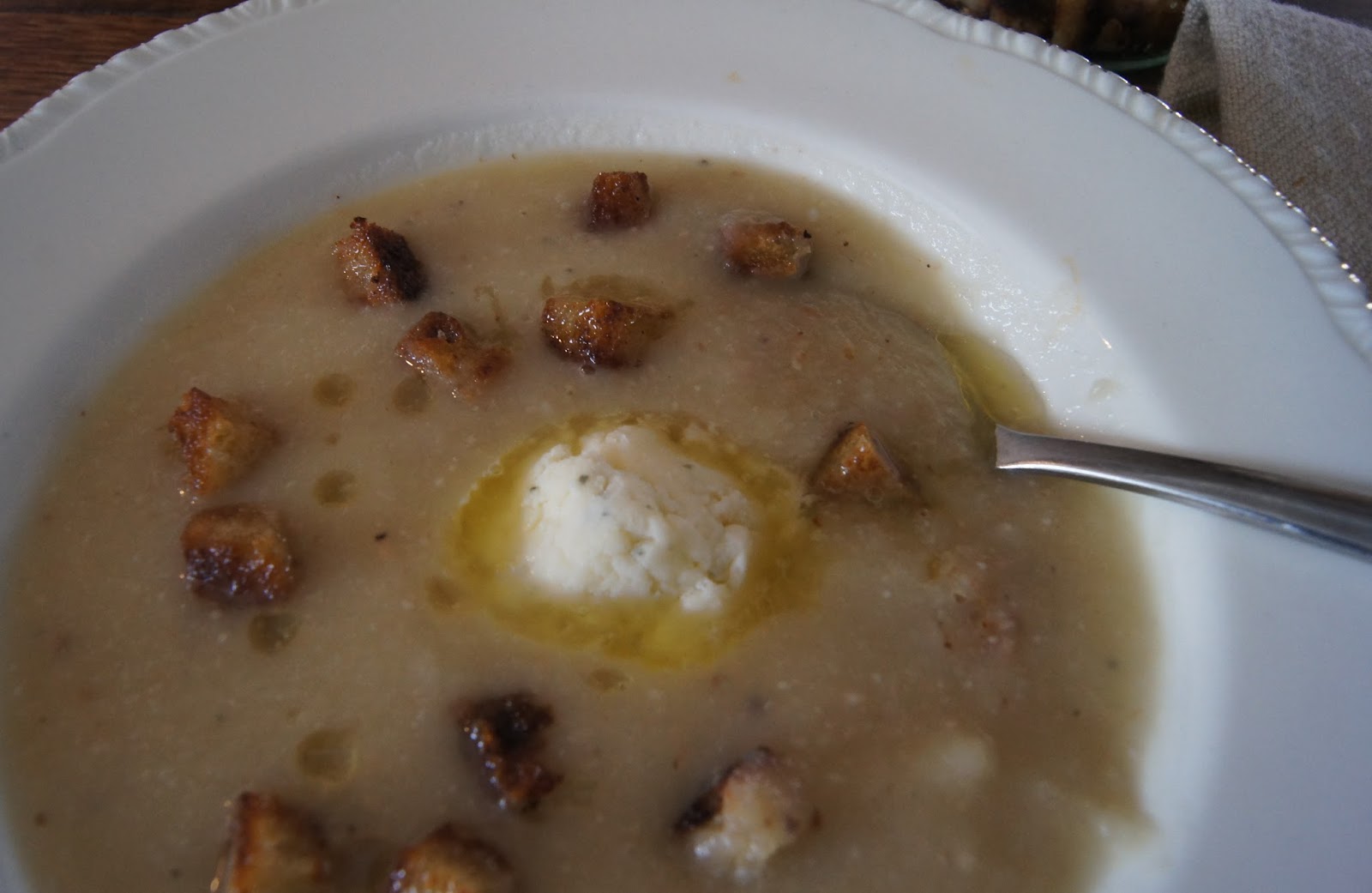
If it hadn’t come with a sexy French name, I might never have tried it.  Puréed cabbage and potato soup sounds, you must admit, a good deal less appealing than Crème de Choux aux Beurre de Roquefort.  The source is Madeleine Kamman’s In Madeleine’s Kitchen.  There are three remarkable and surprising things about this recipe:

1)  In spite of the cream—crème—in the title, there’s no cream in the soup.
2)  In spite of the fancy-sounding title, the list of ingredients is short and plain.
3)  In spite of the short, plain ingredient list, the resulting soup is delicious, even luxurious, the result of “Fucking French cooking magic,” as I described it, enthusiasm overwhelming decorum, in a tweet.


There are a couple of secret ingredients:  walnut oil, and confit fat.  But I think you could do without those if you don’t have them, substituting good butter for the confit fat, olive oil for the walnut oil.  However:  if you haven’t tried French walnut oil, it is well worth seeking out.  A commonly available brand, and the one we always buy, have even brought back from Paris in the past, is J. Leblanc.  It’s pricy, but a little goes a long way.  For me, a salad of fresh tender lettuces straight from the garden, dressed with nothing more than walnut oil and a bit of fleur de sel is one of life’s simple luxuries.  But I’m getting ahead of the season.  Just one more note on the walnut oil:  the French stuff is made from lightly toasted walnuts, so it’s amber in color and has that nutty fragrance and flavor.  The golden walnut oil often sold at “health food stores” and co-ops is not the same.  The French walnut oil should not be used for cooking, only dressings and seasoning.  (NB: the English name is in small print on the bottle, so you’re looking for a bottle labeled “Huile de Noix,” as above.  For Mpls/St Paul readers, Cooks of Crocus Hill carries it, but are currently out of stock in all stores.)


The basis of the soup is potatoes, cabbage, and water.  It gets a smoky depth of flavor from bacon.  Not a lot of bacon, either, less than an ounce per person in Kamman’s recipe (she actually calls for pancetta).  No cream or milk, as noted above.  No stock, just water (you can call it Chateau Sink, as Jacques Pepin sometimes jokes, or perhaps Domaine du Tappe, to French it up).  There’s a bit of garlic, whose presence is felt.  The beurre de Roquefort is simply blue cheese and soft butter mashed together, a few grinds of coarse black pepper—a simple compound butter; it’s worth making extra, for it’s nice to have around, to smear on a burger, say.


And that, my friends, is it, the ingredient list in its entirety.  You gently render off small cubes of the bacon or pancetta, add potatoes and garlic, then the cabbage.  This sweats for a few minutes (“mellows,” in M Kamman’s version), then you add water and simmer until the cabbage is very tender.  The well mellowed vegetables and bacon are then whizzed up in a blender (I used a food processor, carefully spooning out the solids, adding liquid gradually; an FP is really not the best appliance for pureeing soups, I’ve learned from bitter experience).


And get this:  it suffers not at all from being made a day ahead and reheated just before serving.  On Christmas Eve I added a little crunchy garnish, chopped goose skin cracklings—yeah, I happened to have some lying around; don’t hate me because I’m beautiful—from the goose we cooked for our first solstice celebration.  When I made it again for lunch I toasted some small croutons in olive oil—it’s really about the textural contrast, that crunch to perk up the creamy soup.  (See:  "It's all about the garnish".)


Coming back around to my earlier point and seasonal eating and the winter larder:  this is a fabulous dish that you would never make in the summer, but which is perfect for the cold months when, you know, you have a lot of potatoes and cabbage around.  It also reminded me how absolutely lovely and civilized it is to start a meal with a soup, so elegant and yet so comforting.  A fading tradition I hope to start reviving in our house.

My adaptation of Madeleine Kamman’s recipe:

Creamy Bacon, Potato, and Cabbage Soup with Blue Cheese Butter

Serves four as a first course, two to three as a main course—add salad and crusty bread to make it a meal

2 ounces bacon or pancetta, preferably in one chunk
1 tablespoon duck confit fat or butter
1 medium or 2 small potatoes, 6-7 ounces total
1 large or 2 small cloves garlic
¼ of a green cabbage, about 12 ounces
1 tablespoon walnut oil, plus additional for garnish*
Salt and freshly ground black pepper

For the blue cheese butter:
2 ounces unsalted butter at room temperature
2 ounces blue cheese

Croutons or cracklings, optional but highly recommended

In a small bowl, mash the butter and blue cheese together with a fork until well blended.

Cut the bacon or pancetta in small dice, about ¼-inch.  Peel the potatoes and cut them into smallish cubes, about ¾-inch.  Shred the cabbage into ½-inch strips.

Heat a medium saucepan and add the confit fat or butter, then the bacon.  Cook over medium-low heat.  As the bacon renders its fat and begins to brown, add the potatoes, tossing them in the fat, then cook, stirring occasionally, until they become a little bit brown, 4 to 5 minutes (you’re just looking for a golden color, not deeply browned as for hash browns).  Stir in the garlic and cook for another minute or two, then add the cabbage, a couple generous pinches of salt, and several grinds of black pepper.

Turn the heat to low, cover, and let the cabbage sweat (“mellow” is the term M Kamman uses) until well wilted, about 5 minutes.  Add 3 cups water, bring to a boil, turn down to a simmer, and cook partly covered until the cabbage and potatoes are very soft, 15 to 20 minutes.

Let the soup cool for a few minutes before pureeing.  If using a food processor, separate the solid from the liquid parts of the soup and purée the solids first, then gradually add in the liquid.  When everything is in the FP, purée for about a minute.  At the end of the minute, drizzle in the walnut oil.  Return the soup to the saucepan.  Reheat just before serving.  (Note:  Kamman directs you to strain the soup back into the pot after puréeing; I did not bother with this step, finding the soup smooth enough to my taste without straining.  Straining would no doubt produce an even more velvety and elegant purée, if that's what you're after.)

To serve:  heat the soup and taste for salt; you will probably want to add another pinch or two.  Ladle the soup into bowls, and to each add about a tablespoon of the blue cheese butter.  Add croutons or cracklings, as you please, drizzle a small amount of walnut oil over the surface of the soup, and serve.

*If you don’t have/can’t find walnut oil, use a flavorful olive oil—or, perhaps pumpkin seed oil, such as Wisconsin’s own Hay River Pumpkin Seed Oil.  And, how about this—if using pumpkin seed oil, think about substituting butternut squash for all or part of the potatoes, then garnish with toasted pepitas instead of the croutons/cracklings.

Happy soupage!

Saturday, May 2, 2015

Celery Root Buttermilk Rampoulade


Seasonal eating in the North Country in spring often involves a collaboration between the root cellar and the first wild greens.  So it was with this version of celery root remoulade spiked with pungent chopped ramps.


Nothing fancy, a simple roster of ingredients.  While my standard celeri remoulade uses sour cream, the buttermilk employed in this version brings a tangy lightness--and combined with the onion-garlic-chive flavors of the ramps, it creates a sort of ranch dressing feel, but subtle, even elegant.


Celery root requires a lot of cleaning up to be presentable.


Using the medium-fine side of a Microplane box grater produces delicate celery root snow--neige de celeri, bien sur!


Chop the ramps fine, including a little bit of the green.


Mix it all up.  A squeeze of lemon juice perks it up and brings all the flavors together.  It's good when made at least a few hours ahead, so the flavors blend.


Celeri buttermilk rampoulade

serves 2 to 3 

4 ounces trimmed celery root
2 good pinches salt
6 tablespoons buttermilk
1 tablespoon mayonnaise
A squeeze of lemon juice
3 ramps, white, red and a bit of the green, finely chopped

Grate the celery root fairly small--the medium-fine side of a Microplane box grater is ideal.  Add all the other ingredients and mix well.  Taste for salt.  Allow to sit in the fridge for a few hours before serving; it can be made a day ahead, too.

This salad is our standby with steak tartare, of late.  It also accompanies smoked fish nicely, and would go well with anything off the grill.


Saturday, February 4, 2012

A Winter Salad by Any Other Name


What shall we call the shreddy salads of winter, the festive haystacks that make the most of root cellar holdings, long-keeping fruits, and the squashes of our season?  Slaw fails the task, too burdened by associations with perfunctory and over-dressed deli/burger/picnic sides.  A celeri remoulade is a lovely dish of shredded root, denizen of every traiteur's cold case, but the remoulade refers more to the dressing than to the shards of celeri-rave.

One thing I've found:  the more I eat with the season, the more I want to eat with the season.  We used to pick up a head of red leaf lettuce on nearly every weekly grocery trip, but eventually our enthusiasm for those often leathery leaves shipped in from warmer climes waned.  Local hydroponic greens are a reasonable choice, but one that doesn't excite my palate much, these days.  I've become more inclined toward broadened ideas of salad, and the shredded type tops my list.  This particular one here, of Benriner-ed squash, celery root, and apple, has become a regular in our shreddy salad rotation.


The squash really is the key, and if you're thinking, "Raw squash...?", well, so was I.  Would it taste too squashy, or gluey.  Let your dubious heart be comforted--neither is the case.  I've made this with kabocha and...something else.  A small hubbard type, I think.  I think any hard winter squash would work.  Butternut, for sure.  The drier types, like buttercup, maybe not so much, but I could be wrong.  The raw squash really has quite a mild flavor, especially in this combination of more assertive tastes.  What it does provide is texture, an al dente quality that is almost more pop than crunch--very intriguing, extremely refreshing.


If you are very, very good with a knife you can do this by hand.  I used the medium blade on my  Benriner mandoline--every kitchen should have one.  But watch your fingers!  I shredded up roughly equal amounts of squash, celery root, and apple.  I mixed up a dressing of cider vinegar, a little honey, oil, salt and a wee bit of pepper.  I've been keeping it really local with my oil choices this winter, too.  This is becoming easier since local sunflower oils from small producers have started showing up, like those from Smude and Driftless Organics  .  I love the Smude oil--it's light in texture, but it has a definite presence, and is excellent in salad dressings.  I haven't tried the Driftless Organics product.
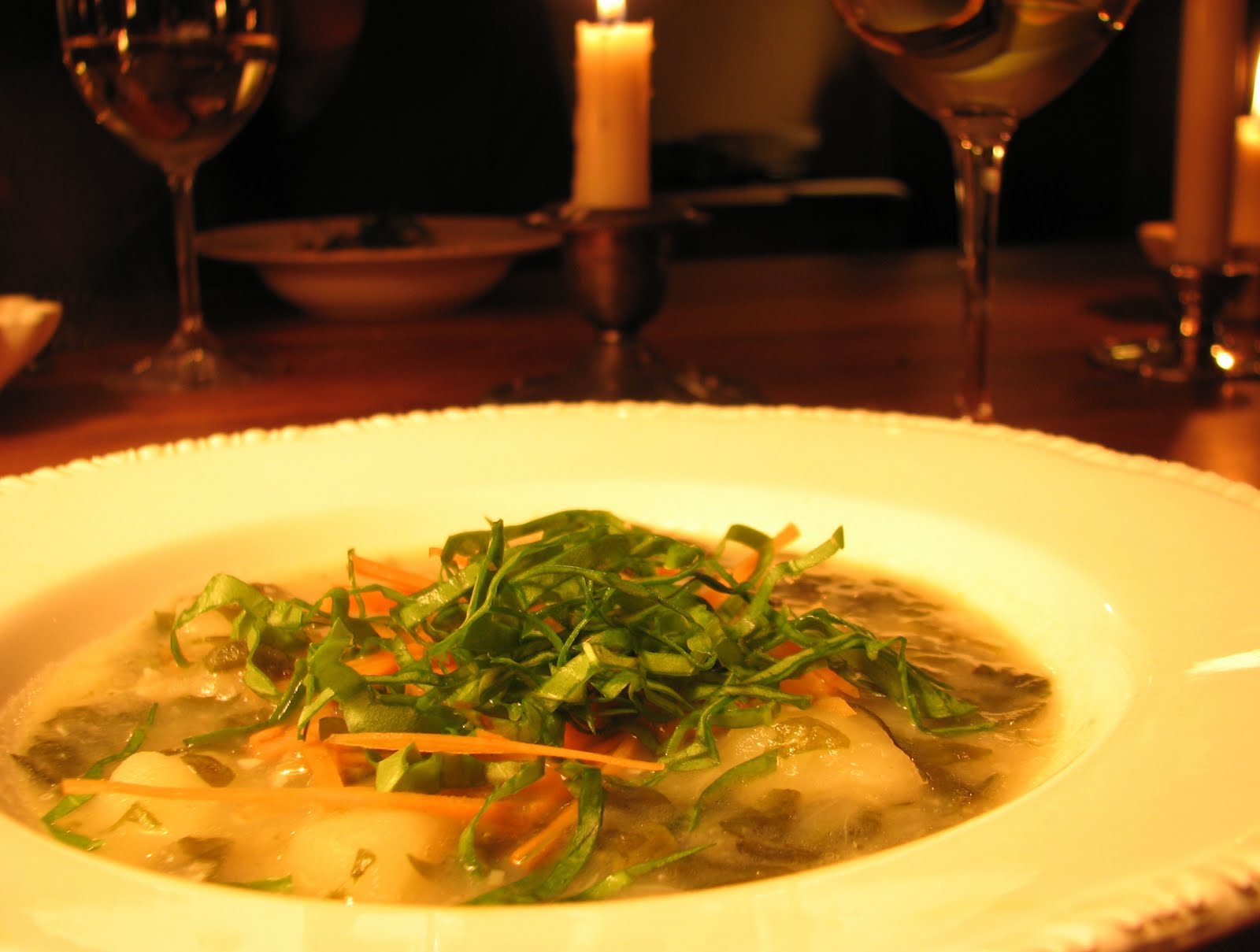
There's another local oil, a more specialized product, which I have

mentioned recently, and which is produced over in beautiful west central Wisconsin by a very cool couple of guys, Ken Seguine and Jay Gilbertson--that's Hay River Pumpkin Seed Oil. The salad pictured here was made using that oil. It has a teasingly nutty aroma, a bit like sesame oil, but less in-your-face. Much more on Ken and Jay and their pumpkin seed saga to come.

I don't really miss the leafy salads that were so delightful in the warmer months. Soon now I'll be starting lettuce seeds in flats, and moving them to a sunny window. In this mild winter March will likely provide the first wild green spriglings of dandelion, sheep sorrel, and cress to fill out a salad of lettuce thinnings, and it will only get better from there. Until then I'm going to enjoy my shreddy salads, my root cellar raw spaghetti, whatever you want to call it. But if you've got a better name for it, please do let me know.


Text and photos copyright 2012 by Brett Laidlaw

Wednesday, January 18, 2012

Smelt Po'boys with Wild Remoulade Sauce


We've been in eat-out-of-the-freezer mode for a couple weeks now.  When there's not enough space in the freezer to chill your martini glass, you know something has to be done.  I'm not really a hoarder of stuff, in general, but I am something of a pack rat when it comes to food.  My refrigerator is a pickle museum; I curate a jam and jelly collection there, as well.  Apparently I have a horror of endings, for I keep jars that contain a half-inch of blackberry preserves, one lonely cornichon, some scraps of fermented vegetables.  Sometimes I find jars of pickles entirely absent of pickles, nothing left but the brine.  And then, frighteningly, I'll return that jar to the fridge, thinking, hmm, there was that pickle brine rye bread recipe someone sent me eight years ago, maybe I'll make that....

As for the freezer, that's more of an archaeological situation when it comes to determining what's in there, scraping back through layers of time, discovering freezer burned trout frames, sacks of berries of dubious provenance.  I swear to god, I recently pulled out a zip bag containing a frozen block of something, and in the space where you note the contents, it said "SOUP?"  That got tossed.

But there's good stuff in there, too.  A lot of the very best fish we eat comes frozen, believe it or not.  On our trips to the South Shore of Lake Superior we always stock up on fresh fish at Halvorson Fisheries in Cornucopia. Sometimes the fish is frozen and vacuum-packed there, and sometimes we bring the fresh-off-the-boat lake trout, whitefish, and herring home and freeze what we won't use fresh.


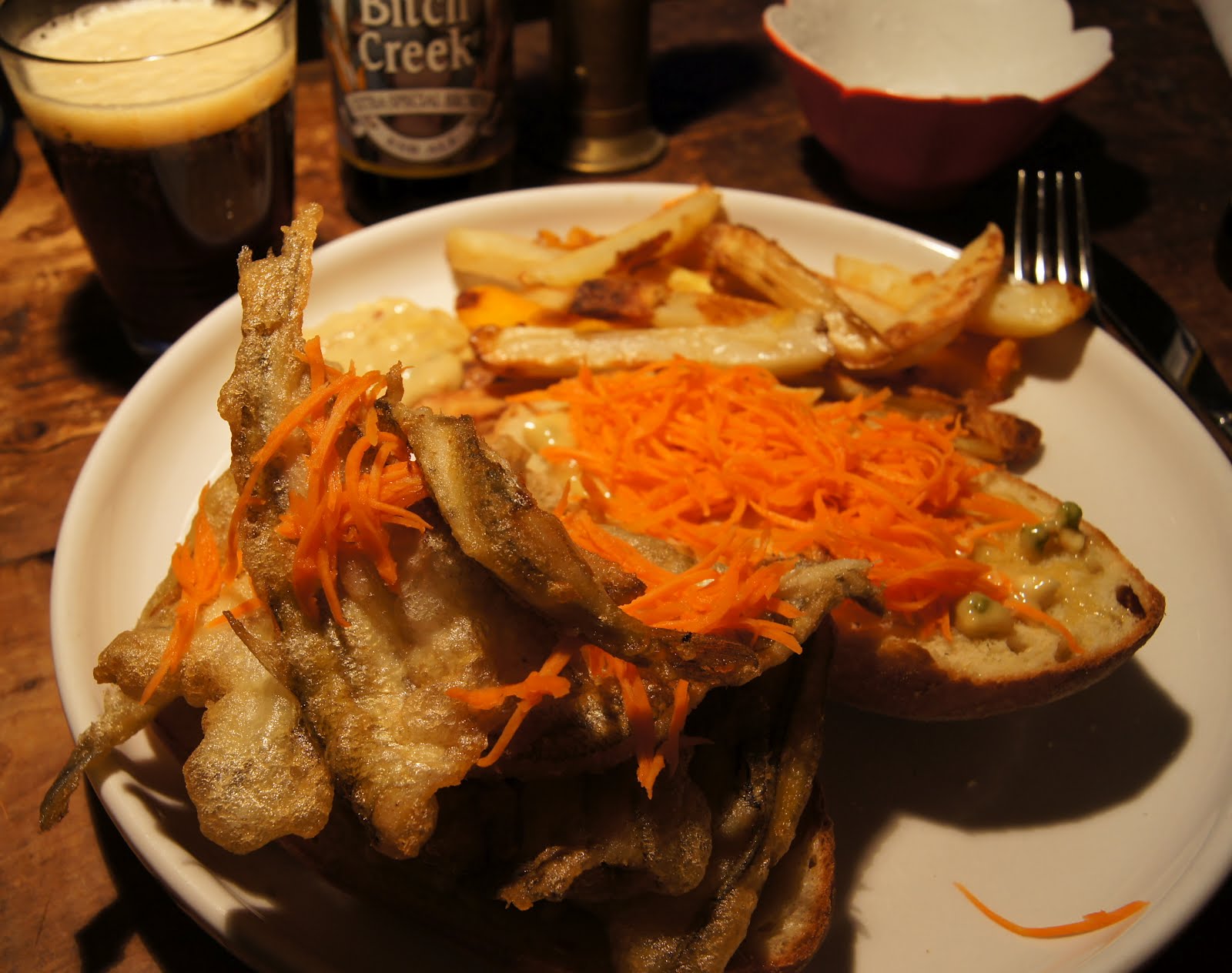
So in our freezer clean-out mode, courtesy of Halvorson's, we've recently had burbot bourguignon (eelpout in red wine, by another name), fish tacos also made with burbot (an intriguing freshwater cod that Amy "Sourtooth" Thielen writes about here ; I'd really like to get up to the Eelpout Fest this year). And our last frozen fish from Corny was a package of smelt that had been in the freezer for at least a year, so I had my doubts as it thawed, but you know what? Here's what: Fish that is packed absolutely fresh, and properly frozen, and kept frozen, is great even a year later. The vacuum-packing provides no opportunity for freezer burn or staling. The smelt had very little "fishiness" to them; rather, they had a cucumber-y, watery scent like some oysters have. Their fate was to be dipped in a light tempura batter, fried, and served on homemade rolls with a remoulade sauce perked up with chopped pickled ramps and salted milkweed bud "capers" on a north-meets-south po'boy. We don't do a lot of deep frying, but a few times each winter we'll fry up fish or shrimp for po'boys or tacos. It makes for a fun and summery meal, most welcome in the depths of January.


It's a joke around our house that writing a cookbook is a rather elaborate way of organizing one's recipes, but damn handy once it's done. There's truth in the gag, too--putting together this meal, I made the buns from the Cornmeal Honey Butter Bun recipe (p. 120), shaping oval buns of about 5 ounces of dough.


The remoulade started with a batch of mayonnaise (p. 219), to which I added some mustard, worchestershire, finely diced celery root, salted milkweed buds, and chopped pickled ramps (p. 224). The tempura batter is in the Walleye Taco recipe (p. 165). And alongside we had Oven-Fried Roots (p. 192)--potato, celery root, and mystery pumpkin (yes, I know, pumpkin is not a root; but it cooks up sort of...rootish).


The beer, Bitch Creek Extra Special Brown, was an impulse buy purchased for all the wrong reasons--because it's from the Grand Teton Brewing Company, and Mary used to live in Jackson Hole, in the shadow of the Tetons; and Bitch Creek is a famous western trout stream, and there's a fly pattern named for it . In spite of that, it was excellent--deep, dark, toasty, and bitter (as I poured out the last few drops to rinse the bottles this morning I got to thinking of beef short ribs braised in Bitch Creek ESP, lots of leeks and onions, maybe a dash of cocoa, some allspice...).


We still haven't made much of a dent in the freezer inventory, and chances are that some day soon I'll get it in my head that I can't go another week without a piece of grilled lake trout, a plate of Herring Milkweed Meunière (p. 171), and I'll hit the road for the South Shore, returning with a cooler full of fish, most of which will go in the freezer.

Hey, I just remembered, there are still some whitefish livers in there. Now, if I can only find them....

Text and photos copyright 2012 by Brett Laidlaw

Thursday, March 31, 2011

Winter's Last Soup

  Sometimes I plan my cooking, and sometimes I just cook what's thrown at me. Case in the latter point: carrot apple soup. Things turned rather hectic around here last fall, and organization of the root cellar sort of fell by the wayside. We store our root vegetables in a large crawlspace cum dirt-floored cellar, separate from the rest of the basement. We call it "The Dungeon," kind of a creepy place, lots of spider webs, dank. But it keeps a temperature in the mid-40s through the winter, pretty much ideal.

Into this dungeon/root cellar last fall I unceremoniously shoved a couple of boxes containing potatoes, garlic and shallots, and a bin of carrots. When I needed any of these things, I would go down with a flashlight and rummage around, quickly, for the required vegetables. I don't like spending more time in there than I have to. If I wanted a carrot, I would just grab one off the top of the bin, and vamoose. At a certain point, a few weeks back, I noticed the carrots becoming kind of...grotty, I think is the word. Some were sprouting, some rotten at the core, some generally slimy. But there seemed to be a lot left, and quite a few still good, so I eventually had to screw up my courage and address the situation.

I pulled the whole bin out into daylight. I regarded it a bit askance, one eye half closed, pretty sure I was not going to like what I saw. And...

...And it wasn't that bad. I probably deserved to punished for my poor management of root cellar resources, but I dodged the bullet on this one. It took a good half hour to trim and clean up the salvageable carrots from the bin, and when I was done I'll bet I had around fifteen pounds of nice, sound, sweet carrots. And since the weather here continues soup-worthy, that is what I did.

I was afraid of the soup becoming too sweet, so I paired the carrots with some tart apples we had in storage (those are just about done, and the apple trees will soon be blooming). I had also thought to finish it with buttermilk, but the carrots were not ultra-sweet, the apple tartness really came through, and it wound up needing rounding off more than tarting up. So I stirred in a little cream at the end.

I’m not sure if it’s a  positive or negative that the finished soup looks and tastes remarkably like a luxe version of Campbell’s tomato soup. The sweet carrots and tart apples create an amazing trompe-bouche tomato effect. The garnishes are inspired, if I say so myself. The carrot and shallot shreds reprise flavors already in the soup, the cheese and garlic bring different depth and richness. I'd recommend using one of the other. Both would be over the top, I think, but maybe that wouldn't be a bad thing. If you don’t want to make it fancy that way, just drop some croutons in--or crumble on some saltines.


Carrot Apple Soup
Serves four as a starter, two as a main course

1 shallot sliced
4 1/8-inch slices ginger
2 cloves garlic crushed
1 ½ teaspoons canola or grapeseed oil
3 ½ cups excellent chicken or vegetable stock
2 small tart apples, peeled, cored, and chopped (1 1/2 cups)
3 medium carrots(12 ounces), peeled and chopped (1 ½ cups)
¼ teaspoon salt
3 sprigs thyme
1 small clove garlic, minced
1 teaspoon minced fresh ginger
Freshly ground black pepper
¼ cup heavy cream

Garnish #1:

½ a small carrot, cut into fine shreds or grated
1 small shallot, sliced very thin
2 tablespoons olive oil

Garnish #2:

1 clove garlic, minced
¼ cup grated swiss or gruyere cheese

Cook the sliced shallot, ginger slices, and crushed garlic in the canola oil over medium heat until they take on a good bit of color, four to five minutes. Be careful that the garlic does not burn. Add the stock and bring to a boil. Simmer partly covered for 30 to 40 minutes. Strain the stock and discard the vegetables. You should have at least 2 ½ cups of liquid left. Add stock or water to make up the difference if too much has simmered away.

Return the stock to the saucepan. Add the carrots, apples, thyme, minced garlic and ginger, salt, and a few grinds of black pepper. Bring to a simmer and cook covered until the carrots are very tender, 40 to 45 minutes. Let the soup cool for ten minutes or so, then puree it in a blender or food processor until it is very smooth. Pass it through a sieve or food mill back into the saucepan. Add the cream, and reheat gently just before serving. Taste for salt.

For garnish #1: Heat two tablespoons olive oil in a small saucepan. Add the shredded carrots and cook until they become shrunken and a bit brown. Remove them from the oil. Add the sliced shallot and cook until lightly browned. Remove from the oil, reserving the oil. Place a spoon of the carrots on top of the soup, and a spoon of shallots on top of that. Drizzle some of the olive oil around the edges.

For garnish #2: Place a half teaspoon of minced garlic and a couple tablespoons of grated cheese in the bottom of each bowl. Place the bowls on the table, and--carefully!--ladle the very hot soup into the bowls. The aromas of garlic and cheese released by the hot soup will make your guests swoon.


Text and photos copyright 2011 by Brett Laidlaw

Thursday, February 17, 2011

Escabeche, A Pretty Little Pickle


We're safely past the midpoint of February, and the big thaw continues. I'm hoping to be able to pluck the first wild watercress of the year this weekend, and getting some seeds started--for leeks, head lettuces, cabbage--may be optimistic, but not out of the question.

The root cellar continues to provide carrots, squash, potatoes, parsnips, leeks; from the freezer, tomatoes, wild mushrooms, corn; the fruits of my fermentations still give us sauerkraut, red kale/kimchi/seaweed, and sour beets. It's all good, and a good variety, when you look at it. Nothing could tempt me to indulge in asparagus or green beans, from the grocery store. For one thing, it wouldn't be an indulgence--those spring and summer veg in winter always taste weird to me. (I'll confess a weakness for guacamole, though; the avocadoes have been really good lately.)

What I start to miss this time of year is the freshness, the brightness of vegetables straight from the garden or market. The braising pot is my dear friend, but now and then my teeth need a workout, my palate needs a jolt.

Enter the escabeche: I'm sure I use the term quite loosely. It's generally applied, I think, to fried fish added to a vinegary marinade, then cooled. Or it may mean the marinade, per se. Which may include vegetables, or not. For me it's a quick hot pickle, eaten immediately, though it will keep. (Something about the word itself makes me think of fast: Vite, vite! Pronto! Escabeche!) It is particulary good with fish, like this trout with springtime escabeche of ramps and asparagus.

And then the other night we were preparing to broil a couple of Lake Superior herring fillets that would be served with a mildy hot chili oil vinaigrette (I'm cravin' a lot of spice these days), and I wanted something fresh and crunchy and tart.

Down to the basement for a carrot and a parsnip. Cuisinart makes a rare appearance: into the tube, slicer attachment installed, a carrot, a small parsnip (both peeled), a large clove of garlic, a small red onion.

Dump all that into a small saucepan, add about three tablespoons of olive oil, half that of cider vinegar, and some chili--I'd been soaking some lovely chilies kept from the market last summer, Red Rocket, I believe, so I added one of those, chopped. You could crumble in any dried red chili, heat to suit, or add a teaspoon of sambal. A grind of black pepper, good pinch of sea salt.

I just brought that up to a boil, turned off the heat, covered the pot, let it sit until we were ready to eat. It was just the thing against the soft and flavorful fish napped in my piri-piri style sauce (I made that recipe with olive oil, using half the amount of oil called for).

The pickle will keep a few days, and it was good with a chicken sandwich. The vegetables can be whatever's on hand--celery or celery root, fennel (a fave), green beans sliced, and I imagine an apple wouldn't be bad in this, at all. The piri-piri sauce will keep a while, as well--it was originally made to dress the grilled chicken that wound up in the sandwich....

Keep 'er rollin'.


Text and photo copyright 2011 by Brett Laidlaw

Thursday, January 20, 2011

Just a Nice Shreddy Salad, Sparked Up with Green


I'm pretty close to a final list of recipes for the cookbook, which has me looking back to the early days of Trout Caviar (three years old now!). Where once the old standards appealed to me (and often still do), I find that I want to put a bit of a twist on things--and not inadvertently steal somebody else's recipe, just as important.

Céleri remoulade, the classic celery root slaw you find in virtually every French traiteur (like a Super-Deli), became a favorite the first time I ate it. It only suffers from being so...white, white shreds mixed with sour cream and mayonnaise, a polar bear in white tux and tails in a snowstorm. A sprinkling of paprika on top is a bit like lipstick on the pig, not really fooling anybody.

Perusing the produce section of the Seward Co-op for local greenery, I was drawn to a beautiful bunch of watercress from LaBore Farm in Faribault, MN. Chopping a handful into the dressing gave some green relief to that too-pale salad-scape, and a bit of pungency, and made the recipe my own. Also, in place of the usual sour cream, I used goat milk yogurt--a delicious switch. This salad really benefits from sitting for at least a half hour, one hour, better, before serving.

I've made a similar preparation using parsnips instead of celery root, and that was good, too. The parsnip seemed drier than the celery, so up the dressing amounts.

Celery Root Watercress Remoulade
Serves four as a first course

1 medium-size celery root, 9 to 12 ounces untrimmed, 6 to 8 ounces trimmed
2 pinches salt
juice of 1/4 small lemon

Grate the celery root medium to coarse, or shred it on a mandolin. Toss the shreds with the salt and lemon juice, and let sit 20 minutes. To the celery root add:

2 Tbsp mayonnaise
2 Tbsp goat milk yogurt (or sour cream)
A handful of watercress, stems and all, finely chopped, 1/3 to 1/2 cups
freshly ground peppper to taste
salt to taste

Mix it all together and let sit for at least 30 minutes before serving.

Cue up the Amélie soundtrack, and open a nice cotes-du-rhone.

Tuesday, January 11, 2011

Pizza Pizza


Now, I realize that this is a really, really stupid thing to say, but I'm going to say it anyway: We are nearly halfway through the winter!

I know what you're thinking--Gohhrr! 'E's daft!--that sort of thing. You're thinking that we just barely passed the solstice, there are still many weeks of white ahead. But bear with me: The solstice, December 21, is the start of astronomical winter, but meteorological winter started on December 1. That's, what, 42 days ago. Meteorological spring starts on March 1--48 days from now. So in three days, on Friday, January 14, we will reach the halfway point of winter. How's that for a TGIF treat? And when we get to March, you know what? Here's what: The average high in the Twin Cities on March 1 is 34 degrees! That's above freezing folks! Hooray for melting!

To celebrate, let's have some pizza: Another midwinter fact I'm grateful for is that a recent perusal of my produce selection shows that we're holding up pretty well in most areas. I still have fresh kale from our garden in the fridge--picked that a couple of weeks ago, and it's still in excellent shape. There's probably more out there, under the deep layer of white, under a couple of blankets, if the mice and rabbits haven't found it. We have loads of nice carrots, garden leeks in the the extra fridge downstairs, local celery root from the co-op, potatoes a'plenty, shallots, garlic, onions, parsnips, and squash.

Man, do we have squash. Last fall we were eating a lot of squash, stuffing it, roasting it, grilling it, gratin-ing it. It seemed we could not have enough laid by to last us the winter. I kept seeing serve-yourself squash stands in rural Wisconsin, and I was unable to pass them by. A lot of those squash went bad weeks ago--I expected that. Some had clearly been frost-bitten (those four-for-a-buck-ones from a help-yourself field), so I used those first, and the rest went rotty. But by now the ones that are sound should be good for the rest of winter (which is almost over, anyway...). And though we went off them for a while, I'm happy to get reacquainted.


If you do start to get sick of the repetitive winter veg routine, pizza is a great way to liven things up. Everything's better when baked fast and hot on tasty bread (almost as if you put it on a Ritz, right, Mme. Ed.?). These two winter-veg-topped pizzas are inspired combinations, though I say so myself.

The kale and blue cheese is something of a stand-by for us. I used to toss some currants on it, or chopped dried figs. This time I got the idea to use dried apples, because I have this idea that in many applications, one dried fruit is as good as another, and our dried apples are free and local. But when I chopped up a few, they seemed a bit dry, and tasted not so sweet. So I tossed them with the product of another recent brainstorm: Maple syrup-cider vinegar reduction. I was trying to come up with something that had the mellow, sweet-and-sour flavors of aged balsamic vinegar. This is not that, but it's very good in its own right. It is a bit mellow, it is sweet-and-sour, but the flavors really come at you, whereas in an aged balsamic I think they kind of coddle, reassure, and then gracefully retreat. This stuff is excellent to glaze grilled meats or vegetables, and it did the trick to moisten and soften the dried apples that I put on this 'za.


Some of them got very dark in the oven, almost burnt, not quite. Those charry pieces tasted remarkably like crispy bacon bits--Bide-A-Wee Bac~Os! The kale came up beautifully crisp, the blue cheese just oozed on down--great. It's important to toss the kale with oil, maybe a half-hour before baking. It will actually absorb a bit of the oil, and start to break down in volume, making it easier to keep atop the crust.

For the squash: I've made this twice. Both versions have been good, neither has been perfect. I think the third time will be the charm. First time: I sliced the squash very, very thin on my Benriner, but I left the slices pretty big, and I completely covered the crust with them. I suppose I was thinking of some potato pizzas I've seen and made. Well, the squash got nicely browned, and those very thin slices cooked just the right amount, but the full coverage sort of smothered the crust, it was a bit wet under the squash, tasted sort of steamed. The bottom of the crust was nicely crisp, so it held together and was good, but there was room for improvement.


Second time, last night: I didn't bother to cut the squash slices as thin, as I planned to cut the strips thinner, and not completely cover the crust. Again, a good result, but the thicker (still, not more than 1/8-inch) squash pieces, though they cooked nicely, did not become as brown as I would have liked. So, next time I'll combine 1 and 2, and I think that will do the trick.

Oh, and both times I added the goat cheese partway through the baking, fearing that it would all melt and run all over the place if I put it on at the start, but now I don't think that will be a problem. I would put it on with the rest of the toppings, and that's what I suggest in the recipe below.

In the next couple of posts here I'm going to carry on from pizza to hot dogs, then a really great burger--simple, happy food to keep our spirits up as winter makes that big turn toward spring....
But have you noticed, the sun is really warm now, when it's out. Which, today, it's not, and it's...snowing...of...course....

Whatever happened to the Little Caesar's mascot, the little dude in Roman togs? Roman toga. Toga togs. Pizza pizza. Cute.

And hey, just for fun, let's do the local audit: kale, leek, and chili, our garden; apples and maple-vin redux, Bide-A-Wee trees; squash from a farm on the banks of the Upper Kinnickinnic; garlic from Evan up near Turtle Lake; Minnesota cheeses, Donnay chevre, Saint Pete Blue; Smude sunflower oil on the squash; crust made from North Dakota, "Dakota Maid" flour and a little Whole Grain Milling (MN) whole wheat bread flour.

Not local: olive oil, salt, pepper, yeast.


Pizza Dough, "Poolish" Method (a poolish is a yeast sponge which somewhat approximates a sourdough)
Makes two approximately 12-inch pizzas, fairly thin crust

1 cup warm water
1 tsp active dry yeast

Stir the yeast into the water and let stand for about five minutes. Add:

3 Tbsp whole wheat flour (we like Whole Grain Milling's whole wheat bread flour)
3/4 cup unbleached all-purpose flour

Mix well, then cover the bowl with plastic wrap and let stand for several hours or overnight.

1/2 tsp salt
1 1/2 Tbsp olive oil
Additional unbleached all-purpose flour, around a cup

Stir the salt and olive oil into the poolish. Add unbleached flour a bit at a time to make a soft but workable dough. Knead for a couple of minutes. Leave it alone for 10 or 15 minutes. Then knead again for a couple of minutes, adding flour as needed, till the dough is nice and smooth. Let rise for 1 1/2 to 2 hours at room temperature, or refrigerate, then remove from the fridge an hour before you plan to shape it.

To shape the crusts, divide the dough in half. Form each half into a ball. Flatten the ball into a disk. You can now use a rolling pin, or just your hands, to extend the disk into a 12-inch crust. Do not hurry. Let the dough be your guide. Gradually roll, stretch, toss to flatten and broaden the dough. When it resists, leave it alone for a few minutes. Pour yourself a glass of wine. Go find your dog or cat and a tell her what a good dog/cat she is, yes she is, isn't she just a yummy snookums doggums/kitty-cattums yes she is! Wash the dog/cat goo off your hands. Stretch the dough a little more. You're almost there. Okay. My work here is done.

Place the dough on a cornmeal-dusted baking peel (if you're using a baking stone) or baking sheet (if no stone). Brush with olive oil, and let rise for 30 minutes or more, until the dough is looking puffy. Top and bake as below, or use your imagination and whatever's in the fridge.

Kale, Apple, Blue Topping

8 medium leaves kale, tough lower stems removed, washed, spun, sliced 1/2-inch thick
1/4 cup chopped dried apples, roughly 1/3-inch pieces
3 cloves garlic, sliced very thin
3 ounces blue cheese, crumbled

Toss the kale with 1 tablespoon of olive oil, and let sit 30 minutes. Mix the apple pieces with 1 1/2 tablespoons maple-vinegar glaze (*see below), and let sit at least 30 minutes. Stir the apples occasionally during this time.

When you're ready to bake, distribute the garlic slices evenly over the crust. Add the apples and glaze to the kale. Pile this on top of the pizza--it will look like too much, but the kale will reduce dramatically. Dot the blue cheese over the pizza. Bake at 550 (or your oven's top temp) for 5 to 7 minutes, until the crust is brown and the kale looks crispy, but not burnt.

Squash, Leek, Goat Cheese Topping

6 ounces butternut squash, a roughly 3- by 3-inch chunk from the solid top part, peeled
1 small leek, white and light green part, well washed, sliced thin on the diagonal
1 small dried red chili, seeds removed, crushed
salt and black pepper
1 Tbsp oil, sunflower, olive, or grapeseed
3 ounces fresh soft goat cheese, "chevre"

Slice the squash very thin, less than 1/8-inch--use a mandoline if you have one. Cut the slices into 1/2-inch strips. In a large bowl, toss the squash with the leeks, chili, a few grinds of pepper, a couple good pinches salt, and 1 tablespoon oil.

Just before baking spread the vegetable mix over the dough, and dot the goat cheese around evenly. Bake on a stone in a 550 oven (or as hot as your oven will go) for 7 to 9 minutes, until the crust is nicely brown and the vegetables are browned on the edges.


_______________________________________________________

*To make the maple-cider vinegar reduction, combine ½ cup maple syrup and ½ cup apple cider vinegar in a saucepan. Bring to a boil over medium heat—watch the pot constantly as it comes to a boil, to avoid boil-overs. Cook over medium-low heat—vigilance, again, is necessary to avoid a sticky mess—until reduced by half. Once cool, store in a small glass jar in the fridge. Use to glaze grilled meat or vegetables, or to add to salad dressings for a sweet-sour jolt. Or spoon it over vanilla ice cream, or into a baked apple.

Tuesday, November 30, 2010

Provencal Sunshine


I tend to think of the golden, garlicky glory that is aioli as a summer dish--a glistening bowl of it surrounded by raw or crisp-blanched vegetables straight from the garden, or a pungent spoonful melting over a piece of grilled chicken. But when I whipped up a batch recently, and served it with root vegetable oven frites (parsnip, celery root, carrot, potato), then with roast beets and sliced red onion, a sprinkling of toasted walnuts, I found a whole new appreciation for that grand emulsion.


Indeed, mixed-root oven fries with aioli is my new favorite dish. With summer vegetables, the bright flavors of aioli are almost redundant. But with the deep, caramelized, earthy, both sweet and savory flavors of the roasted roots, the aioli is a perfect match and counterpoint. With the beets, something similar occured, though less profound. There the garlic and the lemon tartness mellowed the dirt flavor of the beets, and tempered the sweetness. I owe the inspiration for that salad to our friend Tata, whose Russian version uses grated beets mixed with loads of oil, mayonnaise, chopped garlic and walnuts.


That steak wasn't bad, either, nice pan-roasted porterhouse with a red wine-shallot sauce, and when the sauce bled into the aioli on the plate, well, that was something rather special, too.

And maybe it seems silly to pay homage to a single egg yolk, but I do believe that the Blue Gentian Farm egg that went into that aioli made it one of the best I've ever made. That, and the wonderfully sharp, sweet garlic that we got from a young farmer named Evan (didn't get his last name) near Turtle Lake.

Beets, Menomonie Farmers Market, red onion from Morgan and Ben, walnuts, well, probably from California. We're local, but we're not dogmatic. I really like walnuts.

And in parting, let me offer a couple of aioli-mayo tips, recently discovered though I've been whipping together oil and eggs for years. I use 3/4 cup of oil to one egg yolk, and I like the oil to be 1/2 cup canola, 1/4 cup extra virgin olive. I whisk the egg yolk with a scant teaspoon of Dijon mustard, then start adding the oil. Instead of pouring the oil at the beginning, dip a spoon into the oil, straight up and down, and then just let whatever oil clings to the spoon drip off into the egg yolk as you whisk. Do that a few times until you see the emulsion starting to form. Then you can start pouring in the oil in a slow, steady stream as you whisk. I add lemon juice partway through the whisking, for flavor and to lighten the mix. I add the very finely chopped garlic--at least one very large clove--and salt at the end. Adding a bit of salt to the garlic as you chop it helps to break it down so you can produce a virtual puree of garlic.

Oh, and this time I made my aioli in one of our 8-quart stainless steel mixing bowls, and when I was finished I did not have to spend a half hour cleaning spattered oil from counter, walls, and myself. Ya lives some and ya learns some. Whisk on, friends.


Text and photos copyright 2010 by Brett Laidlaw

Sunday, November 21, 2010

Seasonal Soupage: Potato-Shallot-Sorrel


I "tweeted" recently that I was a-fixin' ta put some fine fresh root vegetables, picked up from some of our Bide-A-Wee neighbors, together in a soup with "snow-kissed" sorrel from our garden. When I came to examine the sorrel bed, I found that I was guilty of a bit of food-blogger poetic license. "Snow-kissed" turned out to be more a case of "glacially-encased." I pried back the lid of crusted snow to reveal the beautiful bed of green above. What about that does not make one think of spring--except the snow, I mean...? In fact sorrel, a hardy perennial related to rhubarb, is at its best in early spring and late fall. It's one of the first plants to emerge in the spring, and then its young leaves add delightful zing to salads.

Through the summer it grows tall and leggy, bolts at a sidewise glance. I cut back the flower heads when I think of it, but that's a purely cosmetic operation. Whether you deadhead or not, when the cold weather comes in, sorrel comes back in style. It's a classic in rich sauces for fish, like this one I made with brown trout. It's also lovely paired with starchy things in soup. After a few frosts the leaves of sorrel become more tender, and also more tart, it seems to me, its lemony quality pronounced. Yet it's a delicate, vegetal acidity these autumn leaves impart. I'm not even sure if you can find sorrel reliably in the stores. This would be another gardener's dish, or friend-of-the-gardener's. Ask around if you don't grow it and can't find it. It grows abundantly, and a little goes a long way, and any sorrel aficionado you find will surely be eager to share.

You could substitute watercress for the sorrel--a different, but kindred taste and concept.

Oh, and the source of all the great roots we picked up last weekend--carrots, parsnips, and potatoes from Kay and Ric in Prairie Farm, shallots, fingerling potatoes, and garlic from Evan near Turtle Lake, gorgeous braids of shallots and onions, and more potatoes, from Morgan and Ben, west of Ridgeland--we found these folks (some of whom it turned out we already knew)through the Hay River Transition Initiative, a fantastic group of people keeping the western Wisconsin countryside alive and lively. As part-time rural residents, we haven't done much with this group yet, but we're really looking forward to getting more involved in the future. It's the sort of grass-roots effort that really gives one hope.

A delicious bowl of soup is another thing that bucks me up:


Sorrel-Shallot-Potato Soup
Serves two

2 shallots, each the size of a small egg, chopped fine
2 large cloves garlic, sliced thin
12 ounces waxy potatoes (two medium), peeled, quartered, sliced 1/2-inch thick
2 Tbsp (1 oz.) unsalted butter
2 cups unsalted chicken stock, preferably homemade
1 whole clove
1 small allspice berry
1 small bay leaf
6 whole black peppercorns
salt
1 small bunch sorrel leaves (about 3 oucnes), thick stems removed, chopped (about 2 cups chopped)—hold back a few leaves to chiffonade for garnish
1 small carrot, shredded very fine or grated, for garnish, optional

In a medium saucepan, melt the butter over low heat, and add the chopped shallots and a pinch of salt. Cook gently, without browning, until they shrink and become translucent, about 5 minutes. Add the garlic and cook for 3 minutes more. Add the stock, the sliced potatoes, the spices, and 1/8 teaspoon salt. Bring to a boil over medium heat, and simmer gently for 30 minutes, until the potatoes are very tender—falling apart somewhat, not totally disintegrated.

The soup can be made to this point several days in advance. Just before serving, bring the soup to the simmer, add the chopped sorrel, and simmer for 10 minutes. Taste for salt. Serve garnished with the reserved sorrel chiffonade, and the carrots if you like.

Note: Mary didn't care for the raw carrot garnish, but I did.

This kind of soup often gets a creamy finish, and a swirl of heavy cream, dollop of sour cream or creme fraiche certainly wouldn't hurt. But this au naturel version would be my preference when you've got really good potatoes and homemade stock.

Wednesday, November 17, 2010

The Best Breakfast Ever...

...according to Mary, anyway, was this here:


Wonderfully fresh and flavorful eggs from a local farm (thanks Don and Joni for passing them along!), delicious gouda with mustard seeds, Marieke, and the main delicacy, in her view, a mixed-root pancake. Her contention: We don't get enough vegetables at breakfast. This is a preparation to right that wrong.

This went from dinner the night before--accompanied by a sort of "ranchy" sauce, preceded by a roasted cauliflower salad--to breakfast the next morning. It became something of a theme of that snowy weekend to keep one meal segueing into the next....


Quite simple, extremely tasty. I've dubbed them pancakes, but they're definitely more in the latke style pancake than the batter-y sort of usual breakfast 'cakes. The eggs and flours just barely hold the vegetables shreds together. You could call them flat fritters, I guess, but that does not seem so appealing... Careful not to grate your knuckles into the mix.

Root Veg Pancakes

1 large potato
1 large parsnip
1 carrot
1/2 small celery root
1 small onion
1 small leek

Peel and grate the first five; slice the leek very thin and add to the grated veg. Add:

2 eggs
2 Tbsp each all-purpose flour and cornmeal
salt and pepper to taste

Mix and let sit for at least 30 minutes.

Heat a heavy fry pan--cast iron is excellent--and add 1/8 inch fat--we used duck fat and a little canola. Stir up the mixture and spoon out 1/2-cup portions into the pan, pressing down with a spatula (alternately, you could make one big, full-pan-sized cake, and cut it into portions, though this will be more difficult to flip). Cook over medium heat for five minutes, then flip over. Continue to cook for a total of, say, 18 minutes, turning often so the insides will cook through without burning the outside--lots of natural sugar in the mix, so be careful of that.

Serve for breakfast just as is, or with a dollop of sour cream; at dinner we mixed a bit of mayo, half & half, cider vinegar, chopped red onion and minced garlic, salt and pepper, for that "ranchy" sauce. Could be a side dish to grilled meat, roast chicken.


Text and photos copyright 2010 by Brett Laidlaw

Tuesday, April 13, 2010

Round Again


In which the last of the past meets the first of the new, via soupage. So here some of the last of last year's garden leeks, potatoes, and carrots meet the vanguard of early spring, the chives, the sorrel. I could have added a little mint. It's a variation on a Madeleine Kamman recipe for nettles soup--not that we can't get nettles now, we can, just not in the yard. (Lots of other "weeds" out there, though, and several edible.)

I grew all that stuff, by the way. Proud of meself, I am.


It is puréed, enriched with some cream, topped with a bit of grated Wisconsin "gruyère," or as you please--as Mme Kamman says, it "does not hurt." A dish both rich and green in flavor, the tart nip of sorrel subdued but still influential. A fine transitional soup to say merci and au revoir to the root cellar, and a big bienvenue to the gardening year. If you have sorrel, chives, garlic chives, and mint in your garden you get the first green of spring, year after year, without doing a thing.


Leek and Sorrel Soup
serves two

1 large leek, cleaned, sliced crosswise into 1/4-inch pieces (about 1 1/2 cups)

1 1/2 Tbsp unsalted butter

2 medium potatoes (about 8 ounces total) peeled, sliced 1/4-inch or thinner

3 cups chicken stock

1 packed cup young sorrel leaves

1/4 tsp salt

1 small carrot, grated

1/2 cup heavy cream

chives, about a dozen blades

grated cheese, such as gruyère, about a cup, optional

salt and pepper to taste


In a heavy-bottomed soup pot melt the butter and add the leeks. Cook over medium heat until they are soft, 6 to 8 minutes. Add the potatoes and the stock, 1/4 teaspoon of salt, and bring to a boil. Line the sorrel leaves up with the stems all facing the same way. Chiffonade up from the bottom, slicing halfway up the leaves. Add the sliced stem ends to the pot, set the top halves of the leaves aside. Cook at a high simmer for about 30 minutes, until the potatoes are very soft, falling apart.

Turn off the heat and let the soup cool for a few minutes, then run it through a food mill or push it through a sieve (you may blend it if you like, before sieving--not necessary if using a food mill). Return the smooth soup to the pot and bring back to a simmer. Set a bit of the grated carrot aside for garnish, and add the rest to the soup. Cook for 5 minutes. Chiffonade the rest of the sorrel, and set a little aside for garnish. Add the rest to the soup. Chop the chives, save some for garnish if you like, add the rest to the soup. Add the cream and cook another couple of minutes without letting the soup come to a boil. Add a few grinds of black pepper if you like, taste for salt.
Serve with crusty bread and a green salad.


Text and photos copyright 2010 by Brett Laidlaw. Recipe adapted from
When French Women Cook by Madeleine Kamman, one of my favorite books.

Wednesday, March 17, 2010

What Color is Your Le Creuset?


As you can just sort of barely tell from that shot, mine is blue. Cooks become attached to their tools. I have a deep respect for my sauté pans, my go-to All-Clad saucier, a ready-to-hand paring knife, my baking stones. But I find, considering the question here and now, that I have actual affection for only four items:

**My Global Asian chef's knife which, to my utter astonishment, sat my once beloved Sabatier down in the drawer, rarely to emerge, practically the day I got it, probably ten years ago.

**My exceedingly well-seasoned wok, a dumpster dive find from the alley between Harriet and Garfield Avenues just south of 28th Street in south Minneapolis, twenty...two...years...ago--it didn't come well-seasoned, that's what the twenty-two years have been about.

**A magnificent black cast iron skillet, low-sided and about sixteen inches across, a true heirloom that was given to Mary by a friend, Karen, because Karen knew she wouldn't ever use it, and knew we would--what generosity there.

**And my Le Creuset seven-quart dutch oven, a birthday or Christmas present from Mary in a year I do not precisely recall.


Of those four, only one has a name. It's the dutch oven; we call it "Big Blue." There are a lot of reasons that from among all the saucepans, cocottes, terrines, skillets, gratin dishes, knives and cleavers and spatulas of all kinds, from all the drawers and cupboards full of tools, this one vessel has so distinguished itself, become almost more of a family member than a pot. To wit: it is beautiful, it is venerable, it is French. It is versatile in performing many tasks, and it is indispensible in a few.

It is stock pot, confit pot, bean pot, soup pot, stew pot. It is braising vessel, best when tucked into a low oven for some slow hours filled with oxtails in Belgian beer or short ribs simmering in red wine, pork shoulder soaking up cider. It is chicken in vinegar and rabbit in mustard sauce.

Big borscht, white beans and sausage, fish chowder. Choucroute garni, moules marinière, pot au feu, boeuf à la bourguignonne, poule au pot (I did mention that it's French, didn't I?).

It is classic and comfort; the ideal vessel for a precisely calibrated cassoulet or a tossed-off soup of refrigerator miscellany.


Last night it was a variation on garbure, inspired by Sally Vincent's excellent webite
Raining Sideways.

(Here I digress, abruptly, to note that I've recently added several great sites to the "We Read These" column at right. El is a former Minnesotan now living la vida local--and how--in southwestern Michigan and writing about it in
fast grow the weeds ; Sylvie is "French by birth, Virginian by choice," gardening, cooking, and expressing the joie de vivre of it all at Rappahannock Cook & Kitchen Gardener ; Patrick mixes Duck Fat & Politics very appetizingly and literately down in beautiful Northfield, MN; and Amy Thielen, a familiar byline to Star Tribune readers (most recently reporting on Red Lake walleye), writes compellingly of life and food in northern Minnesota at Recipe-Phile. All well worth a bookmark, and the rest of that stuff over there, the old stuff, well that's all good, too. I'll bet they all have Le Creusets; I wonder what color theirs are...?)

Back to garbure, a hearty vegetable, bean, and meat soup that is either Basque, Béarnaise, "French country," or southwestern, depending on how the Google rolls. Ours was Saint Paul, Dunn County,
Midtown Farmers' Market , and Seward co-op. It's frequently made with duck, or confit thereof, but we just used a ham hock from Hilltop Pastures Family Farm and a hunk of our own home-smoked bacon. The beans are de rigeur in a true garbure, it would seem; in our variation we subbed some sprouted wheat berries that Renée Bartz grows out in Connorsville, WI (Bolen Vale Cheese ), on the road to Bide-A-Wee.


Then the vegetables were carrots, leeks, and potatoes from our gardens, onion and garlic from the market, turnips, parnips, and cabbage from Seward, all local stuff. Simmer an hour or so. Grate some cheese (Roth Kase Wisconsin "gruyère here), and the soup-filled, cheese-topped oven-proof bowls go in for a melting--or a browning under the broiler, if you prefer.


Mary was kind of stressed yesterday about various life and work issues, and sat down to supper in a bit of a funk. After a few bites of cheesy veg, bacon and deeply delicious broth (and, yes, a couple sips of wine), she looked over at me and sort of sighed, and she said, "You know, it's gonna be all right."

Big Blue has that effect on people.


Little Bide-A-Wee spudlettes, "La Ratte," keeping well in the cellar.


Text and photos copyright 2010 by Brett Laidlaw