Showing posts with label photo essay. Show all posts

Thursday, August 21, 2014

Volunteers


Most of the party crashers in our garden are both uninvited and undesirable, i.e., weeds, but some of the unexpected sproutings are are ones we actually look forward to and hope for.  These are the things that we did once plant, that went to seed in the garden, and come back for a return visit once things melt and warm up.  We refer to these plants not as weeds, but rather as volunteers, selfless, altruistic vegetables that don't have to be asked to pitch in, but show up fairly reliably, ask for little in the way of cultivation, and give their all without reserve.

Purple mustard greens are probably the most reliable volunteers in our garden.  When we lived in Saint Paul I planted them once or twice in the late 1990s, and then enjoyed their complimentary contributions for a decade and a half.  When we moved to Wisconsin we wound up bringing some compost out with us from Saint Paul, and by golly, if there weren't purple mustard seeds in there, and so the cycle has begun again.

I really enjoy the look of radish flowers, so I leave those be when they bolt, and I like pickled radish seed pods, so I pretty much leave the plants alone until, well, to be honest, probably the next spring; I've got to be better about fall garden maintenance, which makes turning things around in the spring so much easier.  At any rate, my slovenly gardening had the beneficial consequence that in earliest spring we had daikon plants shooting up in a variety of spots.

Lettuce is a common volunteer if you leave the bolted plants around long enough, and in the herb world, dill is a reliable reseeder.  Tomatoes often pop up in our compost, but they rarely amount to anything.

But the volunteers that provide both the most entertainment and nourishment are the squash plants that frequently erupt from our compost pile.  Given adequate water and space, squash and pumpkins will grow like crazy even in mediocre soil, and so it's pretty amazing what they can do when they feed on a diet of pure, well-rotted compost.  In mid June we started to see the squash emerging from one of our compost bins; probably a half dozen or more vines developed and competed for space and light.  The ones that got over the top and into the yard or meadow are now doing very, very, nicely, indeed.  Here's a little tour of our magnificent volunteer squash explosion:

Looking east.  These are all coming out of a roughly 4 by 4-foot bin about a third of the way in from the left.


The largest squash by far, with 60-pound Lily for comparison.  She stands about 2 feet at the shoulder.  This must be a Hubbard; we had one that rotted in the root cellar.

I'm guessing delicata.


And maybe carnival? 


Hanging in the adjacent bin.

Another view of the sprawl.

The volunteer squash are luring a variety of pests away from my cucumbers.

Viny ambition.

Having surmounted the wood pile.

Kabocha in there?


There's a bumblebee in there, along with what I think of as cucumber beetles.  But the beetles don't seem to be doing any harm to the squash, and must in fact be helping with pollination.


There you have it.  I'll report back when things start to assume their eventual colors and ripen.


Text and photos copyright 2014 by Brett Laidlaw

Tuesday, October 2, 2012

How to Make Trout Caviar


The stream trout season on Wisconsin's inland waters closed at midnight this past Sunday, September 30.  I made up for a disappointing fishing year by logging some serious stream hours during the last week and a half of fishing--my shoulders are still aching from hours of wearing an overloaded fishing vest into which I had stuffed every fly box I could find, containing everything from teeny, tiny size 24 midge patterns to two-inch long streamers and weighted, rubber-legged girdle bugs, because, well, you never know what you might need, and in late September fishing you may be called upon to switch tactics radically in the space of an hour.  There are hatches of miniscule mayflies and midges which bring trout to feed selectively at the surface, in which case one must be able to match the hatch very closely; and then, the fish feel fall coming on, and the spawning season, so they are feisty and hungry, and can be tempted to go after those flies that represent a much bigger meal.


The latter tactic proved most successful for me in the waning days of the season, so I was able to add yet more weight to the vest in the form of trout, mainly browns.  And some of those fish turned out to be hen trout of breeding age, which gave me the opportunity to prepare what around here we refer to as "The Titular Delicacy," i.e., trout caviar.


I often say that the hardest part about making bacon is finding a source for pork belly; similarly, the hardest part of making trout caviar is coming into some trout roe.  If you live near a trout farm, you may be able to get some there--I've obtained rainbow trout roe from the Star Prairie Trout Farm in the past.  If you fish for Great Lakes salmon or steelhead, or know someone who does, the roe of those lake-run fish can be treated the same way that I prepare the roe of brown and brook trout from my local streams.  Here's the somewhat messy process that results in a truly exquisite treat:


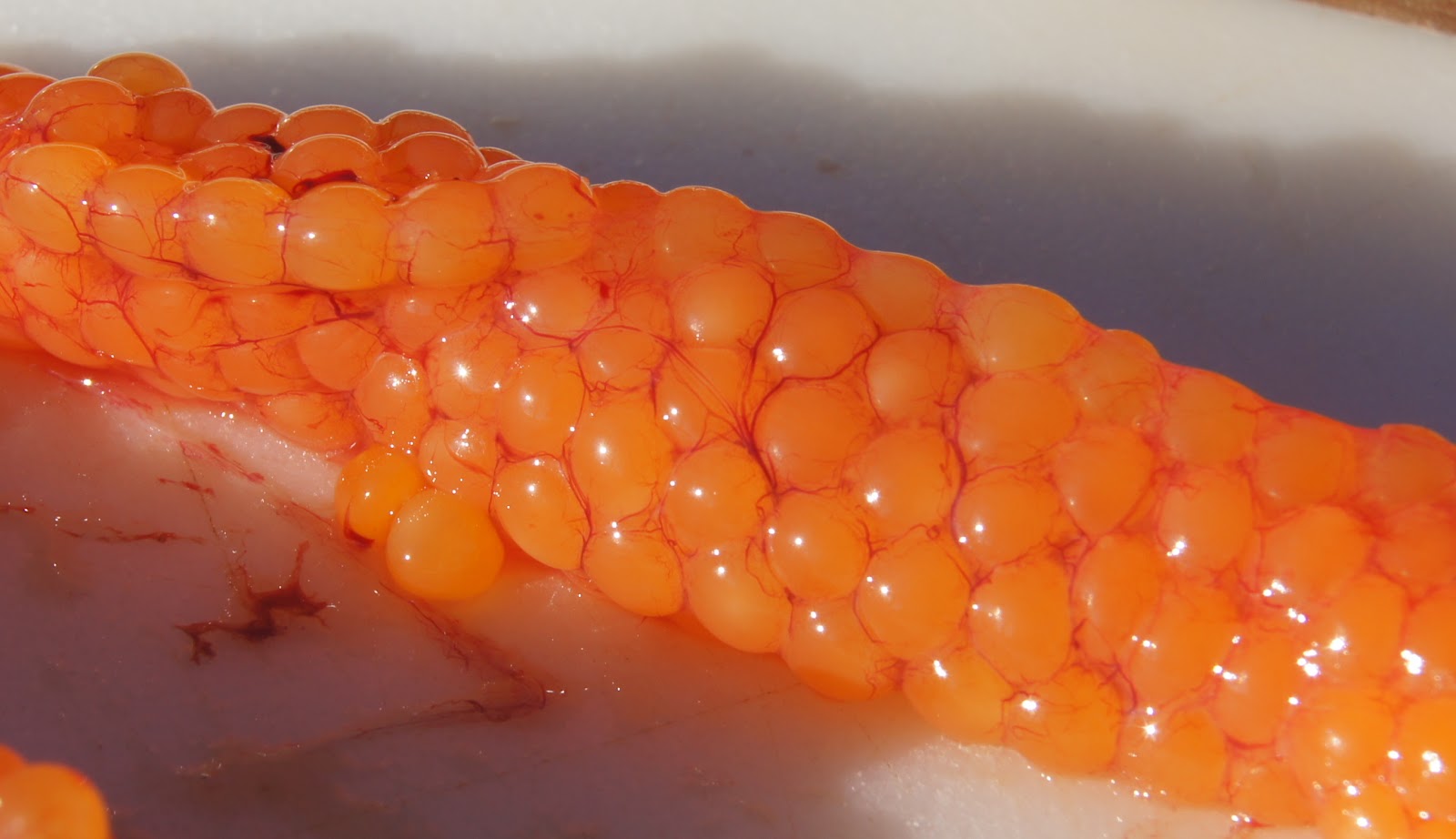
When you open up a mature female trout at this time of year you find the body cavity packed with roe contained in egg sacs surrounded by a clear, veined membrane.

My hands are clean, but stained from working with black walnuts!

And now I must digress a bit, because in trying to nail down the terminology of caviar, I've just gone down a bit of a rabbit hole.  I used to think the membranous sac surrounding the roe was called a skein, but I've now come to think that skein refers to the eggs themselves.  Skein in general refers to a loose agglomeration of things--often a loosely gathered bunch of yarn or thread, or in another common usage, it refers to geese:  "One swallow does not make a summer, but one skein of geese, cleaving the murk of March thaw, is the Spring." — Aldo Leopold.  In none of the online dictionaries that I consulted did I find any reference to fish roe, nor was that usage listed in the venerable Oxford English Dictionary, print version.  However, there are plenty of references to skeins on various fishing-related sites, and a quick survey of some of these reveals much confusion as to what skein actually means.  I've found it used to mean the membrane, the roe, and the two combined.  Therefore, I am going to eschew using it at all, and just refer to the sac, and the roe.  Thanks for your patience.


I used to think the sac was gray, but Mary helped document the caviar making process this time, and she cleverly pointed out that it's actually red.  I have this little color blindness thing going on, so I can sometimes miss details like that.  When Mary mentioned the color of the sac, it immediately made sense to me: there are veins in the sac that carry blood, probably to bring oxygen to the eggs, so I guess it's an organ, not just a functional material.


What you want to get rid of. 

Besides obtaining your roe to start with, separating the sac from the eggs is the only difficult part of the process.  The sac is delicate, so it breaks easily as you try to carefully scrape away the eggs.  The more you do it, the easier it becomes.  I use the dull side of a couple of paring knives to separate eggs from sac.


You're going to break a few eggs, but the eggs, in fact, are pretty sturdy.  You just go at it confidently, working quickly but carefully.  It's not necessary that the eggs be totally clean of membrane at this point, as you can pick out any stray pieces after rinsing.


The water turns pink and cloudy as bits of membrane and blood are rinsed away.


Rinse a couple of times, and drain well.


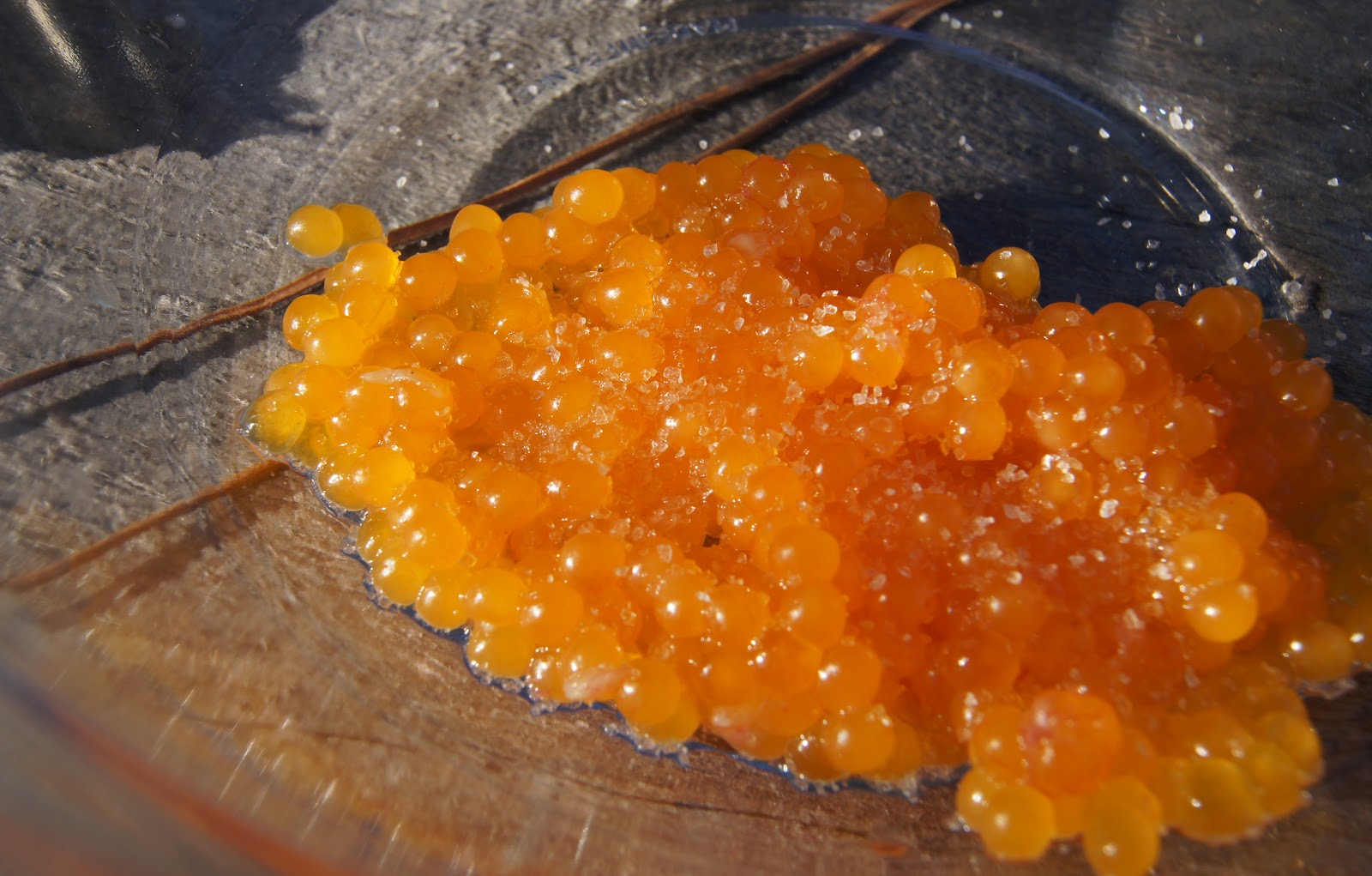
Weigh the roe.  That's just about an ounce, 29 grams.  That might not seem like a lot, but this roe was from a  pretty small fish, just a 12-inch brown.  And the caviar is rich; a little goes a long way.


The salt should be a bit less than 10 percent of the weight of the roe--in the book I say 4 grams salt--that's a scant quarter-teaspoon--to 50 grams of roe.  I didn't quite trust my Ikea scale to accurately weigh two grams of salt, so I went with the volume/eyeball method, and lightly coated the surface of the roe with salt.  That turned out to be the perfect amount.  This batch of caviar was nicely cured and not at all too salty.  We enjoyed it as part of my birthday raw foods dinner, along with a plate of lovely oysters, and steak tartare.  I share my birthday, October 1, with Rod Carew, the People's Republic of China (which made for quite a gala day for me, the two years I passed my birthday in Chengdu), Julie Andrews, Vladimir Horowitz, and Bonnie Parker (of Bonnie & Clyde!).  That it falls the day after closing day takes a lot of the sting out of seeing another fishing season come to an end.
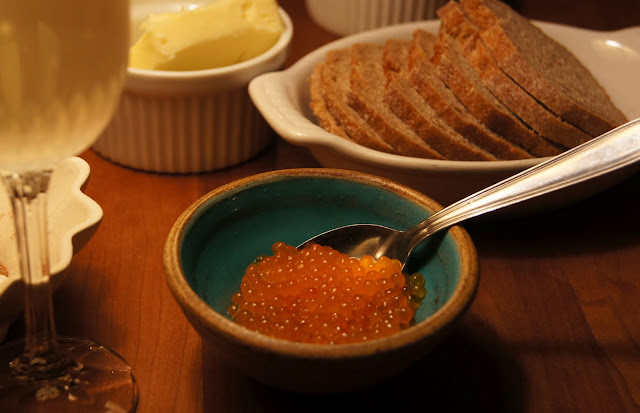

Trout caviar will keep for around a week--in the book I say four to five days, playing it safe.  But it's best eaten fresh, within a day or two.  The salt will permeate the eggs within a few hours, so you can make it in the afternoon and eat it that evening.


I think it should be easy to see why I'm so enthusiastic about this stuff.  On a thin slice of homemade sourdough rye, with some Hope butter and a dab of a goat yogurt-cream mixture flavored with shallots and black pepper, it made a delectable bite.  I have the roe from two trout killed on closing day to salt and consume, and then I'll have to wait until next autumn to enjoy it again.  It's worth the wait.


Text and photos copyright 2012 by Brett Laidlaw


Tuesday, April 17, 2012

Field Report: In Ramp Woods


"Say something once, why say it again?," goes the line from the Talking Heads song, but it's just that pull of the eternal return that compels the forager, the gardener, that perennial gyre that sets our annual rhythms, brings us round as it carries us onwards, or upwards or--wherever it is that time is taking us.  Anything novel is set within the context of the same-old, same-old, another winter melts into spring, sap rises, buds break, leaves unfold, and the warming soil--but barely, still a cold, cold bed for the warm of blood--alerts dormant roots that it's time to renew the age-old cycle.  Annie Dillard, among others, found both beauty and horror in nature's tireless circles--hope and inspiration in seasonal rebirth, despair at the mindlessness of it all, the profligacy of overripe fecundity, the plain unmitigated waste of life and matter.  Here it comes again.  A la Beckett:  I can't go on.  I'll go on.


The ramps are up in near north Wisconsin, crazy early, and the whack-a-doodle climatic shenanigans continue.  After a warm and muggy afternoon that gave us hailstorms, lightning and downpours, tornado warnings, we awoke to:  snow.  Clouds of snow gusted down our valley much of the morning, only finding purchase on car windows, twigs, and deck boards.  The grass stayed green as the white pelted down.  From heat index atmospheres the day before, we were into windchill territory again.  The snow let up by early afternoon, a cold damp wind prevailed.  Perfect conditions for a forage.

One thing that defines my character is that I love to be out in the woods alone on a cold, damp day.  It's not that I'm only happy when it rains, but Shirley Manson and I both appreciate inclement times.  Pull on the wellies, get out the waxed cotton wading jacket, the wide-brimmed wool felt hat (crushable Stetson), we're good to go.  Camera in the bag along with the hori-hori (Japanese digging knife), and let's get some ramps.  A drenching rain sets the soil up nicely for harvesting.  I plunge the knife down along a ramp stem and give it a twist, and up comes a ramp.  I take only three or four from a large cluster, and move on to the next.  In some areas ramps are being over-harvested, and taking only the tops, leaving the bulbs, is recommended.  In my woods there are literally acres and acres of ramps, and no one else harvesting them, that I've seen.  I feel fine about taking the whole thing.  Note that these are white-stemmed ramps, unlike the more common red-stemmed type.  Both occur in these woods, though the white-stemmed ones are by far most common.  They tend to be a little smaller than the red ones; the taste is the same.


My attitude towards allium tricoccum--ramps, wild leeks, wild onion--is as variable as one spring is to the next. When I first discovered them, dropping to my knees in a Wisconsin woods to find the source of the appetizing aroma produced when my wading boots crushed those broad green leaves, I embraced them enthusiastically, both because ramps go wonderfully well with grilled trout on a bed of watercress, and because I had unlimited access to what turned out to be gourmet shop fare. And then, when the culinary reputation of ramps grew and grew, this homely wild allium showing up on all the upscale menus, I turned a bit contrarian. Not that I stopped harvesting them, or enjoying their versatility, but I didn't herald their return with quite the same zeal. The ramp hype in foodie world put me off. I know I wasn't alone in that.

This year I'm taking ramps on their own terms again, and loving them. I start loving them through that ritual of the return to the forager's woods after the long winter's wait. And now that I'm installed in the country, I've got ramp patches very near my home. So an afternoon outing to gather ramps and nettles (I don't actually have to go into the woods for these, as I have them in my yard) provides a good pretext for an ambling stroll, and I can be back home in time for tea, a hot shower, then bring on happy hour and dinner. Last night it was chicken and ramp tostadas topped with six-year-old Wisconsin cheddar, a Spotted Cow close at hand.


With April temperatures back in the more usual realm, or even a bit colder, the ramps are looking perky and fresh. A benefit of the very warm March could be an unusually long ramp season. I plan to enjoy it with all due rampish gusto.

Some pictures from a trip:

Did I mention that a pretty good trout stream runs through this woods?  This is a small feeder stream to it.  Brook trout live here, too, and this broke-down beaver dam makes the upstream water quite fishable.


Upstream of the dam.  I'll hit this stretch with the 7-foot bamboo strung with a 4-weight silk line, come May.


Downstream, a meadow meander.


Stinging nettles along the stream.  It was trout fishing that led me into foraging.


Squirrel snack bar.


An opportunity for woodland omenic exegesis.  What can we read from the deer bones.


Snow on a hazel husk.


And on hazel leaves.


Look for ramps where the trout lilies grow.


Groovy trout lily leaf.  No blooms yet.


The spore-producing body of ostrich fern.


Ostrich fern fiddleheads will emerge from this unpromising-looking clump.


Interrupted fern fiddleheads are much ahead of the ostrich.  Not edible; easily distinguished by the fuzzy white coating; they lack the ostrich's grooved stem.


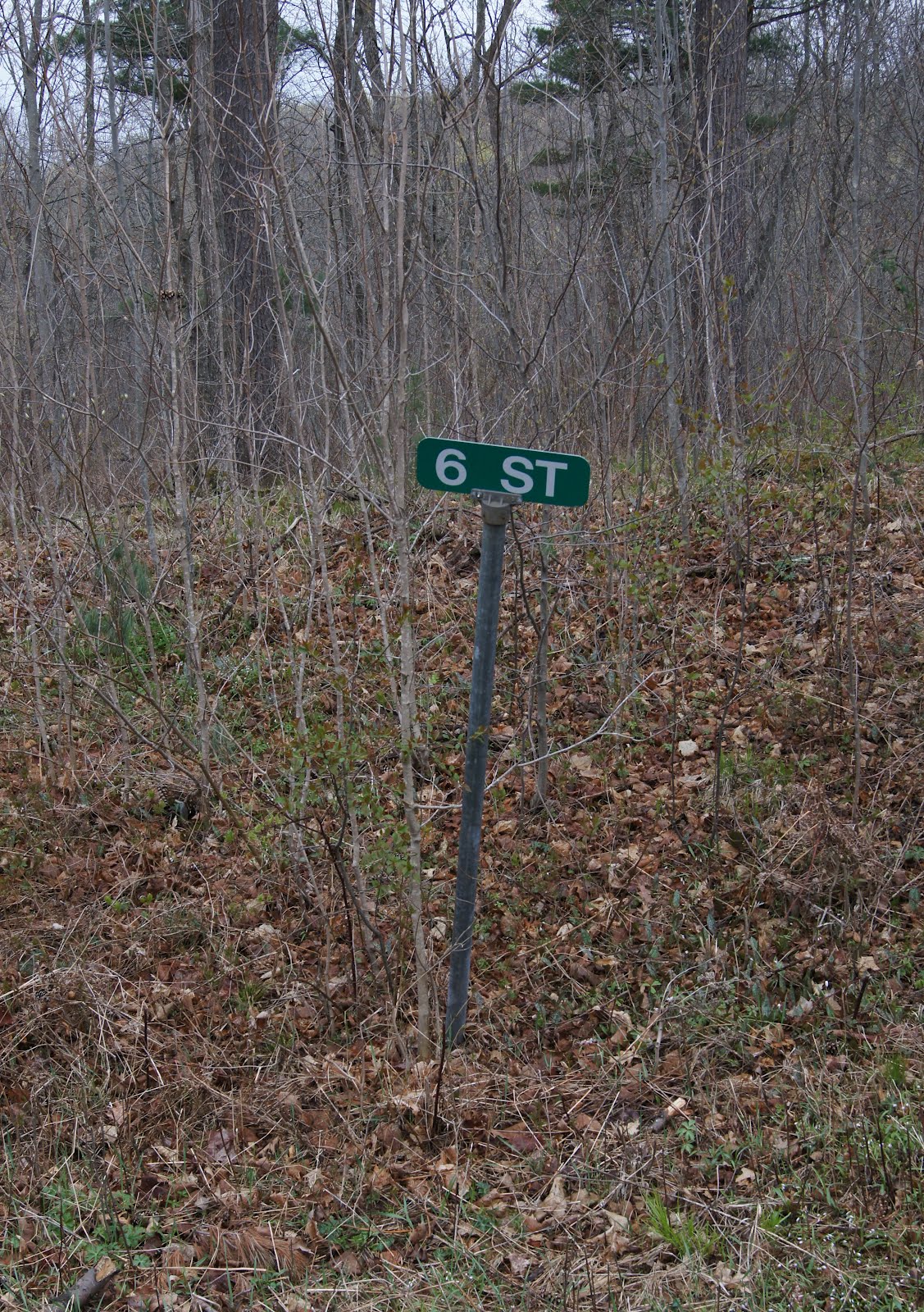
Positively Sixth Street.


Text and photos copyright 2012 by Brett Laidlaw

Monday, November 28, 2011

A Very Bide-A-Wee Thanksgiving


Martha took most of these excellent photos at the first Bide-A-Wee Thanksgiving gathering.  She and Tom were among the small group of pilgrims who travelled through the Wisconsin countryside resonating with rifle reports as the firearm deer season continued.  Also joining us were Jean-Louis and Nina, and their dog Georgia.  We started with Tom's delicious turkey paté and a relish tray that helped me thin the inventory in my pickle museum--spicy snow peas, soy sauce flat beans, asparagus, sweet gherkins, and cornichons. Then we feasted on confit of turkey legs and wings (salted and spiced then slow roasted in duck fat), maple-herb cured turkey breast cooked on the Bide-A-Wee fire with red wine-port sauce (none dare call it gravy!); pommes boulangère courtesy of Jean-Louis, chestnut-sausage stuffing, rutabaga remoulade (both mine), Tom's fresh cranberry-orange relish, and brioche nanterre au levain.  Then after a walk around the hilltop as dusk was coming down, we finished up with Martha's luscious pumpkin pie (recipe on the Libby's pumpkin filling can, she claims), and a beautiful apple tart on homemade puff pastry by (who else?) Jean-Louis. 

The turkey was a broad-breasted bronze, raised just down the road by our neighbors Mandy and Jeremy Berg. And even this turkey non-enthusiast must admit that it was a damned tasty bird.

By the end of the day we were sated, glowing, grateful, and exhausted as our guests started homeward under a sky full of stars as brilliant as any we've seen at Bide-A-Wee.  We hope your Thanksgiving feast was equally enjoyable.

The pilgrims:

Jean-Louis and Nina.

Mary with a better shot of J-L.


Tom holds forth.


Fearless fotog Martha; blurry but the best I got of her.


The pitmaster.


Groovy reflection shot with most of us.


Canine contingent:

Georgia, Nina, and Lily.


Annabel in standard dozing mode.


Lily, the great hunter.


A little local color.


The feast:
Tom has been working on perfecting his turkey paté for three years; I'd say he's just about there.


Country loaf, levain brioche.

The maple-herb-cured breast on the grill. It was grilled & smoke-roasted.


Rutabaga remoulade, with apple, sorrel, a mayo, sour cream, cider vinegar dressing.


Confit turkey legs and wings and chestnut dressing warm on the Haggis.


Cutting up the confit...


...and the breast.


Tom's cranberry orange relish.


Diverse libations enlivened the day.


A flavorful plate.


And another.

We forgot to take pictures of dessert.


Aftermath.

A delicious and memorable day.